Settlr Sells Free Hex Strategy, Not a Zendesk Invoice
Settlr at playsettlr.com: free browser Catan-style multiplayer with expansions, guest play, no ads—Next.js + WebSockets. Competes with Colonist.io; legal shadow from Catan IP.
NewName Editorial
Editorial Team
Catan costs ~$40 plus paid expansions; official digital versions gate content behind DLC. Settlr offers a free, browser-based hex strategy experience—settlements, resource trading, victory points—with multiple expansions, guest play, and no ads or paywalls (product positioning from playsettlr.com). Judge it on session reliability and community, not brand-naming pillar essays.
Business model: zero revenue, maximum friction removal
Settlr's GTM is deliberately anti-monetization:
- No download—modern browser + link share.
- Guest play—no account required to start a table.
- Streamlined lobby—invite friends via URL.
- Expansions included at no charge (Seafarers/Cities & Knights-class depth marketed vs official DLC).
Revenue appears donation/community-funded or hobby-operated—no ads, no premium tier on marketing site. Sustainability risk: server costs for concurrent WebSocket games scale with popularity; without monetization, uptime depends on operator commitment.
Product and tech: clone mechanics, original art
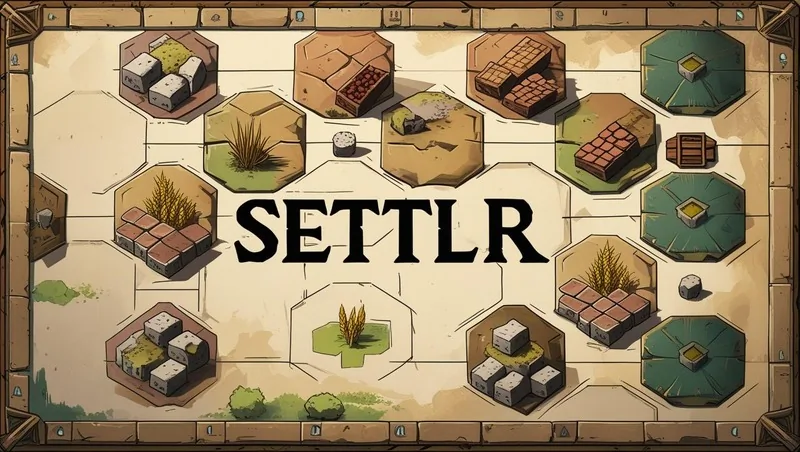
Built as Next.js web app with optimized assets (/_next/image pipeline). Gameplay mirrors Catan's loop—game mechanics aren't copyrightable, but trade dress and trademarks are. Settlr uses distinct art/icons (wheat, stone, tree motifs) to reduce direct infringement—still lives in legal gray zone (Asmodee has pursued clones like Colonist.io with C&D pressure historically).
Tech stack implications:
- WebSockets for real-time multiplayer—host scaling needed if viral.
- Cross-platform (Windows/Mac/Linux/ChromeOS) via browser—no App Store gatekeeping (also no App Store discovery).
- Discord/community as support channel—classic indie game ops.
Competitors: clones, official, licensed platforms
| Settlr | Colonist.io | Catan Universe | Board Game Arena | |
|---|---|---|---|---|
| Price | Free, no ads | Free + premium cosmetics/ranked | Freemium DLC | Subscription premium |
| Account | Guest-friendly | Account for ranked | Required | Account |
| Legitimacy | Unofficial clone | Unofficial (survived rebrand) | Official Asmodee | Licensed Catan |
| Polish | Indie | High MAU | Official art | Slower UX |
| Risk | C&D / shutdown | Established | Cost | Paywall |
Choose Settlr for fast guest rooms with friends who won't pay $40 for cardboard or DLC.
Choose Colonist.io for larger matchmaking pool and ranked meta.
Choose Catan Universe when official support and purchases matter.
Legal precedent and Colonist survival
Asmodee/Embracer has historically sent cease-and-desist letters to browser clones (Colonist.io survived via rebranding and differentiated assets). Settlr's survival depends on continued forbearance or geographic obscurity—not a durable moat. Colonist.io remains the category leader with ranked play and larger lobbies; Settlr differentiates on guest friction and anti-paywall purity, not feature depth.
Server economics: each concurrent game holds WebSocket state; viral Reddit posts can spike hosting bills without revenue offset—classic gift economy game risk. Community Discord doubles as QA and moderation—unpaid ops labor sustains product. Expansions free-to-play undercut Catan Universe DLC but also raise IP salience—more players means more publisher attention.
Session design and community ops
Guest play lowers friend-group activation energy—no "download app, create account, verify email" funnel. Link share → lobby → hex placement mirrors Among Us viral loops but for strategy niche. Next.js enables fast iteration on UX (patch notes button visible in HTML snapshot)—indie team signal.
Monetization escape hatches if legal pressure hits: cosmetic skins donations, optional ranked ELO subscription, or pivot to original hex game with different art/resources—Settlr brand survives without Catan trade dress. Until then, treat as event game for friend nights, not platform investment.
Matchmaking gap vs Colonist network effects
Settlr optimizes private friend lobbies, not public ranked queues. That is a product choice with business consequences: without matchmaking liquidity, retention depends on your group showing up Friday—not on discovering strangers at similar ELO. Colonist.io's larger MAU creates default routing for solo players; Settlr wins when the URL is pre-shared in a WhatsApp group.
WebSocket hosting costs scale with concurrent tables × expansion rules complexity. Cities & Knights-class logic increases server CPU per tick—free expansions raise infra burn without ARPU offset. Operators may throttle peak hours or cap lobby size silently—users should watch for queue timeouts during viral spikes.
From a publisher relations angle, Settlr's anti-paywall stance is marketing-friendly but legally provocative—free Seafarers-equivalent content signals direct substitution for Catan Universe DLC. Survival strategies observed elsewhere: cosmetic monetization, original resource names, distance from "Catan" keyword in SEO. Settlr's playsettlr.com branding partially decouples search—but gameplay familiarity still attracts publisher attention.
China context
Browser games work on mainland without app store friction—WeChat link sharing can fill lobbies if latency to server is acceptable. Settlr is English-first; no localized rules UI documented. Chinese board-game fans often play Colonist or 桌游模拟器 communities—Settlr competes on zero signup, not localization. IP risk is global—Asmodee enforcement less predictable in CN, but hosting abroad still faces takedown.
Expansion content as competitive weapon—and legal magnet
Marketing Seafarers/Cities & Knights-class expansions for free positions Settlr against Catan Universe's DLC revenue model. Players win; publishers notice. Colonist.io partially navigated this with cosmetics and ranked modes that don't replicate official expansion SKUs verbatim. Settlr's strategy appears closer to maximum substitution—higher delight, higher C&D surface area.
Tabletop parity matters for friend groups migrating from cardboard: robber mechanics, port trading, longest road tie-breakers must feel familiar or WhatsApp groups abandon the link mid-game. Browser latency and mobile Safari WebSocket quirks are silent churn drivers—test on the devices your group actually uses before scheduling recurring game night.
If Settlr adds accounts later for save states or ELO, it moves toward Colonist's model while sacrificing guest purity—watch product direction for signal on sustainability vs hobby project.
Board-game community dynamics
Settlr's Discord-as-support model means rule disputes and bug reports surface in public channels—transparency for players, unpaid labor for operators. Unlike Colonist's ranked ladder retention loops, Settlr retention is social contract: your friend group agrees this is the link for Friday. That is powerful for niche loyalty, fragile for solo discovery.
Official Catan digital products monetize IP legitimacy and expansions; browser clones monetize attention and optional cosmetics (if they survive). Settlr currently monetizes nothing—treat server uptime as charity unless donation links appear. For investors, this is a community artifact, not ARR.
Verify before you invest social capital
-
Uptime. Hobby servers disappear—don't replace weekly game night without backup title.
-
Player count. Confirm friends can join same region/server.
-
Expansion rules. House rules may differ from tabletop—read in-game docs.
-
Legal awareness. Unofficial clones can vanish overnight.
-
Colonist fallback. Have plan B if link dies mid-campaign.
Settlr's edge is democratized access: free hex strategy in a tab, guest-friendly, anti-paywall ethos. It is not a venture-scale business—it is community infrastructure with IP tail risk. Win on frictionless friend matches; lose on Asmodee legal action or server bill exhaustion.