Altar II
A 4.75mm mechanical keyboard that redefines low-profile typing with lateral springs and haptic feedback.
NewName Editorial
Editorial Team
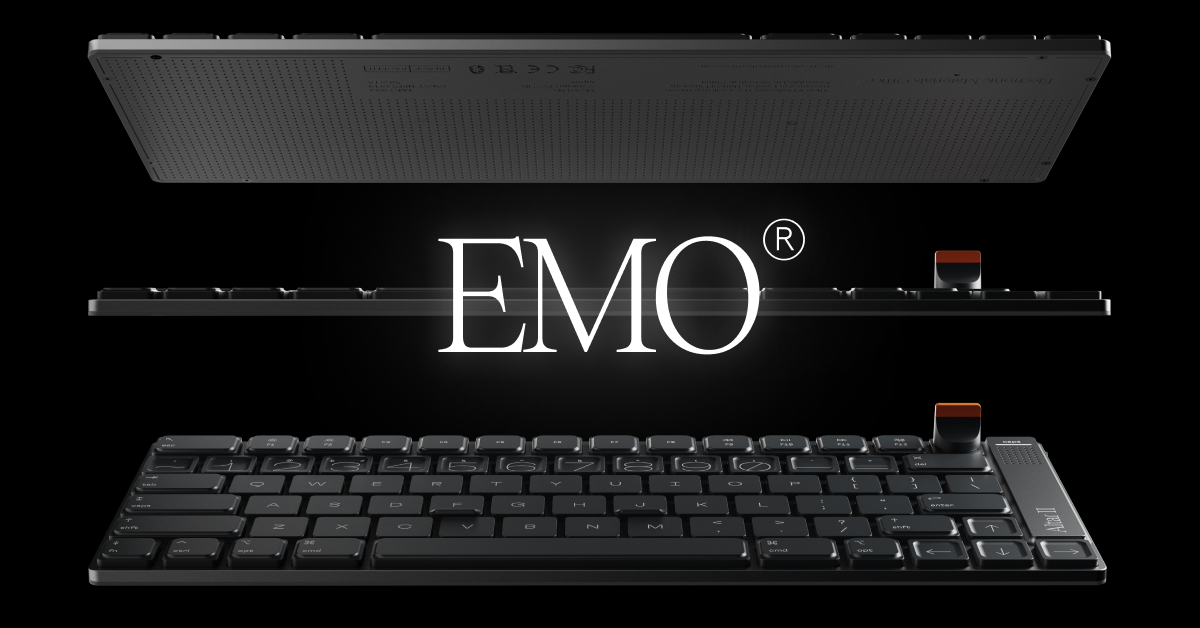
The keyboard world has long accepted a trade-off: mechanical switches give you feel, but they also give you bulk. The tallest mechanical keyboards, like the IBM Model M, stand 50mm tall. Even the slimmest mechanical options, like the NuPhy Air75, hover around 21mm. Then there's the Apple Magic Keyboard, a mere 10.09mm, but it's not mechanical. For two years, a solo designer known as aemerson_ has been working on a keyboard that breaks this stalemate. The result is the Altar II, a fully mechanical keyboard that measures just 4.75mm thick — thinner than the Magic Keyboard, and yet it clicks. That's the headline, but the real story is in the details: a lateral spring, a detachable dial, and a haptic engine that makes the keyboard feel alive.
The 4.75mm problem
The Altar II's spec sheet reads like a taunt to the industry. At 4.75mm, it's less than half the thickness of the Magic Keyboard, and it's fully mechanical. To put that in perspective, the Logitech MX Keys, a popular low-profile keyboard, is 20.5mm thick. The Keychron K2, a favorite among mechanical enthusiasts, is 30mm. The Altar II isn't just thinner; it's in a different category. The website calls it "impossibly thin and sleek," and for once, the hyperbole feels earned.
But thinness alone isn't enough. The challenge is making a mechanical switch that fits in such a tight space. Traditional mechanical switches rely on vertical travel, which requires height. The Altar II's solution is to reorient the spring. Instead of a vertical spring, it uses a "preloaded tension spring arranged laterally." This allows for a vertical travel depth of just 1.8mm, which is shorter than the typical 2mm or more on standard mechanicals, but still enough to provide tactile feedback. The result is a keyboard that feels mechanical without the bulk.
Lateral thinking: the spring that made it possible
The lateral spring is the heart of the Altar II's engineering. By placing the spring horizontally, the keyboard can be incredibly thin while still offering the resistance and snap of a mechanical switch. The website describes it as "breakthrough engineering," and it's hard to argue. The switch is housed in a steel construction, which adds durability and a satisfying weight. The vertical travel of 1.8mm is a compromise, but it's one that most users will likely accept given the form factor.
This isn't just about making a thin keyboard; it's about making a thin keyboard that feels good. The Altar II's typing experience is described as "precise" and "tactile," and the lateral spring is what makes it possible. It's a clever piece of engineering that could influence future keyboard designs.
M-Dial as a Trojan horse
The M-Dial is a small, magnetically detachable dial that sits on the top left of the keyboard. It's a clever addition that adds functionality without cluttering the layout. The dial can be clicked, twisted, and even swapped out for different shapes and sizes. The default dial is a standard knob, but you can 3D print your own, thanks to publicly published specifications. This open-source approach is a bold move, turning the M-Dial into a platform for customization.
The M-Dial isn't just a gimmick. It's a functional tool that can control volume, skip tracks, or trigger custom shortcuts via the companion app. The haptic feedback engine, called Harmonic Synthesiser, provides tactile responses as you turn the dial, making it feel like a mechanical encoder even though it's digital. The M-Dial is a Trojan horse: it looks like a simple knob, but it's actually a gateway to a new way of interacting with your Mac.
Haptics: the feel of a keyboard, not just the sound
The Harmonic Synthesiser is the Altar II's secret weapon. It's a haptic feedback system that provides subtle vibrations for various actions. When you hold a modifier key, you feel a smooth hum; when you complete a shortcut, you get a gentle pop. The keyboard can also tap you for notifications, reminders, and alerts, thanks to deep macOS integration. This is more than just a gimmick; it's a way to make the keyboard feel responsive and alive.
Haptics also extend to the M-Dial, which simulates ticks as you turn it. This gives the dial a mechanical feel, even though it's based on a Hall Effect sensor. The result is a keyboard that feels more premium than its price point suggests. The haptics are fully configurable, so you can tune the intensity to your liking.
The Mac-first bet and its limits
The Altar II is designed for Mac users, and it doesn't apologize for that. The layout is Mac-specific, with Command, Option, Control, and Function keys where you'd expect them. The companion app is a native Swift app, which ensures smooth integration with macOS. The keyboard even has a built-in speaker for subtle audio feedback like wake sounds and charging chimes.
But this Mac-first approach is also a limitation. The keyboard's advanced features, like haptic notifications and app-specific shortcuts, rely on the companion app, which is only available for macOS. If you're a Windows user, you'll lose some of the magic. The settings are stored on the keyboard itself, so you can take it to any computer, but you won't get the full experience without the app.
Naming as a materials manifesto
The company name, Electronic Materials Office, is a curious choice for a keyboard maker. It sounds more like a research lab than a consumer brand. But it's a deliberate move. The name reflects the company's obsession with materials and engineering. The website uses terms like "battery casket" and "inertial damper," which sound like they belong in a spacecraft, not a keyboard. This naming strategy positions the Altar II as a piece of precision hardware, not just a peripheral.
The product name, Altar II, also carries weight. It suggests a sacred object, something to be revered. The tagline "Mechanical miracle" reinforces this. The brand is building a mythology around the keyboard, and the name is a key part of that.
The risk of being a miracle
The Altar II is an ambitious product, but it's not without risks. The price is $349, which is steep for a keyboard, even a mechanical one. The two-year development cycle is a testament to the designer's dedication, but it also means the market may have moved on. The keyboard is still in the reservation phase, with a $100 discount for early adopters, but there's no clear shipping date.
The biggest risk is that the Altar II is too thin for its own good. The 1.8mm travel might feel too shallow for some mechanical keyboard enthusiasts, who often prefer a deeper, more cushioned feel. The lateral spring is innovative, but it's untested in the long term. Will it hold up after years of use? The steel construction suggests yes, but only time will tell.
Despite these risks, the Altar II is a compelling product. It challenges the status quo and offers a glimpse of what keyboards could be. If it delivers on its promises, it could redefine the low-profile keyboard category. If it fails, it will be a fascinating footnote in the history of input devices. Either way, it's worth paying attention to.