Impact-Site-Verification: 41b53a0c-6d04-458b-a457-fe9e29acde1a

Developer Tools··5 min read

AutoCoder

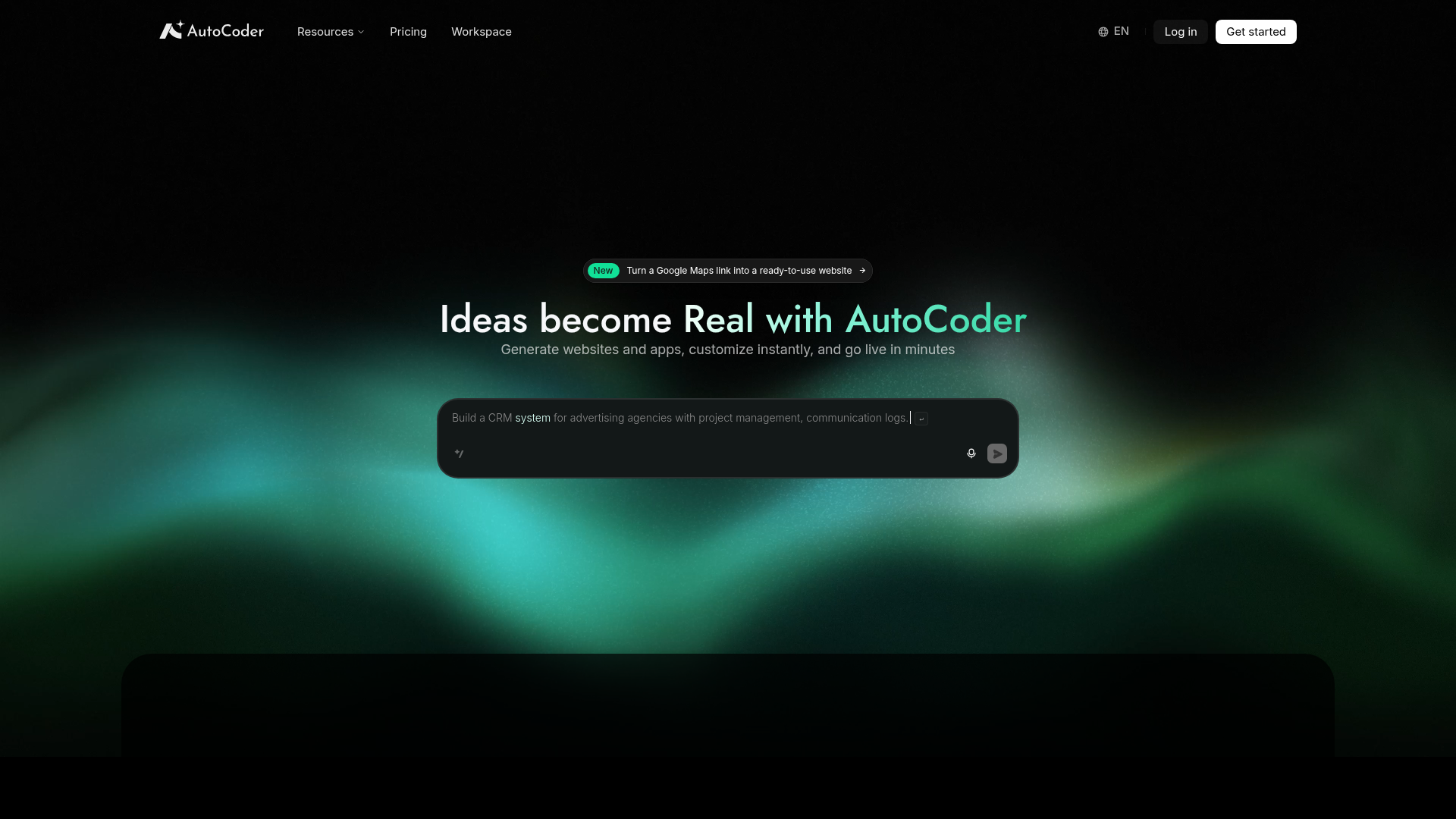
Turn a Google Maps link into a business website with AI.

NN

NewName Editorial

Editorial Team

AutoCoder product image 1
AutoCoder product image 2
AutoCoder product image 3

There is a certain magic in pasting a Google Maps link into a box and getting a website out. AutoCoder.cc has built its newest feature around exactly that: a generator that takes a location URL and produces a ready-to-use promotional site. It is a clever trick, but behind the novelty lies a more ambitious platform that wants to be your AI software company. The question is whether a Maps link is enough to build a lasting business.

The Shortcut: From Maps Pin to Website

Most small businesses still struggle to get online. They have a Google Maps listing, maybe a Facebook page, but no real website. AutoCoder.cc's headline feature attacks this pain point directly. You paste a Google Maps link into the generator, and the platform analyzes the location information to create a website. No design skills, no lengthy briefing, no complicated editing software. The promise is that a business owner can go from zero to a professional-looking site in minutes.

This is not just a landing page with a map embedded. The generated site includes promotional visuals and ready-to-share images, tailored to the business or destination. For a local restaurant, that might mean a clean layout with photos and hours; for a tourist attraction, it might mean a vibrant showcase. The output is designed to be immediately useful, not just a placeholder.

The core mechanism is the analysis of the Maps link. The platform extracts available location data—name, address, category, perhaps reviews and photos—and uses that to inform the website's content and design. This is a smart way to bootstrap a website with real data, avoiding the blank-canvas problem that paralyzes many small business owners.

But there is a limit to what a Maps link can provide. It does not include your menu, your team, or your unique brand story. The generated site is a starting point, not a finished product. AutoCoder.cc seems to acknowledge this by offering unlimited edits on paid plans, allowing users to customize the site after generation. The question is how easy that customization is for a non-technical user. The platform's broader positioning suggests a no-code, AI-assisted builder, but the specifics of the editing experience are not fully detailed in the public materials.

The Vibe Coding Layer: AI Team, Templates, and the Workspace

AutoCoder.cc is not just a Maps-to-website tool. The homepage describes it as a platform to "generate websites and apps, customize instantly, and go live in minutes." There is a mention of an "AI team of PM, Architect, and Engineers" that works on your project, and a workspace that functions like an "AI software company." This is a more ambitious vision: not just a site builder, but a full development environment where AI handles the heavy lifting.

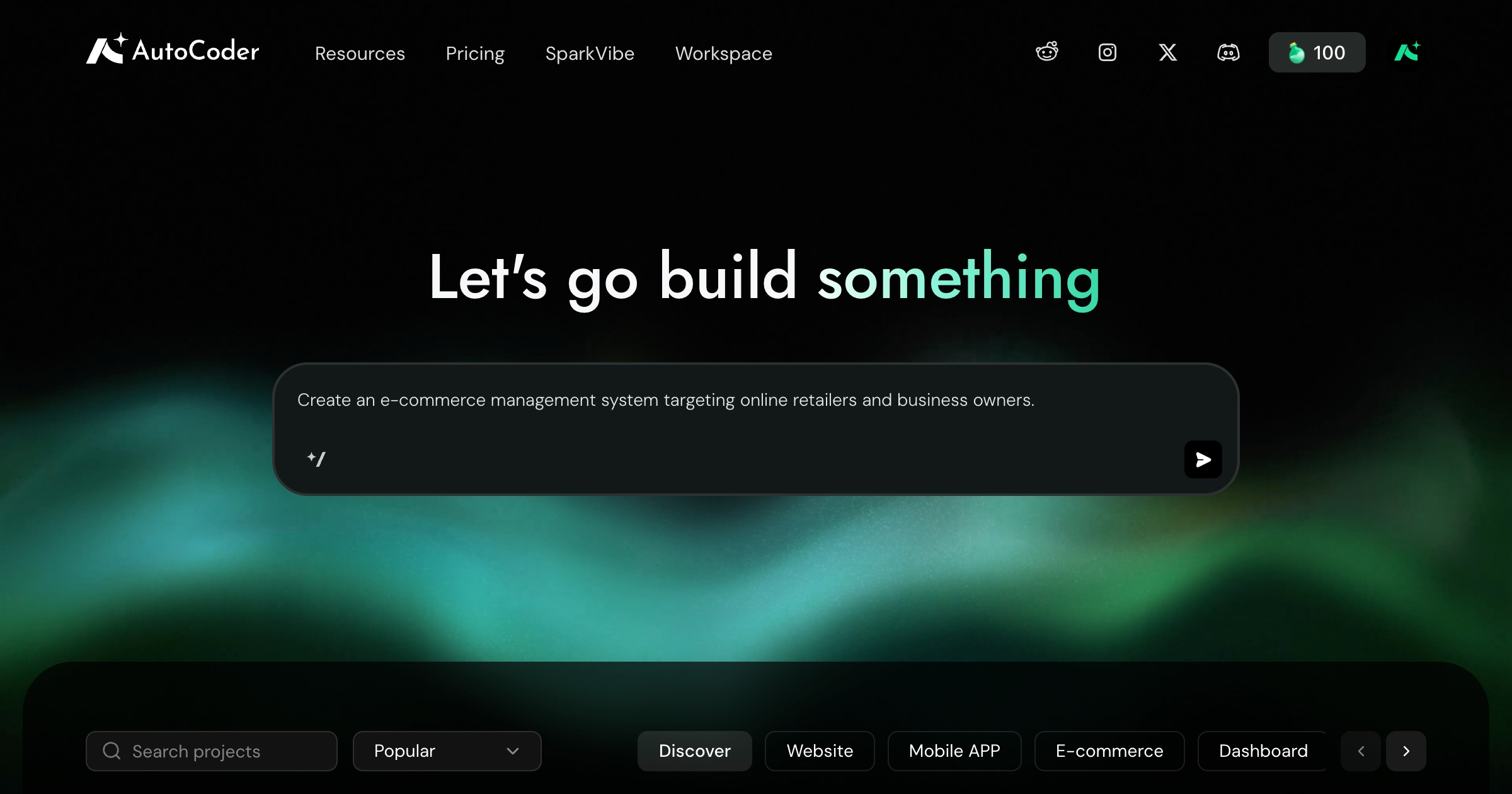
The platform offers templates for various use cases, and there is a feature called SparkVibe that seems to be a vibe-coding tool—generating software from natural language prompts. This aligns with the broader trend of AI-powered development tools that let non-coders create functional applications. AutoCoder.cc appears to be targeting both the absolute beginner who just wants a website and the more advanced user who wants to build a custom app.

The Pricing Ladder: From Free Demos to Full-Stack Projects

AutoCoder.cc's pricing structure reflects this dual audience. There is a free plan that supports backend projects, 1GB of disk space, and unlimited private projects, but only static single-page demos with view-only access. This is a taste, not a meal. The Starter plan at $25/month (first month only, then $49/month) adds custom domain binding, full multi-page projects, and access to login and payment APIs. The Standard plan at $49/month increases credits and storage, while the Pro plan at $129/month offers unlimited custom domains and subdomains, plus priority support.

What is notable is the credit system. Each plan includes a certain number of credits per month, but the pricing page does not explain what a credit buys. This is a critical gap. Users are left to guess whether a project costs one credit or ten. The lack of transparency could be a barrier to adoption, especially for small businesses on a tight budget.

Another interesting detail: the Starter plan is priced at $25 for the first month, then auto-renews at $49. This is a classic introductory offer, but it may confuse users who do not read the fine print. The pricing page does not clearly state what happens when the first month ends, which could lead to surprise charges.

What the Name AutoCoder.cc Signals — and What It Hides

The name "AutoCoder" suggests automation of coding, which fits the platform's AI-driven approach. The ".cc" domain, originally for the Cocos (Keeling) Islands, has become popular among tech startups, especially those with a global or developer-focused audience. It is short, memorable, and gives the brand a technical edge. However, the name may also mislead. AutoCoder.cc is not just a coding tool; it is a website and app builder for non-coders. The "coder" in the name could scare away the very audience it is trying to attract—small business owners who do not identify as technical.

On the other hand, the name positions the platform as a serious development tool, which could appeal to the vibe-coding crowd who want to build real applications. It is a dual identity: a friendly Maps-to-website generator and a powerful AI development environment. The brand seems to be trying to straddle both worlds, which is both a strength and a risk.

The biggest risk for AutoCoder.cc is that the Maps-to-website feature is a gimmick. It is a great hook for getting attention, but will it convert into long-term users? A business owner might generate a site, then realize they need to customize it extensively to make it truly theirs. If the editing process is not intuitive, they will abandon the platform.

Another question is the quality of the generated sites. The promotional images and visuals are generated by AI, but will they look professional enough for a business to use in front of customers? The platform's YouTube demo shows a clean result, but that is a curated example. Real-world results may vary.

Finally, the competitive landscape is fierce. There are established website builders like Wix and Squarespace, and new AI-powered tools like Durable and 10Web. AutoCoder.cc's differentiation is the Maps link input, which is unique but narrow. To compete, it must prove that the generated sites are not just easy to create but also easy to maintain and update.

For now, AutoCoder.cc is an intriguing experiment. It solves a real problem—getting small businesses online—with a clever shortcut. But the platform's long-term success depends on whether it can move beyond the novelty and deliver a genuinely useful, customizable website builder. The public materials suggest ambition, but the details of the user experience remain unclear. That is the open question that will determine whether AutoCoder.cc is a one-trick pony or a serious contender in the AI website builder space.