Bonae Artis LLC
A precision-machined aluminum protractor that makes drawing angles a one-sweep delight.
NewName Editorial
Editorial Team
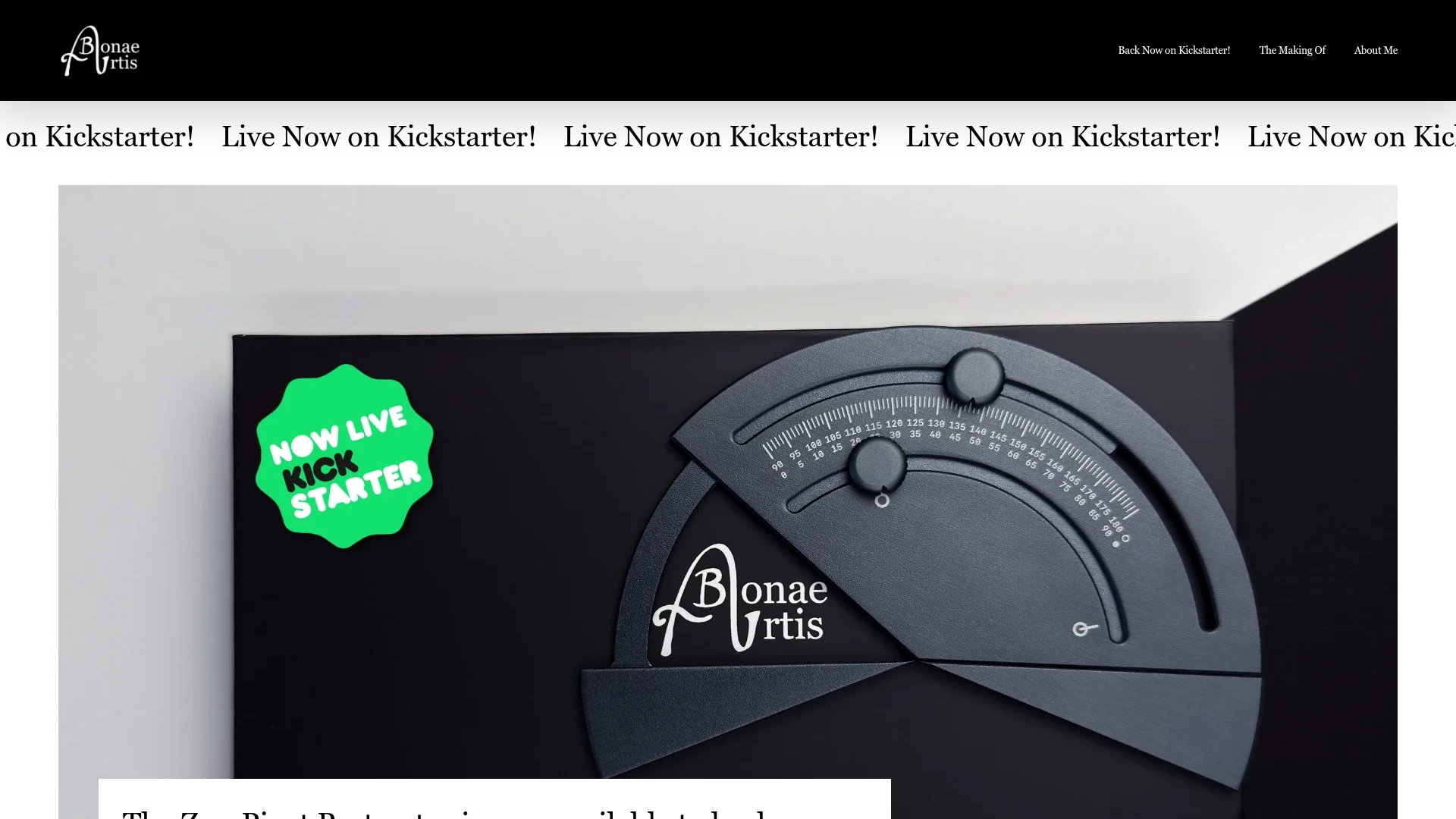
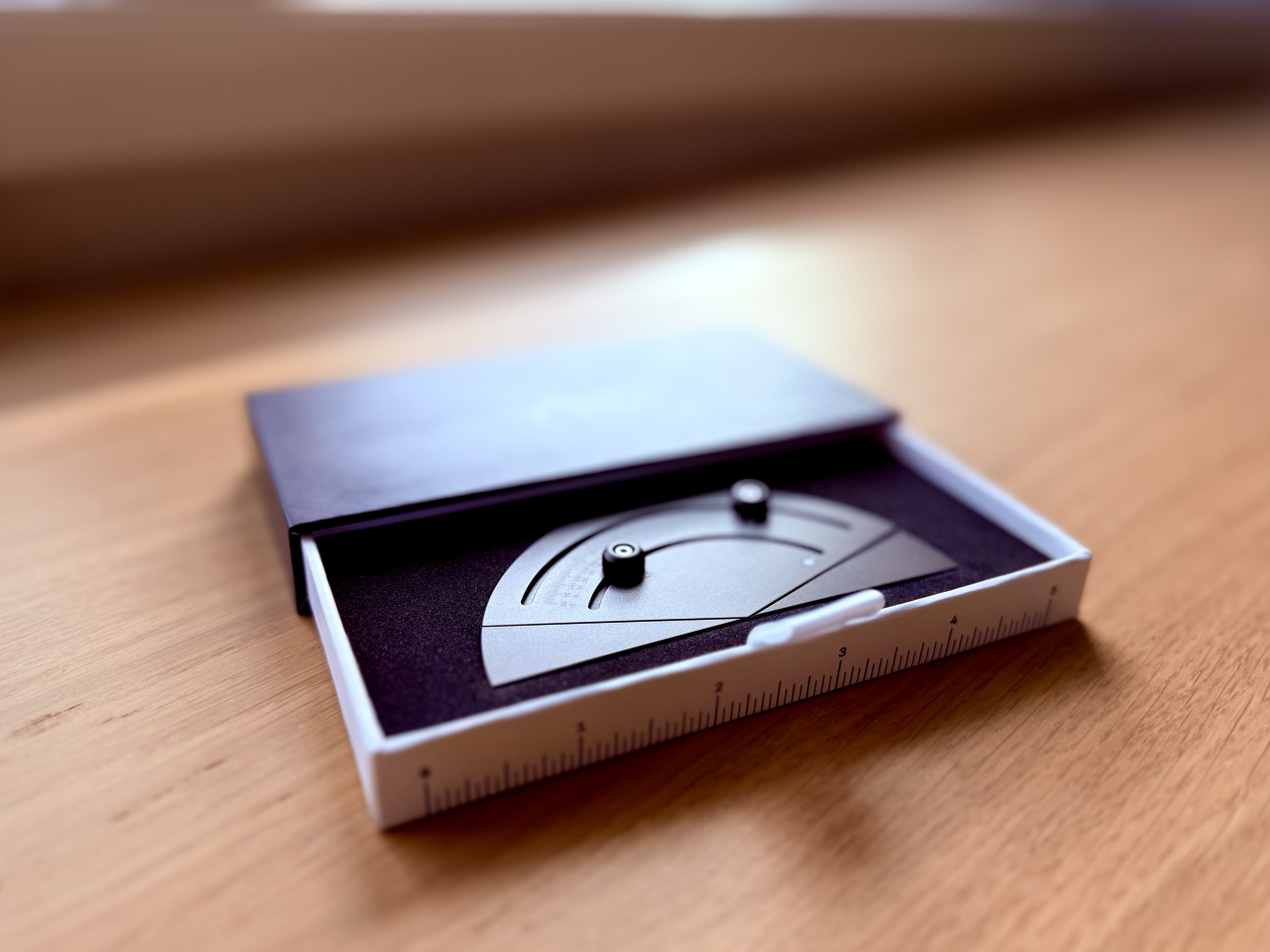
The ZeroPivot Protractor is not the first attempt to improve the classroom protractor, but it might be the most ambitious. Developed by Bonae Artis LLC, a company founded by teenage entrepreneur Wenxin Fang, this precision-machined aluminum tool promises to replace the flimsy plastic protractors that have frustrated students for generations. The product is currently live on Kickstarter, and its story—from a teenager's sketch to a factory in Hong Kong—is as compelling as the tool itself.
A Teenager’s Answer to the Flimsy Plastic Protractor
The classic plastic protractor is a study in compromise. It's cheap, but it bends, cracks, and slips. Its transparency helps you see the lines beneath, but it also makes the markings hard to read. And drawing an angle often requires multiple adjustments, lifting and rotating the tool until you get it right. Wenxin Fang, the founder of Bonae Artis, grew frustrated with these limitations. The result is the ZeroPivot Protractor, a tool designed to make drawing angles not just easier, but more intuitive.
What sets the ZeroPivot apart is its construction. Instead of flexible plastic, it's machined from aluminum, giving it a solid, precise feel. The material choice alone signals a departure from the disposable mindset of school supplies. This is a tool meant to last, not to be tossed in a drawer and forgotten.
The ZeroPivot Mechanism: One Sweep, No Lifting
The core innovation of the ZeroPivot Protractor is its adjustable sliding mechanism. Traditional protractors require you to align the center point, then carefully rotate the tool to the desired angle, often lifting it to check your work. The ZeroPivot eliminates this dance. With a single sweep, you can draw a precise angle without lifting the tool from the paper. The mechanism is designed to be smooth and accurate, turning a fiddly task into a fluid motion.
This is not just a convenience; it's a pedagogical shift. When drawing angles becomes less tedious, students can focus on the conceptual understanding of geometry rather than the mechanics of the tool. The ZeroPivot Protractor aims to make angles "fun," as the company's tagline suggests, by removing the friction that often leads to frustration.
From Sketch to Aluminum: Seven Iterations and a Factory in Hong Kong
The journey from concept to product was not a straight line. The website details a development process spanning over two years and seven design iterations. Fang's blog posts, which read like a public engineering diary, document the challenges of designing for manufacturing (DFM), sourcing materials, and finding the right factory. In August 2025, Fang traveled to Hong Kong to meet with HK AA Industrial, the factory that would eventually produce the samples.
The blog posts are refreshingly honest about the difficulties. One entry, "The Language of Deals," describes the surprise at the speed and scale of responses to a request for quotation (RFQ) on Alibaba—eight quotations within 48 hours. Another, "Shaping for the Line," delves into the complexities of DFM, a process that often forces designers to compromise their vision for the sake of manufacturability. The result is a product that has been refined through real-world constraints, not just theoretical design.
The Kickstarter Campaign: Crowdfunding as a Launchpad
The ZeroPivot Protractor is currently being crowdfunded on Kickstarter, a platform that has become a launchpad for hardware innovations. For a teenage founder, Kickstarter offers more than just funding; it provides a community of early adopters who are invested in the product's success. The campaign is live now, and the website prominently features a "Back on Kickstarter" call-to-action.
Crowdfunding also validates the market. If the campaign reaches its goal, it's a signal that there is genuine demand for a better protractor. It's a risky bet, but one that aligns with the transparency and community-building that Fang has already embraced through the build log.
The Build Log: Radical Transparency as a Marketing Strategy
One of the most distinctive aspects of Bonae Artis is its "Making Of" blog, which chronicles every step of the journey—from the first logo design to the final factory visit. This is not typical corporate marketing. It's a raw, unfiltered look at the struggles and triumphs of bringing a product to life. Fang shares the legal headaches of "Papers and Permissions," the excitement of "The Expo Rush," and the relief of "From Across an Ocean," when the first aluminum samples finally arrived.
This transparency builds trust. In an era where consumers are skeptical of polished marketing, the willingness to show the messy middle is refreshing. It also creates a narrative arc that makes the product more than just a tool; it's the culmination of a story that backers can feel part of.
What the ZeroPivot Protractor Says About the Future of Classroom Tools
The ZeroPivot Protractor is a small product with big implications. It challenges the assumption that school supplies must be cheap and disposable. By using premium materials and thoughtful design, it elevates a mundane object into something that students might actually want to use. It also demonstrates that innovation can come from anywhere—even from a teenager who was tired of fighting with a plastic protractor.
Whether the Kickstarter campaign succeeds remains to be seen, but the ZeroPivot Protractor has already achieved something significant: it has reimagined a tool that hasn't changed in decades. And in doing so, it offers a glimpse of what the future of classroom tools could look like—precision, durability, and a touch of fun.