Impact-Site-Verification: 41b53a0c-6d04-458b-a457-fe9e29acde1a

Developer Tools·Unknown··4 min read

Bor

Real-time policy management for Linux desktops, open source and secure

NN

NewName Editorial

Editorial Team

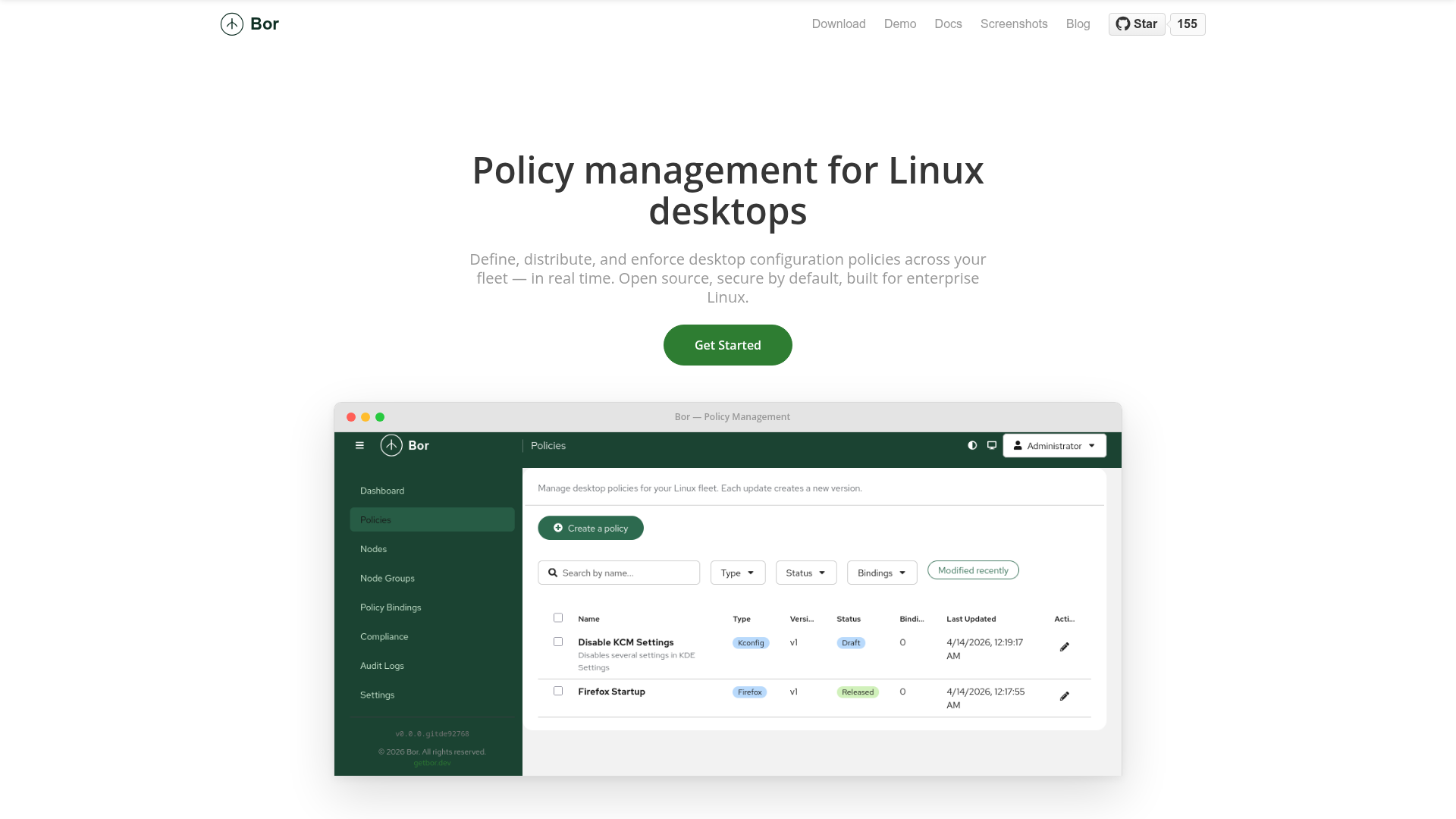
Bor product image 1
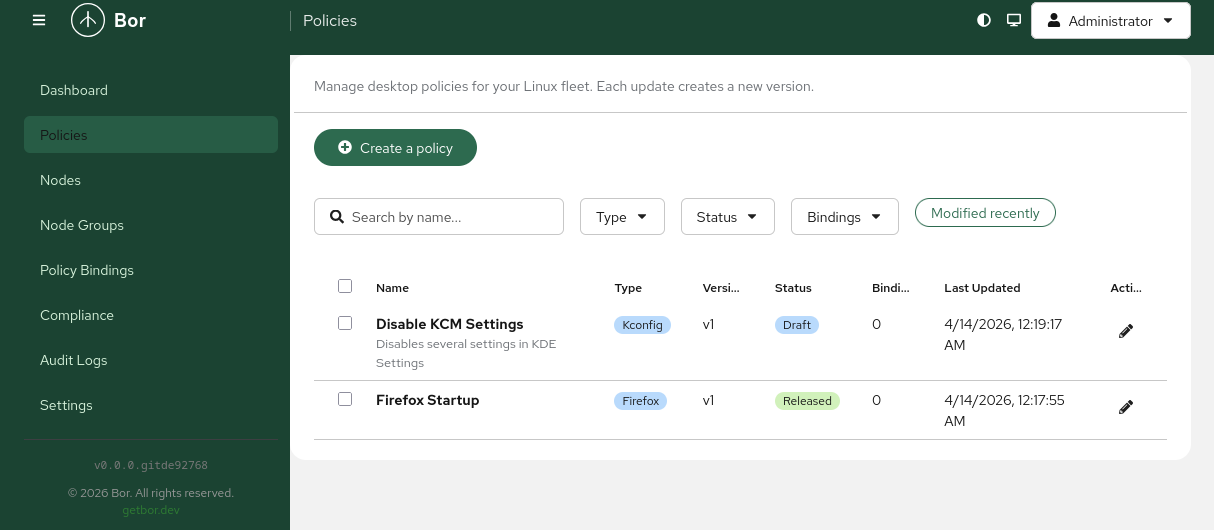
Bor product image 2

Linux desktop fleets have long been the neglected stepchild of enterprise IT. While Windows and macOS administrators enjoy mature group policy and MDM ecosystems, Linux admins often stitch together a patchwork of configuration management tools, scripts, and manual SSH sessions. Bor, an open-source project from VuteTech, aims to fill this gap with a modern, real-time policy management system. Its approach—streaming policies over gRPC, securing with mTLS, and enabling zero-touch enrollment via Kerberos—suggests a fresh take on an old problem. But is it a genuine category-defining tool or just another config management toy? Let's dig into what Bor actually does and why it matters.

The Linux desktop policy gap that Bor targets

Enterprise Linux desktops are everywhere in development shops, government agencies, and academic institutions, yet they lack a unified policy management layer. Traditional tools like Puppet or Ansible are powerful but often overkill for desktop configuration, requiring complex infrastructure and continuous polling. They also focus on server provisioning, not desktop user experience. Bor steps into this void with a purpose-built solution: a central server and lightweight agents that enforce configuration policies on Linux desktops in real time. The project's tagline—"Define, distribute, and enforce desktop configuration policies across your fleet—in real time"—captures its ambition. By focusing exclusively on desktops, Bor avoids the bloat of general-purpose configuration tools and promises a streamlined experience.

Real-time policy delivery: gRPC streaming vs. polling

Bor's core innovation is its real-time policy delivery mechanism. Instead of agents polling a server at intervals, Bor maintains persistent gRPC streams between the server and each agent. When a policy changes, it's pushed to agents instantly. Delta sync minimizes bandwidth, and a snapshot fallback ensures consistency even after network interruptions. This is a significant departure from the polling model used by many legacy tools, which can introduce delays and unnecessary load. The architecture is elegantly simple: a single Go server binary backed by PostgreSQL, and a single lightweight agent. No message queues, no sidecars, no external dependencies. This simplicity is a selling point, promising easy deployment and operation.

Zero-touch enrollment: Kerberos and one-time tokens

Enrollment is often the first hurdle in any fleet management solution. Bor tackles this with two mechanisms: for domain-joined machines, agents automatically enroll using their existing Kerberos ticket—no tokens, no manual steps. For non-domain machines, a short-lived one-time token generated from the web UI is used. In both cases, mTLS certificates are exchanged automatically after initial authentication, eliminating shared secrets and manual certificate management. This approach leverages existing enterprise infrastructure (Active Directory, LDAP) and reduces friction, making it easier to deploy Bor across large fleets.

Security architecture: mTLS, audit logs, and tamper protection

Security is a cornerstone of Bor's design. All communication between server and agents is encrypted with mTLS, using an auto-generated internal CA. The server supports PKCS#11/HSM for CA private keys, adding a hardware root of trust. Every policy change, authentication event, and enforcement action is recorded in a tamper-evident audit log, which is crucial for compliance. Additionally, managed file modifications trigger audit log alerts, providing tamper protection. RBAC with predefined roles and scope-aware permissions integrates with LDAP/AD, allowing fine-grained access control. These features position Bor as a security-conscious tool, ready for enterprise environments with strict compliance requirements.

What's built, what's next: project status

Bor is actively developed, with 15 features marked as done, 2 in progress, and 6 planned. Current policy types cover Firefox, Chrome, KDE/KConfig, dconf, and polkit—common desktop configuration targets. The project has already released v0.8.0, adding Thunderbird, Microsoft Edge, and Firewalld policy types, along with a web UI overhaul and finer-grained RBAC. In progress are multi-tenancy and ACME support for TLS certificates. Planned features include systemd, package, and network policy types, as well as Flatpak and XDG portal management. This roadmap shows a clear trajectory toward broader coverage, but also indicates that Bor is still maturing. The documentation itself notes it's not fully up to date, and the project has not yet reached an official 1.0 release.

The name 'Bor': simplicity and ambiguity

Bor is a short, punchy name that's easy to remember and type. It evokes the element boron, known for its strength and versatility, which fits a tool designed to enforce policies robustly. However, the name is also ambiguous—it doesn't immediately suggest policy management or Linux. This could be a double-edged sword: it's distinctive and brandable, but it may require more marketing to convey its purpose. The domain getbor.dev is concise and fits the developer-oriented audience. The GitHub repository, VuteTech/bor, is straightforward and aligns with the sponsor company. Overall, the naming is a deliberate choice for simplicity, trading descriptive clarity for memorability.

Who should care and what remains uncertain

Bor is primarily aimed at IT administrators managing Linux desktop fleets in enterprises, especially those with existing Active Directory or LDAP infrastructure. Its zero-touch enrollment and real-time policy delivery are compelling for organizations that need quick, consistent configuration updates. However, there are uncertainties: the project is still pre-1.0, and the documentation is incomplete. The team's capacity for long-term maintenance is unknown, though the sponsorship by Vute Tech provides some backing. The open-source license (LGPL-3.0) is permissive for integration, but the community is small (155 GitHub stars). For early adopters, Bor offers a promising solution, but they should be prepared for potential rough edges and evolving APIs. As the project matures, it could become a significant player in the Linux desktop management space, but only time will tell if it can overcome the inertia of established tools.