CoLab Education
The professional networking app powering K-12 education communities to share resources and build capacity.
NewName Editorial
Editorial Team


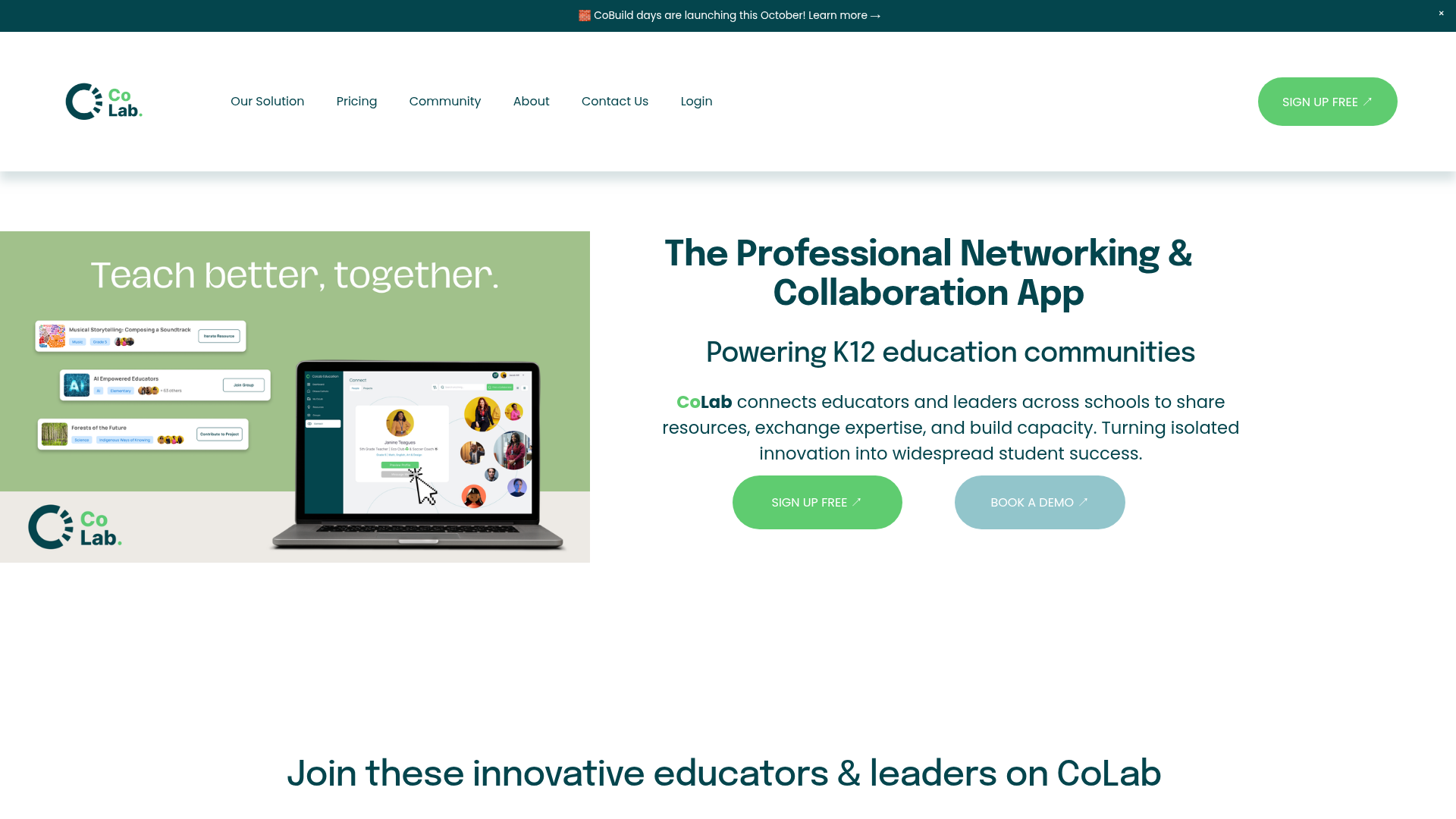
CoLab Education is not another lesson-plan repository. It is not a professional development calendar. It is a professional networking service for K-12 education, and that distinction matters more than the feature list. The company's homepage banner states it plainly: "The Professional Networking & Collaboration App — Powering K12 education communities." The thesis is that the missing layer in education is not content but human connection. Teachers have always borrowed worksheets and shared war stories in hallways; CoLab wants to formalize that exchange at scale, turning isolated innovation into widespread student success.
The Professional Network K-12 Never Had
Educators have LinkedIn for their careers, but they have no dedicated space to connect around their craft. CoLab aims to fill that void. The site describes it as a place where "educators and leaders across schools" can "share resources, exchange expertise, and build capacity." The language is deliberate: this is not a social network for teachers to post photos of their classrooms. It is a professional network where the currency is expertise and the goal is systemic improvement.
The problem CoLab addresses is real. In most school districts, great teaching happens in isolation. A brilliant lesson plan in one classroom never reaches the teacher down the hall, let alone across the district. Professional development is often a top-down, one-size-fits-all workshop that teachers attend and forget. CoLab's bet is that a bottom-up, peer-to-peer network can be more effective. The site's tagline—"Turning isolated innovation into widespread student success"—captures this ambition.
What CoLab Actually Does: Profiles, Resources, and Communities
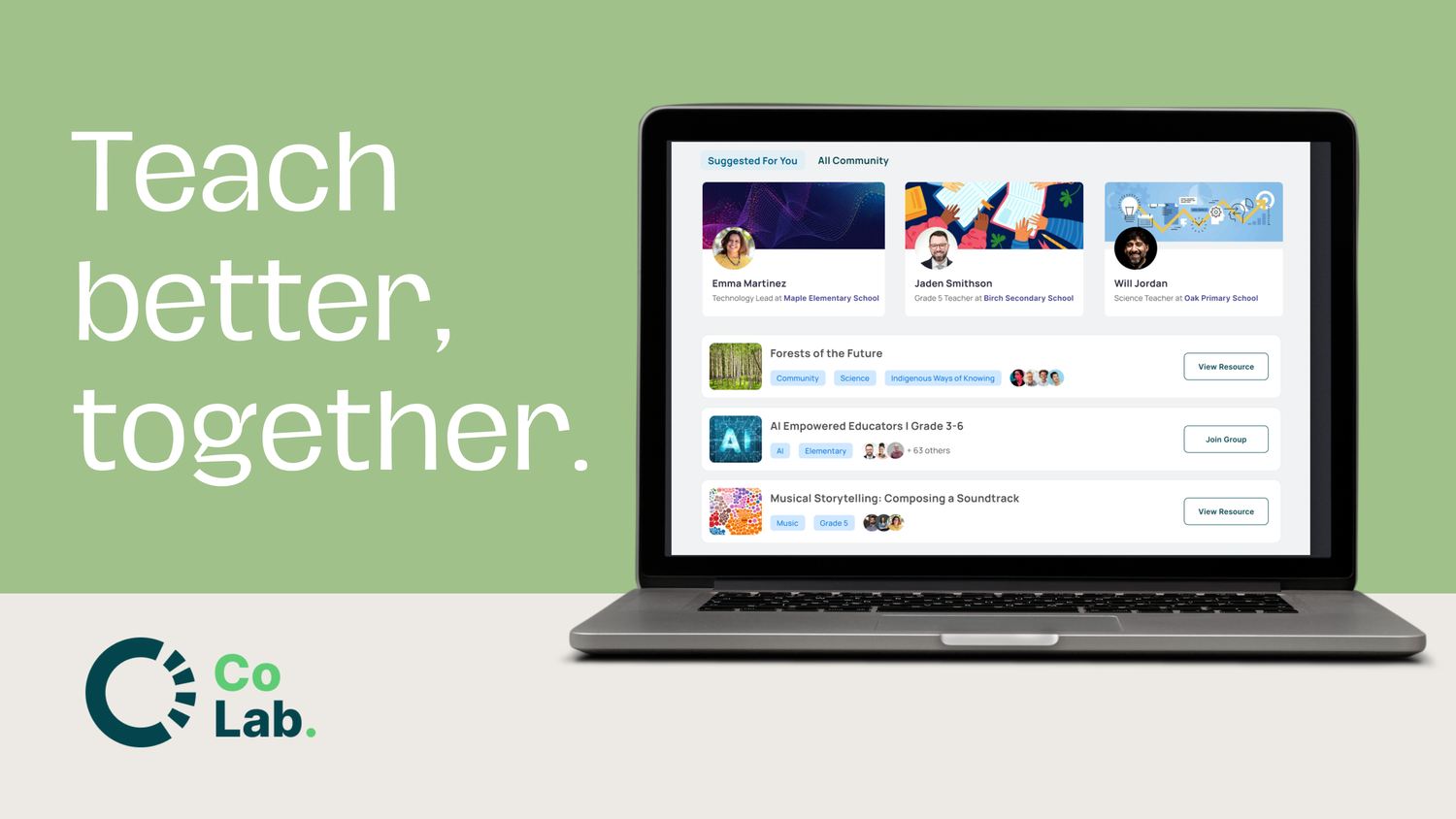
The site outlines four distinct user paths: For Teachers, For Schools & Districts, For PD Providers, and For Education Communities. Each path suggests a different workflow. Teachers can create profiles, share resources, and connect with peers. Schools and districts can use CoLab to build organizational capacity, perhaps by creating private communities for their staff. PD providers can distribute their offerings and engage with educators. Education communities—like subject-area associations—can use CoLab to foster ongoing collaboration beyond annual conferences.
The platform appears to be built around the concept of "communities," which are likely spaces for groups to share resources and discuss topics. The blog post "Getting Feedback on Your Resources: A few simple ways to turn shared resources into real conversations on CoLab" suggests that the core loop is sharing a resource and then getting feedback on it. This is a simple but powerful mechanism: it turns a static library into a dynamic conversation.
The site also mentions "Professional Learning" and "Professional Learning Communities," indicating that CoLab is positioning itself as a tool for ongoing, job-embedded professional development, not just a resource dump. The integration with tools like Brisk and Canva, mentioned in a blog post title, suggests CoLab is open to being part of a teacher's existing tech stack.
The Siakam Signal: Why an NBA Star's Accelerator Backed This
CoLab Education won a grant from the Siakam EdTech Engine, an accelerator co-hosted by the DMZ and co-judged by former Toronto Raptor Pascal Siakam. According to BetaKit, the accelerator awarded three startups with $50,000 each. This is a notable signal for a few reasons. First, it provides early validation and funding. Second, it connects CoLab to a network of mentors and investors. Third, it suggests that the accelerator saw potential in CoLab's approach.
The fact that this is Siakam's second year co-judging the event indicates that the accelerator is established and selective. For CoLab, winning this grant is a credibility boost. It also aligns with Siakam's known interest in education and community empowerment, which is reflected in CoLab's mission.
However, the grant is just a starting point. The site does not disclose the amount of the grant, but the BetaKit article mentions $50,000. This is seed money, not a Series A. CoLab will need to demonstrate traction and a path to revenue to secure further funding. The pricing page likely holds clues, but the public materials do not detail specific pricing tiers.
CoBuild Days and the Shift to Active Collaboration
The site prominently announces: "🧱 CoBuild days are launching this October! Learn more →" This is a clever extension of the CoLab brand. "CoBuild" suggests a more active, hands-on collaboration than simply sharing resources. It implies that educators will come together to build something—perhaps lesson plans, curriculum units, or professional learning experiences.
The launch of CoBuild days could be a significant moment for CoLab. It moves the platform from a passive repository to an active workspace. It also creates a sense of urgency and a reason to return to the platform regularly. The use of the brick emoji is playful but also suggests construction and solidity.
This feature could differentiate CoLab from other edtech tools. Many platforms allow sharing, but few facilitate real-time co-creation. If CoBuild days are well-executed, they could become the hook that keeps educators coming back.
The Naming Story: CoLab as a Promise, Not Just a Label
The name "CoLab" is a portmanteau of "collaboration" and "lab." It is a strong name for an edtech product because it evokes both the scientific process and the idea of experimentation. The "Co" prefix also suggests community and co-creation. The domain, colab.education, is both memorable and descriptive, though the .education TLD is less common than .com. This could be a double-edged sword: it reinforces the education focus but may be harder for users to type.
The name also carries a subtle risk. "CoLab" is a common abbreviation for "collaboration" and is used by many other products, including Google's Colab (short for Colaboratory). This could lead to confusion in search results. However, the .education domain helps disambiguate. The branding is consistent across the site, with a clean logo and a consistent color scheme.
Overall, the name works. It is short, memorable, and communicates the core value proposition. It also allows for natural extensions like "CoBuild" and "In the (Co)Lab" for the blog.
The Open Questions: Adoption, Moderation, and the Grant-Fueled Road
CoLab Education has a compelling thesis and a strong start, but several open questions remain. First, adoption: Will teachers and districts actually use a new platform? The education market is crowded with tools, and getting teachers to change their habits is notoriously difficult. CoLab will need to demonstrate clear value over existing channels like email, Google Drive, and social media groups.
Second, moderation: If CoLab becomes a hub for sharing resources, how will it ensure quality? The blog post about getting feedback suggests that CoLab encourages conversation, but the platform will need robust moderation to prevent spam and low-quality content. The site does not disclose its moderation policies.
Third, the business model: The site has a pricing page, but the public materials do not detail the pricing structure. CoLab may offer a freemium model, with premium features for schools and districts. The success of the company will depend on converting free users to paid plans.
Finally, the grant-fueled road: $50,000 is a small amount to build a sustainable business. CoLab will need to secure additional funding or generate significant revenue to scale. The team, led by Ariella Racco, appears to be actively building the community, as evidenced by the blog posts and partnerships with organizations like TESL Toronto and the Science Teachers' Association of Ontario.
Despite these challenges, CoLab Education is addressing a real gap in the K-12 ecosystem. By focusing on professional networking and collaboration, it is trying to change how teachers learn from each other. If it can execute on its vision, it could become an essential tool for educators. The launch of CoBuild days in October will be a key test of whether CoLab can move from a promising idea to a must-use platform.
Tags