Cremation Tattoos
A patent-pending process turns cremated remains into safe, intimate memorial tattoos.
NewName Editorial
Editorial Team
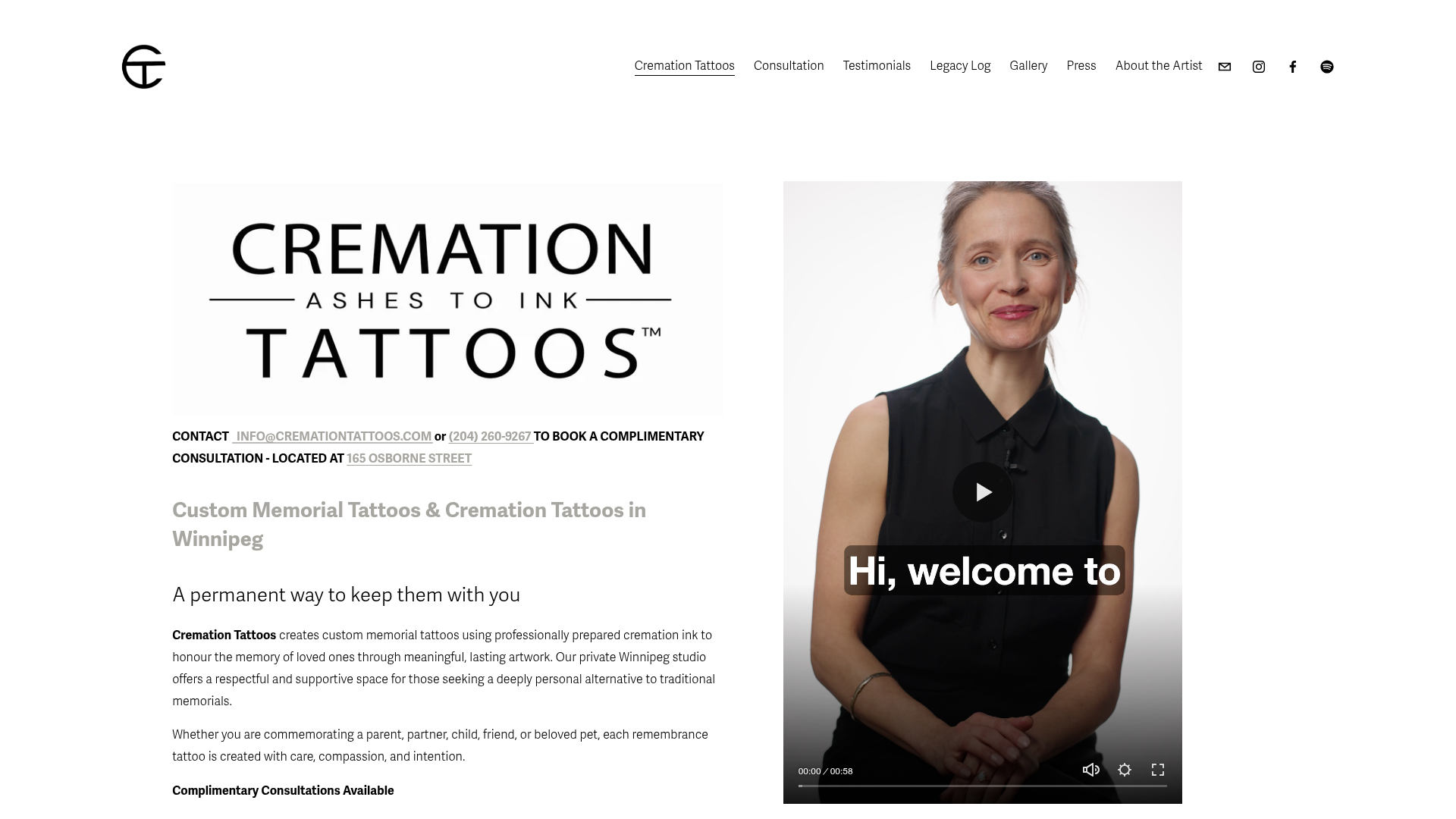
Cremation Tattoos is not a typical tattoo studio. It is a Winnipeg-based practice that takes a loved one's cremated remains, refines them through a patent-pending six-step sterilization process, and mixes them into tattoo ink. The result is a memorial that is literally worn on the skin. But the company's ambition goes beyond individual tattoos: founder Kerri Parnell is building a licensing and training network to bring this intimate service to other studios. That move—turning a deeply personal, safety-critical ritual into a scalable franchise—is what makes Cremation Tattoos worth watching.
The weight of a tattoo that carries ashes
Most memorial tattoos are symbolic. A date, a name, a portrait. Cremation Tattoos offers something more literal: the actual cremated remains of the person or pet are incorporated into the ink. The website describes it as "a permanent way to keep them with you." That is not marketing hyperbole; it is the core value proposition. For clients who choose cremation, a tattoo infused with ashes is a way to physically carry the deceased, a form of remembrance that is both intimate and enduring.
The emotional weight is clear from the site's language: "respectful," "compassionate," "intention." The studio positions itself as a space for grief, not just body art. Clients travel from across Manitoba and Canada to access this service, according to the website. That suggests a demand that is not met by local tattoo shops—either because they lack the technical process or the emotional sensitivity.
The six-step process as the product
The heart of Cremation Tattoos' offering is its patent-pending six-step sterilization process. The website emphasizes that the ink is prepared "in-house during your appointment," meaning the client can witness the transformation of ashes into pigment. This transparency is a deliberate trust-building move. The process is described as "refining cremated ashes into a safe tattoo pigment" while maintaining "the highest standards of hygiene, safety, and respect."
The patent-pending status is significant. It suggests the company has developed a proprietary method that others cannot simply copy. In a field where many tattoo artists might improvise with ashes, a standardized, sterilized process is a differentiator. It also creates a barrier to entry for competitors who might want to offer similar services without the same safety rigor.
Why safety is the marketing message
Cremation is a biological material. Mixing it into tattoo ink without proper sterilization could introduce pathogens or cause adverse reactions. Cremation Tattoos makes safety a central part of its messaging. The website highlights "safe medical-grade pigment refinement" and a "patent-pending sterilization process." This is not just about compliance; it is about reassuring grieving clients who may be anxious about the procedure.
By foregrounding safety, Cremation Tattoos positions itself as a professional, medical-adjacent service rather than a novelty. This is a smart strategy for a niche service that might otherwise be viewed with skepticism. The site's aftercare page and consent form further reinforce the seriousness of the process. For a client deciding whether to have their mother's ashes tattooed into their arm, the assurance of safety is likely a deciding factor.
A studio built for grief, not walk-ins
The physical space is designed for a specific kind of experience. The studio is private and appointment-only, located at 165 Osborne Street in Winnipeg. There are no walk-ins. Instead, the process begins with a complimentary consultation, where clients can discuss their needs and the artist can design a custom memorial. This is a far cry from a typical tattoo parlor's bustling environment.
The website's language emphasizes "compassionate one-on-one consultations" and a "respectful and supportive space." This is not just about comfort; it is about creating an environment where grief can be processed. The studio's specialization in memorial tattoos, pet memorials, and fine line work suggests a focus on delicate, meaningful designs rather than flash art. The gallery and testimonials pages (though not fully captured in the evidence) likely reinforce this emotional narrative.
Licensing: scaling an intimate service without diluting it
The most interesting aspect of Cremation Tattoos' business model is its plan to launch a licensing and training network. According to the company description, this would expand the service beyond Winnipeg. This is a bold move for a service that is inherently personal and safety-critical. Licensing would allow other studios to use the patented process, presumably under strict guidelines to maintain quality and safety.
The challenge is scale without dilution. A licensed studio might not offer the same level of emotional care as the original. The brand's reputation depends on consistency—both in the technical process and the client experience. However, if executed well, licensing could transform Cremation Tattoos from a single-location boutique into a recognized standard for ash-infused tattoos. The company's partnership with North Forge, a Manitoba-based accelerator, suggests it is thinking about growth systematically.
Cremation Tattoos is still a small operation, and the evidence does not disclose revenue or customer numbers. But the combination of a patent-pending process, a focus on safety, and a licensing roadmap points to a founder who is building more than a tattoo shop. She is building a category. Whether that category scales remains to be seen, but the intent is clear: to make ash-infused tattoos a safe, accessible, and respected choice for memorialization.