Gutgutgoose
Sequence your gut, get a custom probiotic, and prove it works with a 90-day retest.
NewName Editorial
Editorial Team
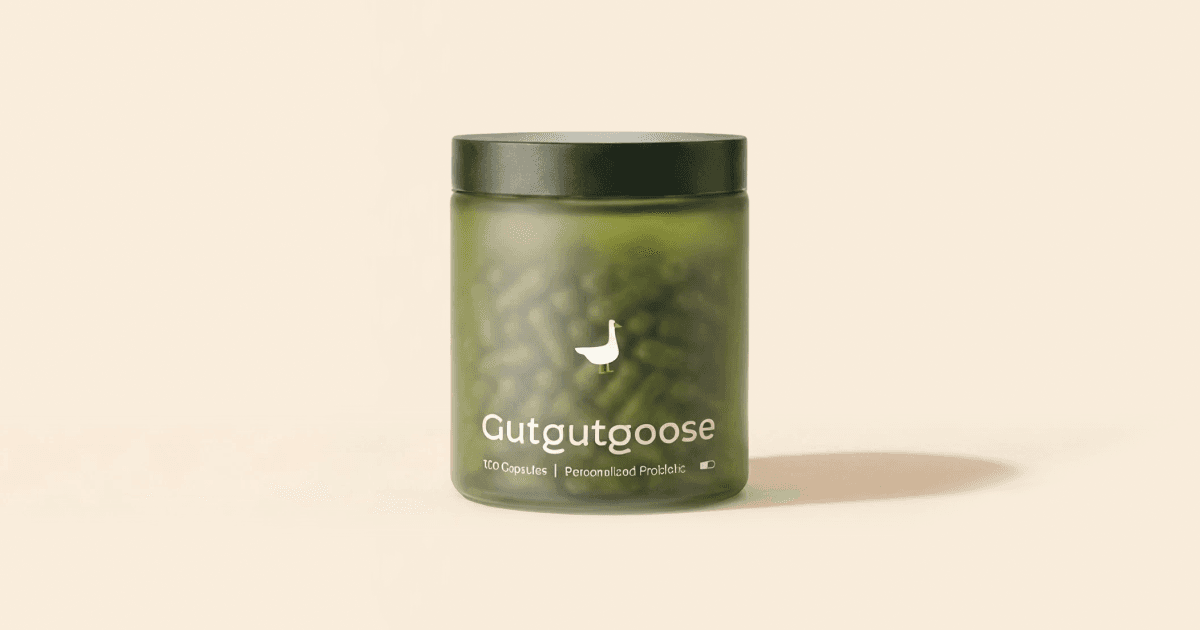
The probiotic aisle is a monument to averages. Every bottle promises billions of CFUs, but those numbers are counted at the factory, not in your gut. Gutgutgoose, a Y Combinator-backed startup, is trying to replace that guesswork with a sequencing-first approach: map your microbiome, model which strains can actually survive there, and compound a formula just for you. But the most interesting part isn't the personalization—it's the 90-day retest that checks whether anything actually colonized. That's a level of accountability the supplement industry has never offered.
The probiotic industry's dirty secret: CFU counts measure the factory, not you
Gutgutgoose's website doesn't mince words: "CFU counts what's alive when the bottle is filled, not what's alive when it reaches your gut, and nothing at all about what establishes there." That's a direct challenge to every label that boasts 50 billion organisms. The company's argument is simple: those numbers are a proxy for manufacturing quality, not efficacy. A capsule full of bacteria that can't survive your gut's specific environment is just expensive waste.
This is the core problem Gutgutgoose is attacking. Generic probiotics are built for an "average gut"—a statistical fiction. The ecosystem inside you is unique, shaped by diet, genetics, medications, and health history. A fixed blend might work for some, but for many it passes through without colonizing. The company's framing is blunt: "It's not a bad product. It's bacteria arriving somewhere they can't live."
Sequencing first: how a 300-strain map becomes an 8-to-20-strain formula
Gutgutgoose's process starts with a stool sample. The company sequences it to identify which of 300+ bacterial strains are present and at what levels. But that's just the first layer. They also read your gut's metabolic pathways—400 to 700 of them—to understand not just who's there, but what they're doing. This isn't a one-dimensional snapshot; it's a functional map.
From that map, they build a model of your gut and run "millions of simulations" to test which strains can actually survive and thrive in your specific environment. The ones that can't grow never make it into your bottle. That's how 50 candidate strains get whittled down to a custom blend of 8 to 20, with doses tailored to your needs. It's a stark contrast to the one-size-fits-all approach, and it's backed by the claim of "16× greater average colonization" compared to generic probiotics—a figure that, while not independently verified, signals the company's focus on measurable outcomes.
Why 'compounded for you' beats 'same blend for everyone'
The word "compounded" is deliberate. It's borrowed from pharmacy, where medications are mixed specifically for an individual patient. Gutgutgoose applies that logic to probiotics. Your formula isn't picked from a menu; it's built from six inputs: your sequencing, your metabolic pathways, your real diet, your health history, your medications, and—if you're a returning customer—your last retest results.
This is where the personalization gets genuinely interesting. The company doesn't ask you to change your diet; it builds the formula around what you already eat. It considers your medications, because some strains can interact with them. And it excludes strains that your health history suggests might cause problems. The result is a formula that's not just personalized in name, but in mechanism.
The 90-day retest: a money-back guarantee with teeth
Here's the part that separates Gutgutgoose from every other supplement subscription. At day 90, you send in a second sample. The company sequences it again and compares it against your baseline: what colonized, what didn't, what changed. If nothing colonized—or you didn't feel any different—you get your money back, provided you actually took the capsules and did the retest.
This is a radical departure from the industry norm. Most brands ask how you feel; Gutgutgoose tests again. The 180-day money-back guarantee isn't just a marketing gimmick—it's a verification loop that forces the company to prove its product works, or refund you. It also creates a feedback mechanism: your second formula is built from what your first retest revealed, so the product evolves with your gut. The company claims this approach leads to "31x longer-lasting" effects, another bold figure that underscores their confidence in the model.
The price of personalization: $183/month and a US-Australia focus
All this science comes at a premium. The "COMPLETE" plan runs $183 per month (billed as three payments), which includes 100 capsules, a retest kit every cycle, and a specialist who has already read your results. The "STARTER" plan is $93 per month, with a retest at day 180 instead of 90. Both auto-renew every 90 days and can be paused anytime.
That's a significant investment compared to a $20 bottle of generic probiotics. But Gutgutgoose is positioning itself as a medical-grade intervention, not a commodity. The pricing also reflects the cost of sequencing, modeling, and compounding—services that don't exist in the traditional supplement supply chain. Currently, the service is only available in the US and Australia, with a waitlist for other countries. That geographic constraint is a reminder that this is a young company, still scaling its operations.
Gutgutgoose's bet is that consumers are tired of guessing. The company is asking them to trust a process, not a label—and then proving it with data. If the 90-day retest becomes the industry standard, the probiotic aisle will never look the same.