OpenSpace
OpenSpace turns agent tasks into versioned, shareable skills—a skill management layer for AI agents.
NewName Editorial
Editorial Team


The AI agent stack is missing a layer. We have models, orchestration frameworks, and evaluation harnesses, but almost nothing that captures what an agent learns as it works. OpenSpace, an open-source project from HKUDS, is trying to fill that gap with a "skill management layer"—a system for organizing, versioning, and sharing the skills your agents develop. It's a bet that the real value of agents isn't in the model weights but in the accumulated knowledge of every task they've completed.
The Missing Layer in the Agent Stack
When an agent solves a problem—say, fixing a bug or generating a report—it often does so through trial and error. The successful approach, the prompt tweaks, the tool calls that worked: all of that is tacit knowledge. In most setups, it evaporates. The agent moves on, and the next agent starts from zero. OpenSpace's premise is that this knowledge should be captured, versioned, and reused, turning every task into a building block for the next.
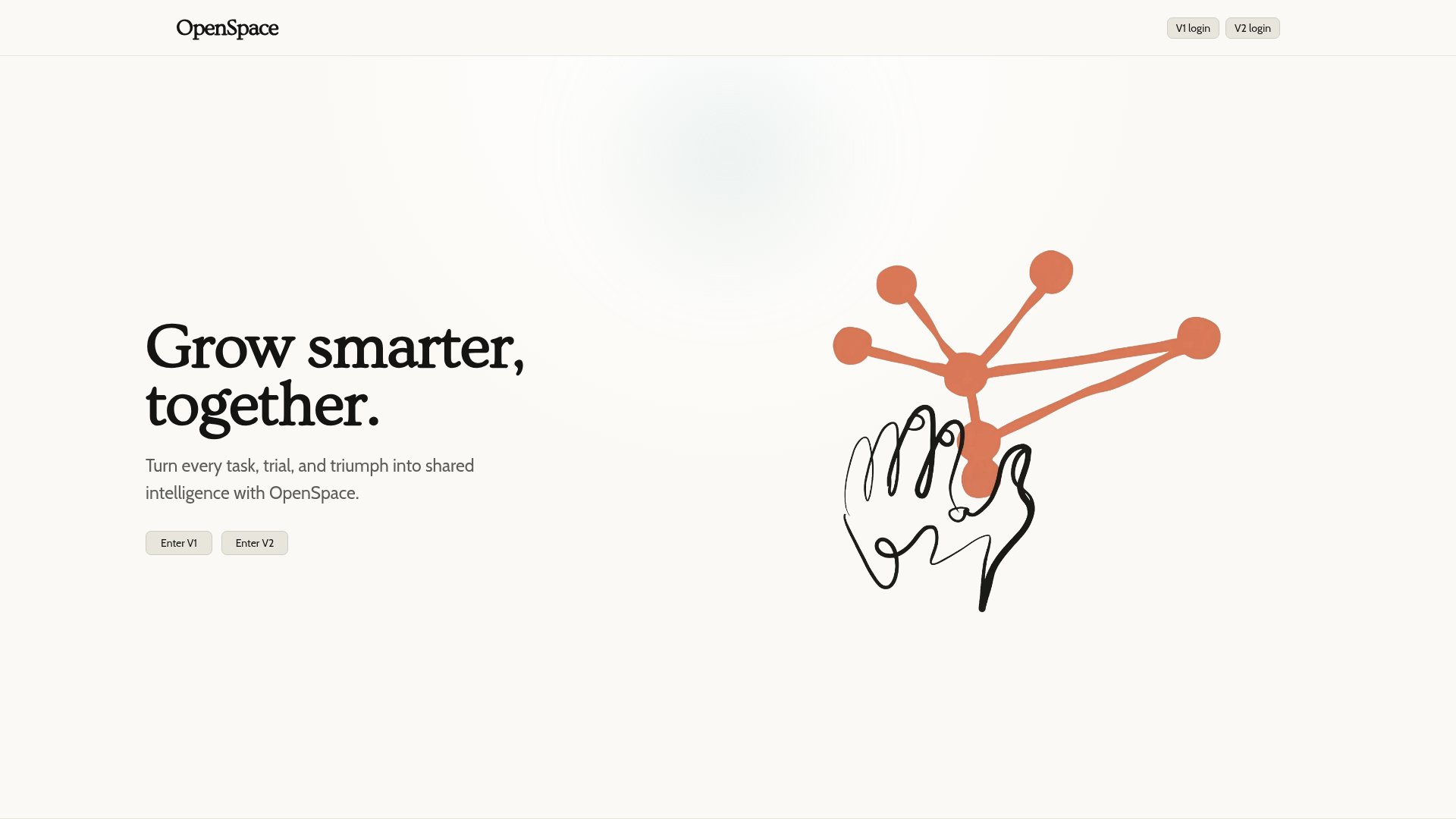
The landing page makes the promise explicit: "Every task makes your agents smarter. Better output, fewer tokens—that's the deal." That's a compelling value proposition: not just better results, but cheaper ones, because the agent isn't re-discovering what it already knew.
From Task Logs to Versioned Skills
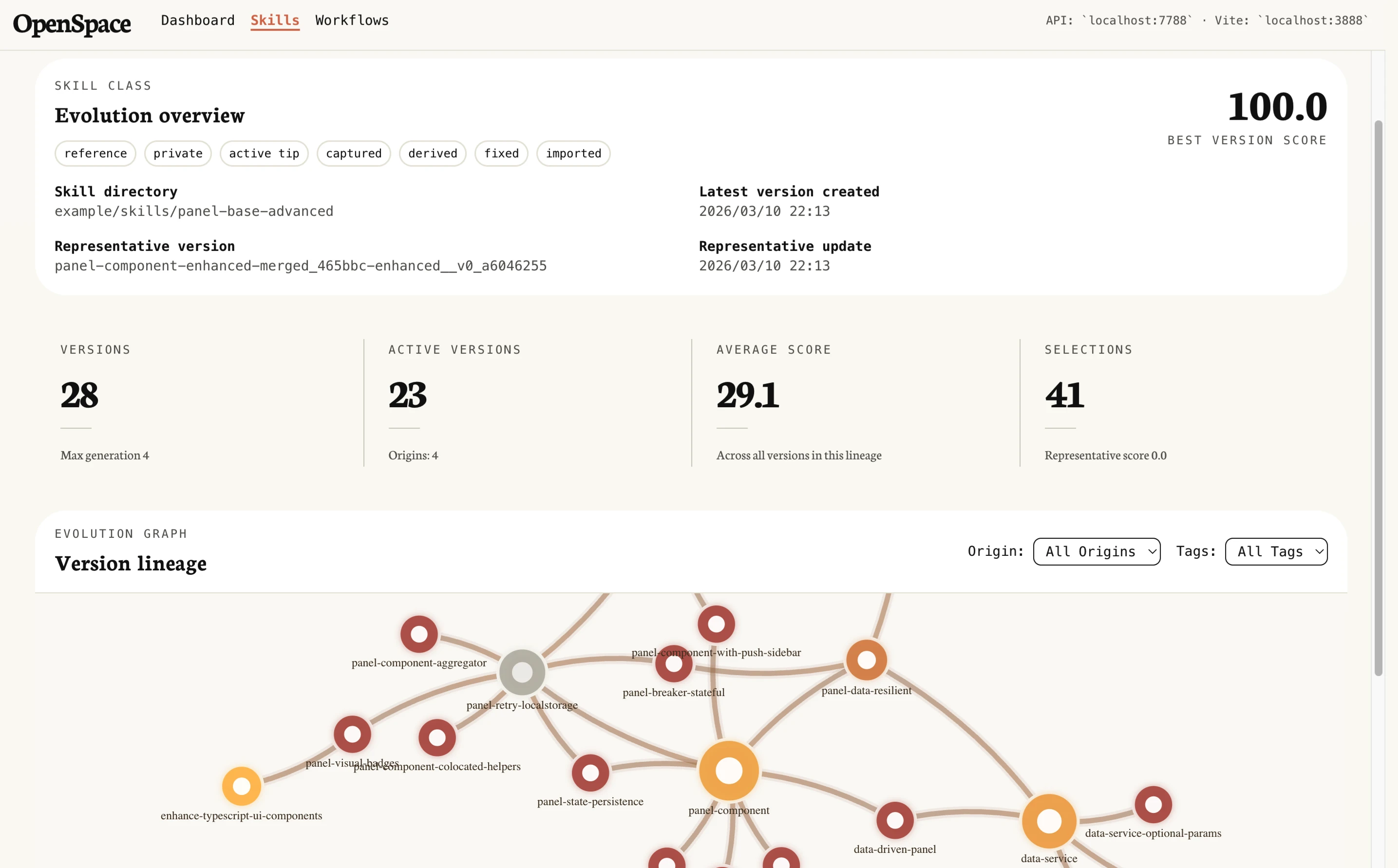
OpenSpace's core mechanism is the "skill"—a captured unit of agent behavior. The platform records what an agent did, tracks how that skill evolves over time, and presents it in a lineage view. You can see scores, versions, and the ancestry of a skill, much like a code repository but for agent behavior.
The "Track Evolution, Line by Line" feature shows unified diffs of skill upgrades, allowing you to review changes without losing context. This is a developer-tool sensibility applied to agent knowledge: version control for skills. It's a smart move, because it makes the abstract concept of "skill management" concrete and reviewable.
There's also a "My Daily Monitor"—a zero-human-code, real-time dashboard generated entirely by OpenSpace that unifies developer workflows, live data streams, and an AI assistant onto a single screen. This suggests OpenSpace is not just a passive recorder but an active workspace where you can see your agents' progress at a glance.
The Community as a Shared Brain
OpenSpace isn't just about individual agents; it's about collective intelligence. The platform encourages sharing captured records and skills into group channels, turning individual wins into team assets. The tagline "Don't evolve alone" underscores this: intelligence grows best when shared.
The site invites users to "step inside and connect your agents to the collective wisdom of the community." This is a bold vision: a public library of agent skills, where you can borrow what others have learned. It's reminiscent of open-source software, but for agent behavior. If it works, it could reduce the duplication of effort across teams and organizations.
However, this also raises questions. How do you ensure quality? How do you handle skills that are specific to a particular context or domain? The platform's versioning and scoring systems may help, but the community aspect is still nascent.
What the Name Signals—and What It Hides
The name "OpenSpace" is evocative but generic. It suggests openness and space—room to grow, share, and explore. It aligns with the project's open-source nature and its community ambitions. But it doesn't immediately convey "skill management for AI agents." The tagline does that work, but the name alone could apply to a coworking space or a data storage product.
The domain open-space.cloud is clean and memorable, though the hyphen is a minor friction. The branding uses a claw hand image, which hints at the agentic, tool-using nature of AI agents, but it's an abstract symbol that may not be instantly decipherable.
There's also a V1 and V2 split on the site, with separate login portals. This suggests the product is still evolving, and the team is iterating on the user experience. It's a sign of a project in flux, which is common for early-stage tools but could confuse newcomers.
Open Questions: Trust, Governance, and the V1/V2 Split
OpenSpace's ambition is clear, but several questions remain. First, how does it ensure the quality of community-shared skills? Without curation, the library could become a dump of half-baked experiments. The versioning and scoring systems help, but they rely on user feedback and adoption.
Second, governance: who decides what skills are canonical? How do you handle conflicts when two skills claim to solve the same problem? These are social and technical challenges that OpenSpace will need to address as it grows.
Third, the V1/V2 split is a red flag for polish. The site offers two entry points, which suggests the team is testing a new version but hasn't fully migrated. This is fine for an early-stage project, but it could undermine trust if not resolved soon.
For developers building AI agents, OpenSpace is worth watching. It addresses a real pain point—the ephemerality of agent knowledge—and offers a concrete mechanism for capturing and sharing it. The community angle is a differentiator, but it's also the riskiest part. If OpenSpace can build a trustworthy, high-quality skill library, it could become an essential part of the agent stack. If not, it may remain a niche tool for early adopters.
Either way, OpenSpace is asking the right question: what happens to what your agents learn? The answer could shape how we build and scale AI systems.