Impact-Site-Verification: 41b53a0c-6d04-458b-a457-fe9e29acde1a

AI & Machine Learning·Unknown··5 min read

Photo2Video

Every top AI video model, one anonymous pay-per-video generator—turn stills into motion in seconds.

NN

NewName Editorial

Editorial Team

Photo2Video product image 1
Photo2Video product image 2

The AI video generation market has a dirty secret: no single model is the best at everything. One model nails photorealistic product spins, another excels at lip-sync, a third handles cinematic camera moves. Creators who want the best result for each shot end up juggling multiple subscriptions, multiple interfaces, and multiple credit systems. Photo2Video's answer is to skip the loyalty question entirely. Instead of betting on one model, it aggregates them all—Seedance, Kling, Wan, Veo, Sora 2, and a dozen others—behind a single, anonymous, pay-per-video interface. It's a model-agnostic bet that turns the chaotic model landscape into a creative menu.

The Model-Agnostic Bet: Why One Video Generator Isn't Enough

The homepage doesn't mince words: "The AI photo to video generator with every top model." That's not a tagline; it's a positioning statement. Photo2Video lists at least a dozen models, from Seedance 2.0 and MiniMax H3 to Kling 3.0, Wan 2.7, Vidu Q3, and even Sora 2. Each model card highlights a specific strength: Seedance 2.0 for "fashion-grade, ultra-realistic product motion," Kling 3.0 for "native lip-sync and multi-shot storyboarding," Wan 2.7 for "precise product rotations and directed shot pacing." The implication is clear: you shouldn't have to choose one model and live with its weaknesses. Instead, you pick the right tool for each shot, like a photographer choosing lenses. This is a departure from the typical AI video tool that locks you into a single model's aesthetic. Photo2Video's bet is that creators will pay for flexibility, not loyalty.

From Still to Motion: What Photo2Video Actually Automates

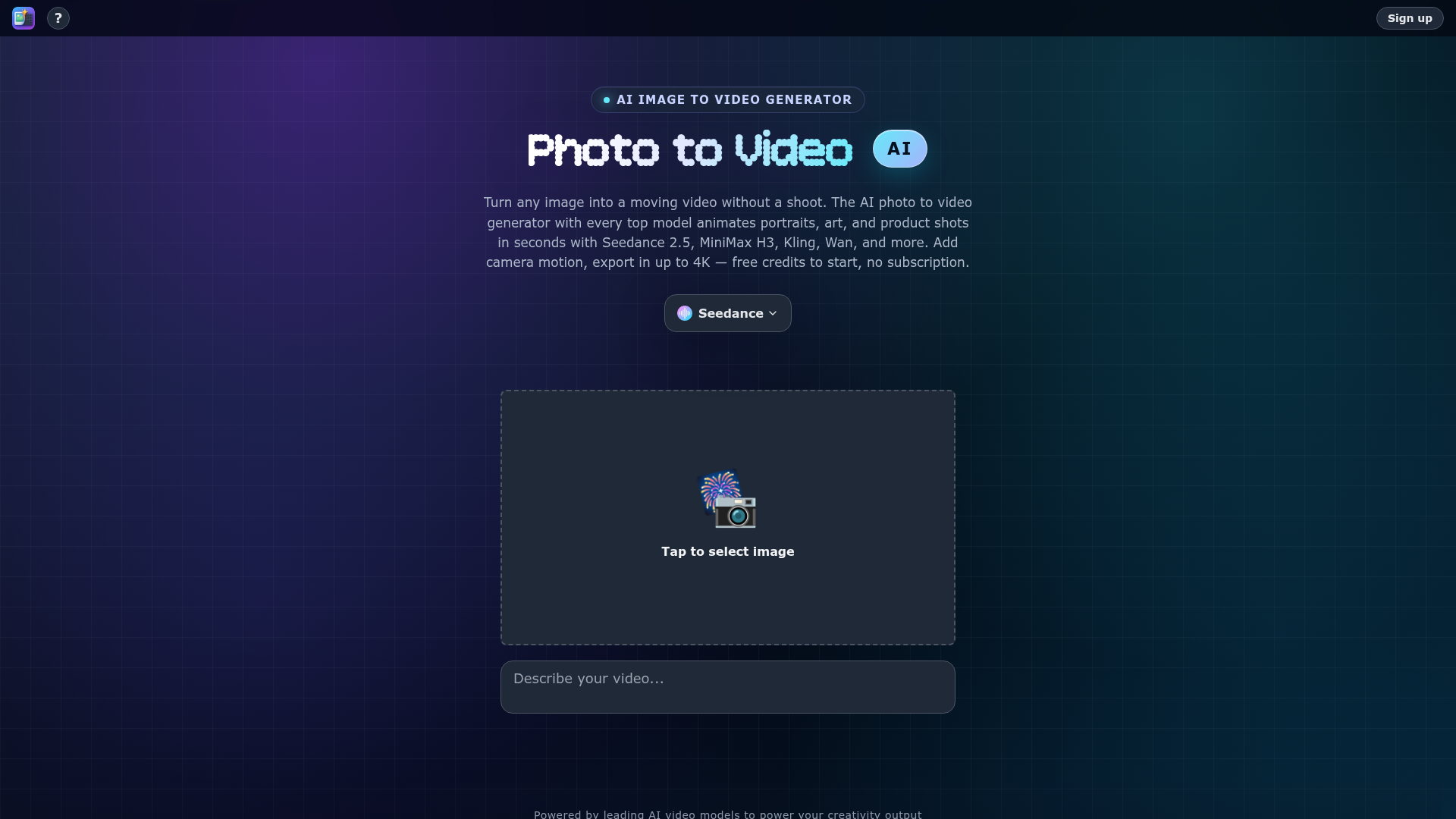
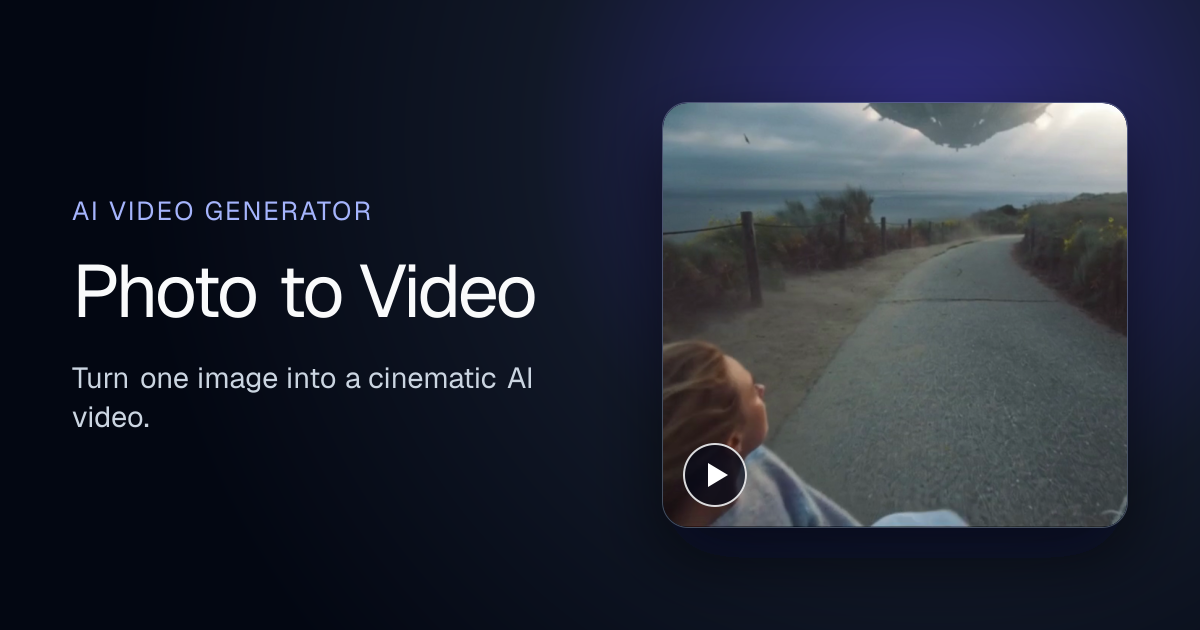
The core workflow is deceptively simple: upload an image, pick a model, and get a video. But the site emphasizes that it's not just about adding motion—it's about preserving fidelity. "Reference images guide the look, so every video matches your vision with no shoot." The product animates portraits (making faces blink and smile), artwork (adding gentle motion), and product shots (spinning to show every angle). The showcase images—a woman on a coastal road, a portrait with wind-blown hair, trail runners on a dune—all come with credits to the original photographers, suggesting a focus on real-world use cases. The site also mentions an "AI 360 Spin from Image" feature, which rotates a subject on a clean loop, built for e-commerce listings. This isn't just a novelty; it's a practical tool for marketers who need product videos without a studio.

The Camera in Your Pocket: Directing Motion Without a Timeline

One of the most interesting sections is about camera control. Photo2Video promises "a real camera, not a guess." You can direct a snap push-in, a hero close-up, or an orbit, and even brush the exact detail you want to highlight. You can add handheld energy or lock the frame off. This is a significant step beyond simple image-to-video animation, which often just adds subtle movement. The ability to control camera motion—pans, zooms, orbits—gives creators a level of direction that was previously the domain of traditional video editing. The site also mentions uploading up to eight reference images to maintain shape, color, and composition across shots, enabling multi-shot sequences that stay seamless. This suggests a workflow that goes beyond a single clip, potentially for short narratives or product showcases.

Pay-Per-Video and the Anonymous Creator: No Sign-Up, No Subscription

The pricing model is another deliberate counterpoint to the subscription-heavy AI industry. Photo2Video offers free credits to start, with no sign-up required. You can try it anonymously, and when you run out, you pay per video. This is a low-friction entry point that removes the commitment barrier. It also aligns with the aggregator approach: if you're not tied to a subscription, you're free to use the best model for each job without worrying about wasting credits on a model that doesn't fit. The site explicitly says "No subscriptions. No timeline editing." This is a bold claim in a market where most tools require a monthly plan. It positions Photo2Video as a utility, not a platform—you pay for what you use, like electricity. This could appeal to freelancers and small businesses who need occasional video generation without a recurring cost.

The Name as a Category Statement: 'Photo2Video' and the Aggregator's Dilemma

The name "Photo2Video" is functional to a fault. It describes exactly what the product does, but it also undersells the ambition. The site is not just a photo-to-video converter; it's a multi-model aggregator with advanced camera controls. The name is a double-edged sword. On one hand, it's instantly clear and SEO-friendly—someone searching for "photo to video" will find it. On the other hand, it doesn't convey the model-agnostic angle or the creative control. The domain photo2video.ai reinforces the simplicity, but it also makes the product sound like a basic utility. This is a classic aggregator dilemma: do you name yourself after the category (like "Photo2Video") to capture search traffic, or do you invent a brand that suggests more? The site seems to have chosen the former, betting that clarity wins over distinctiveness. It's a risk, but one that could pay off in a crowded market where users are searching for a simple solution.

What's Missing: The Open Questions Behind the Hype

Despite the impressive feature list, there are gaps. The site doesn't disclose pricing details beyond "free credits" and "pay per video." It's unclear how much each video costs, whether there are different tiers for different models, or if 4K export is available on all models. The company behind it, Joseph Works Limited, is not a well-known name, and there's no information about funding or team. The site also lists models that are not yet public—like Seedance 2.5 and Sora 2—which raises questions about whether these are actually available or just marketing. The "no sign-up" claim is also nuanced: you can start anonymously, but to keep your videos or access advanced features, you'll likely need an account. These open questions don't undermine the core value proposition, but they suggest that Photo2Video is still evolving. For now, it's a promising aggregator that could become a go-to tool for creators who want flexibility without commitment. The question is whether the simplicity of the name and the model can sustain it as the AI video landscape continues to shift.