PokerJudge
A mobile-first poker study suite betting on AI coaching over HUD overlays.
PokerJudge
Submitted by the team
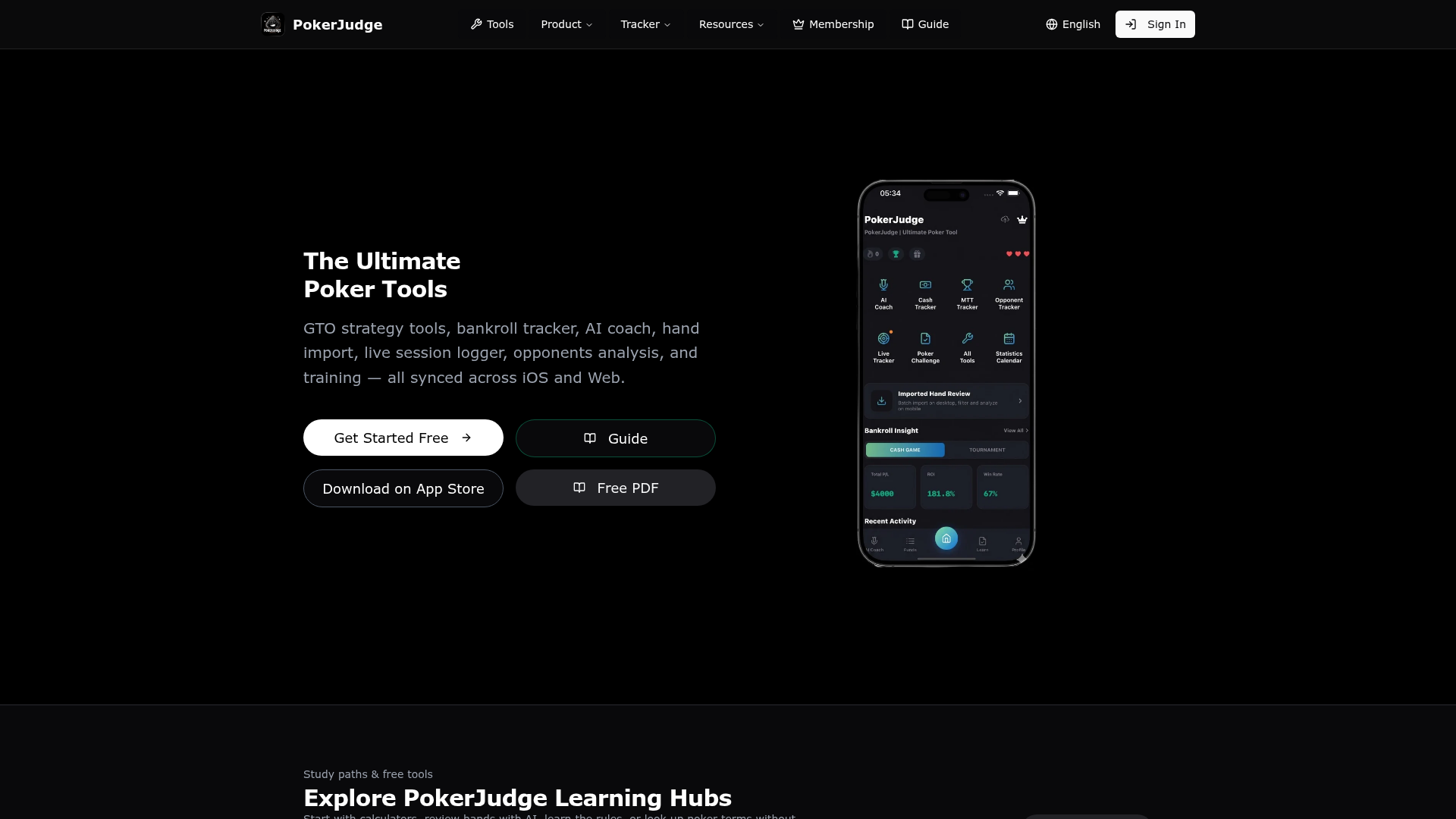
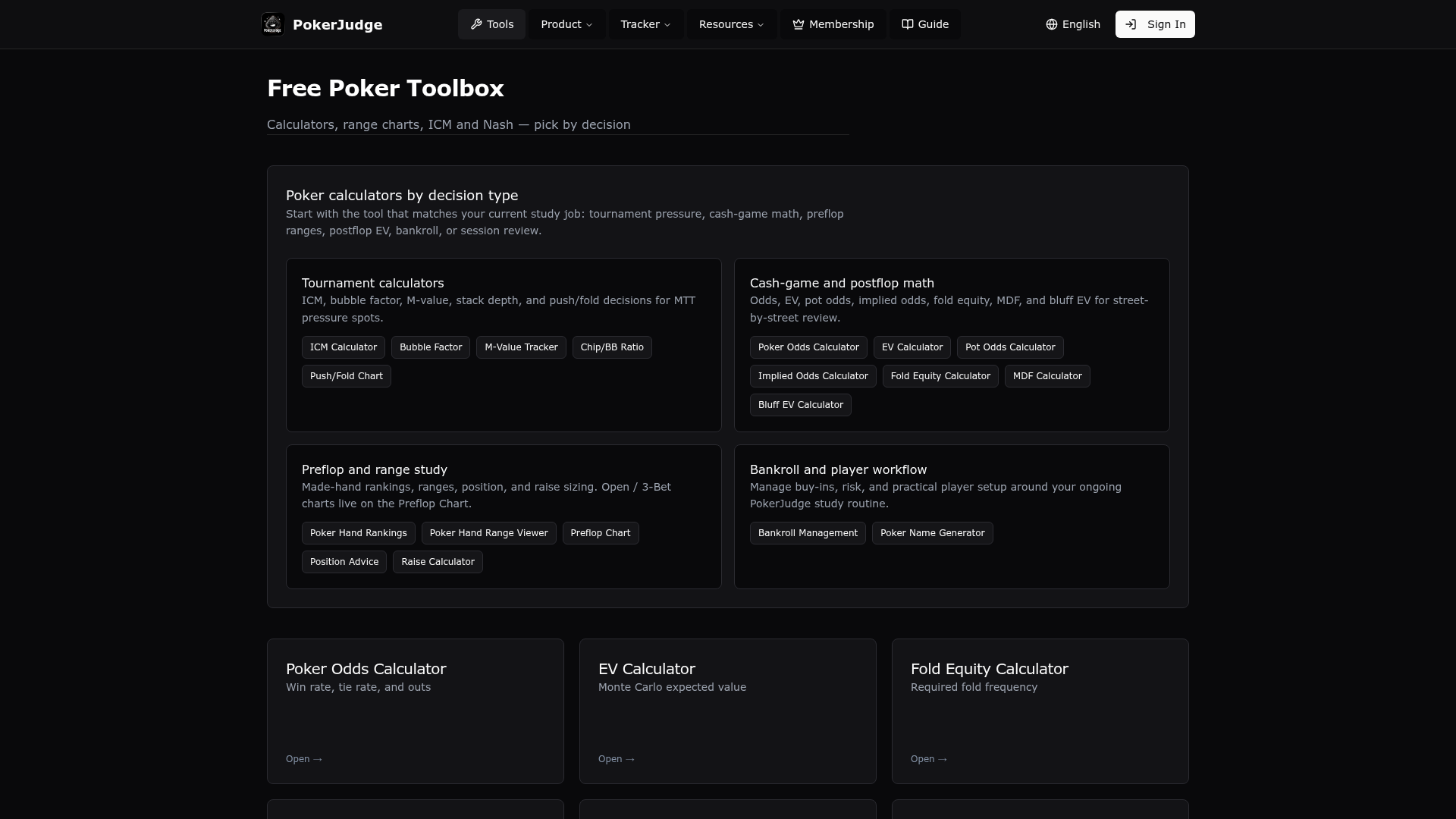
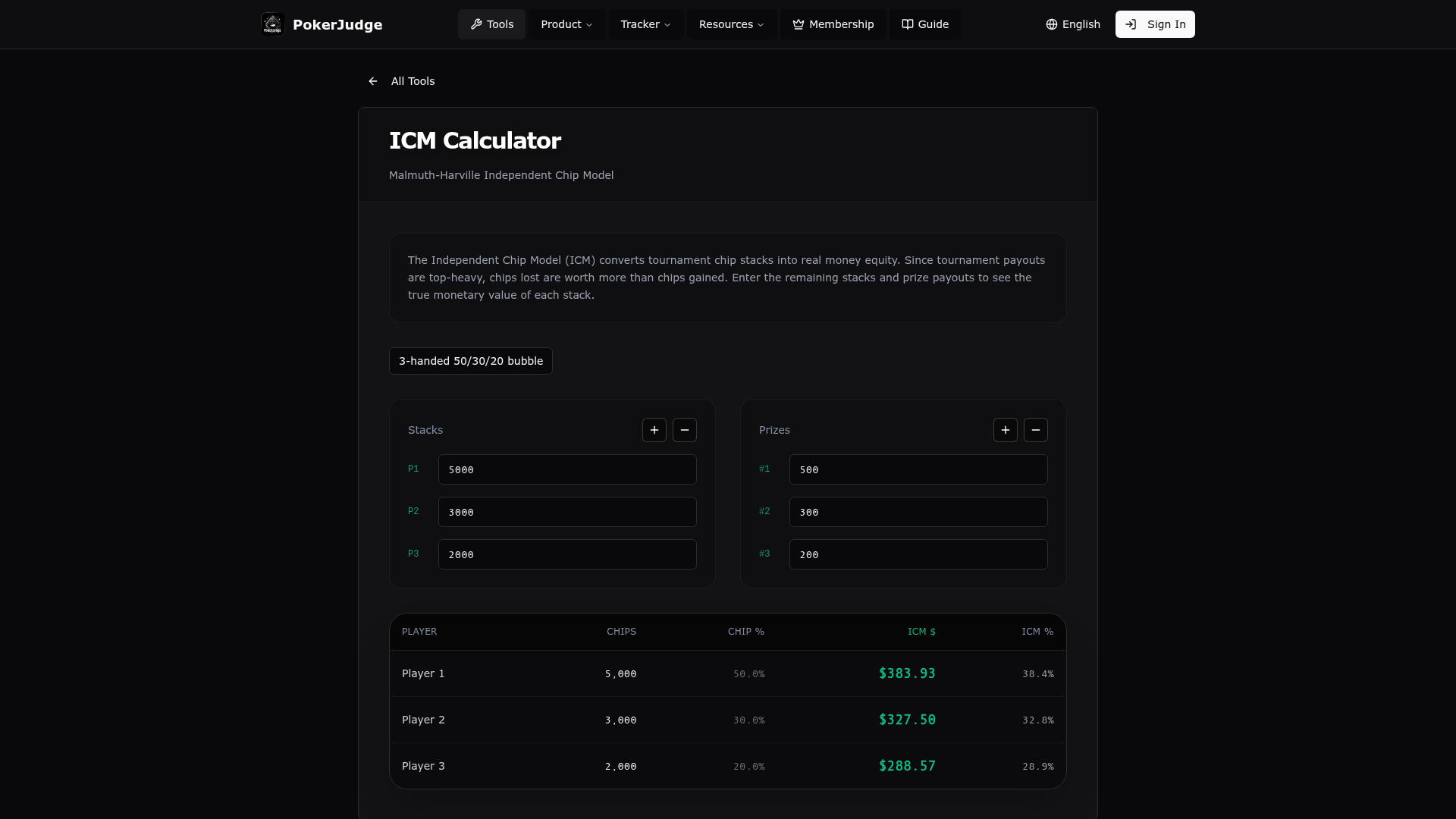
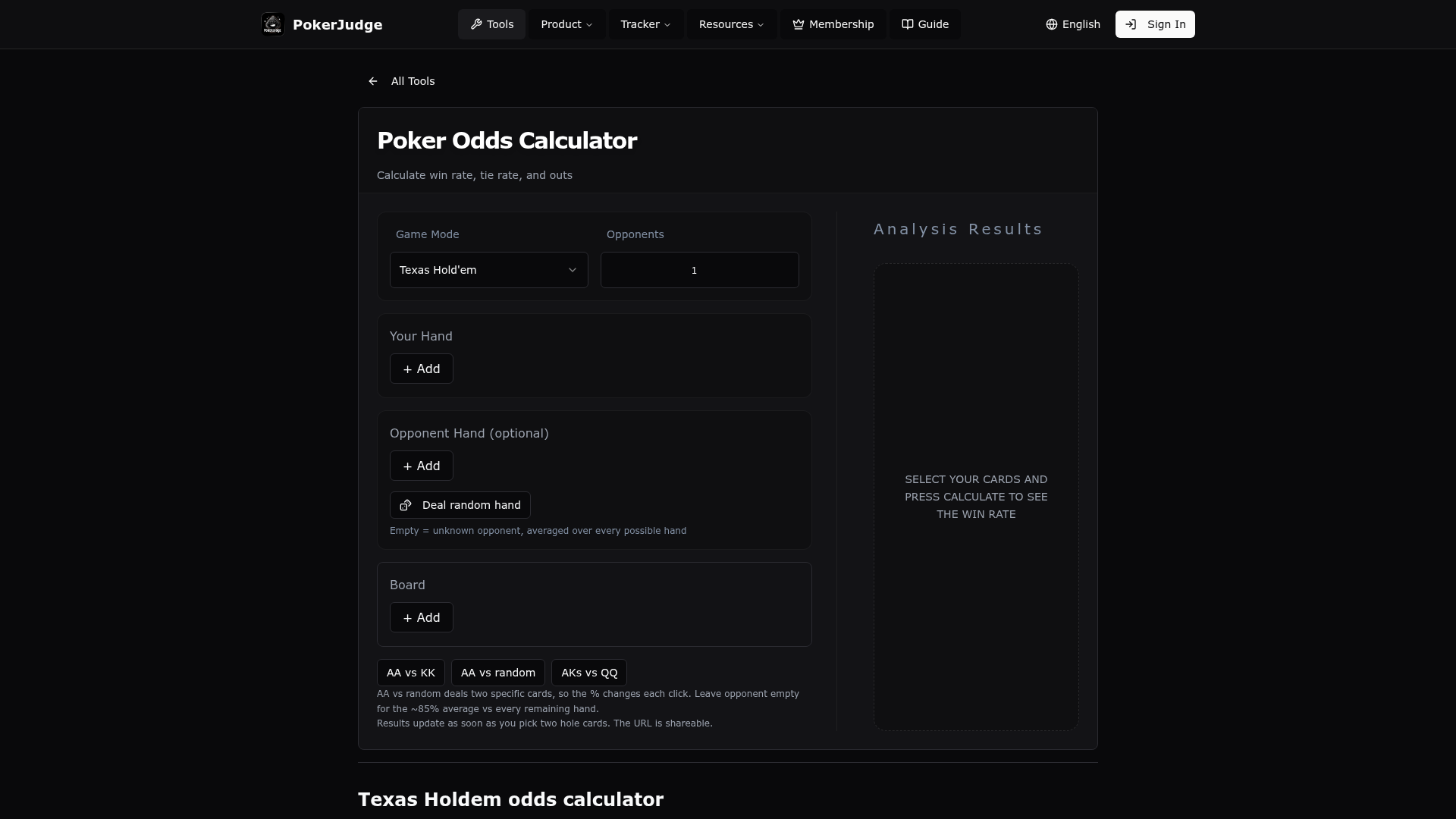
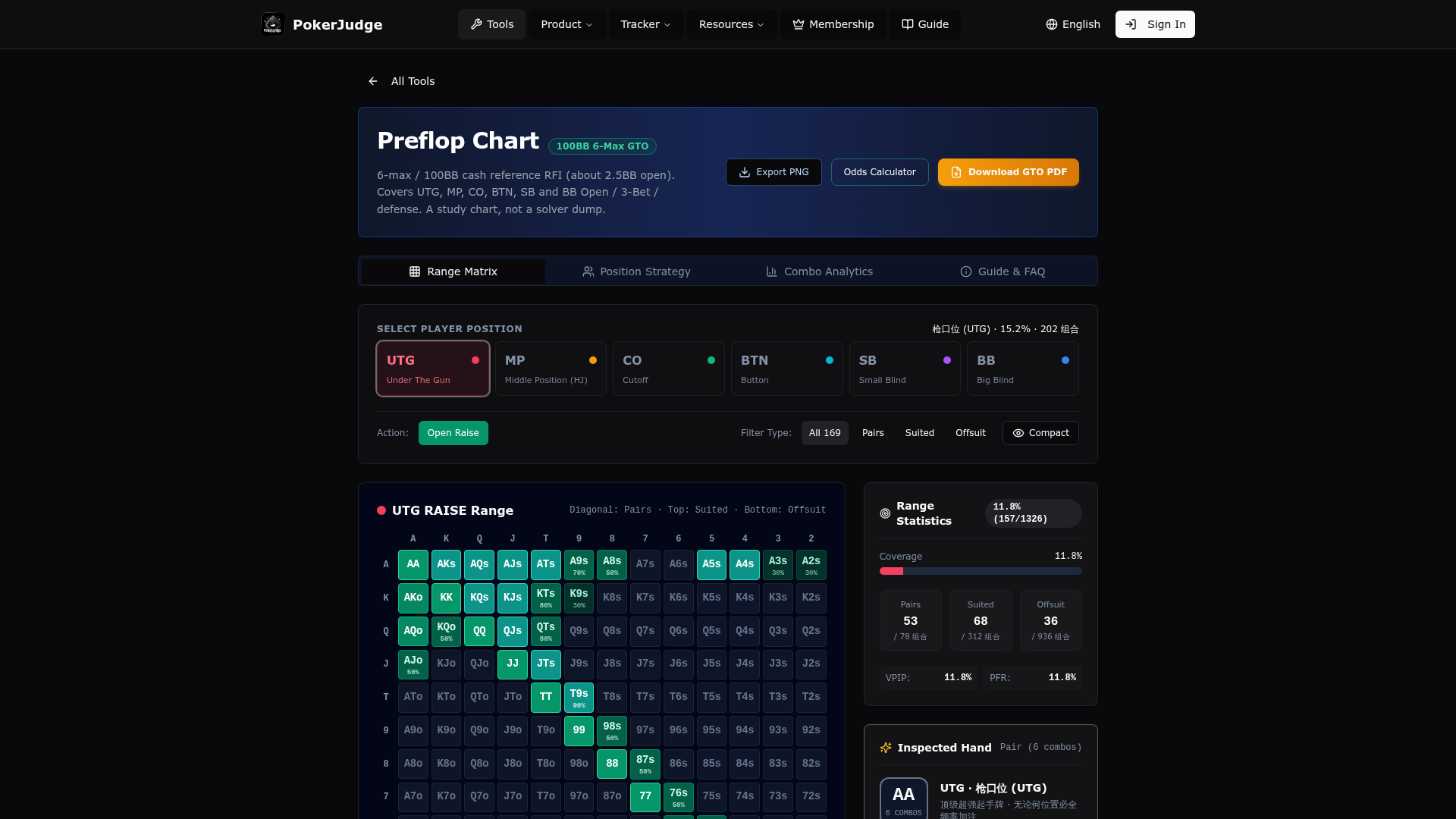
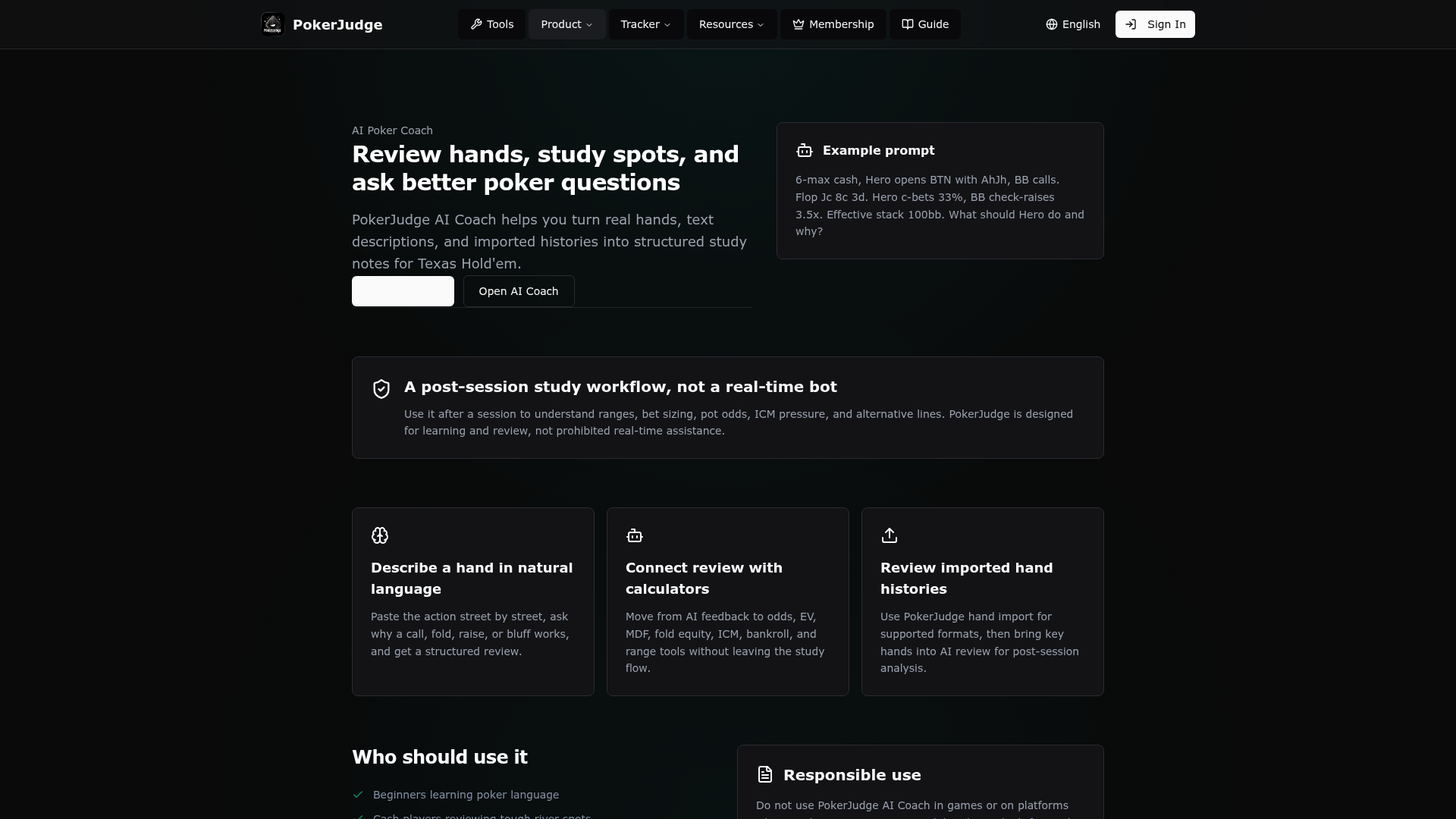
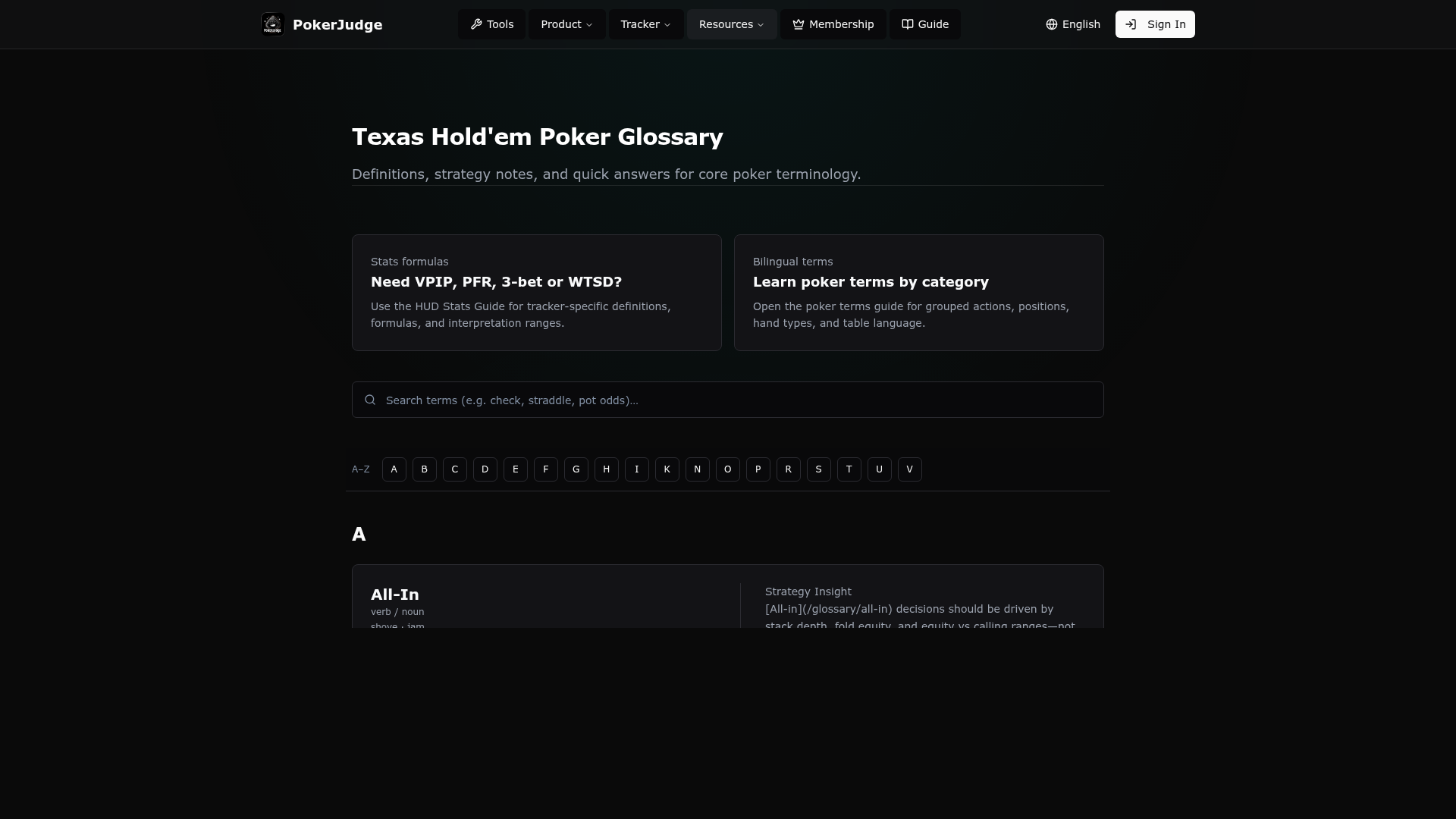
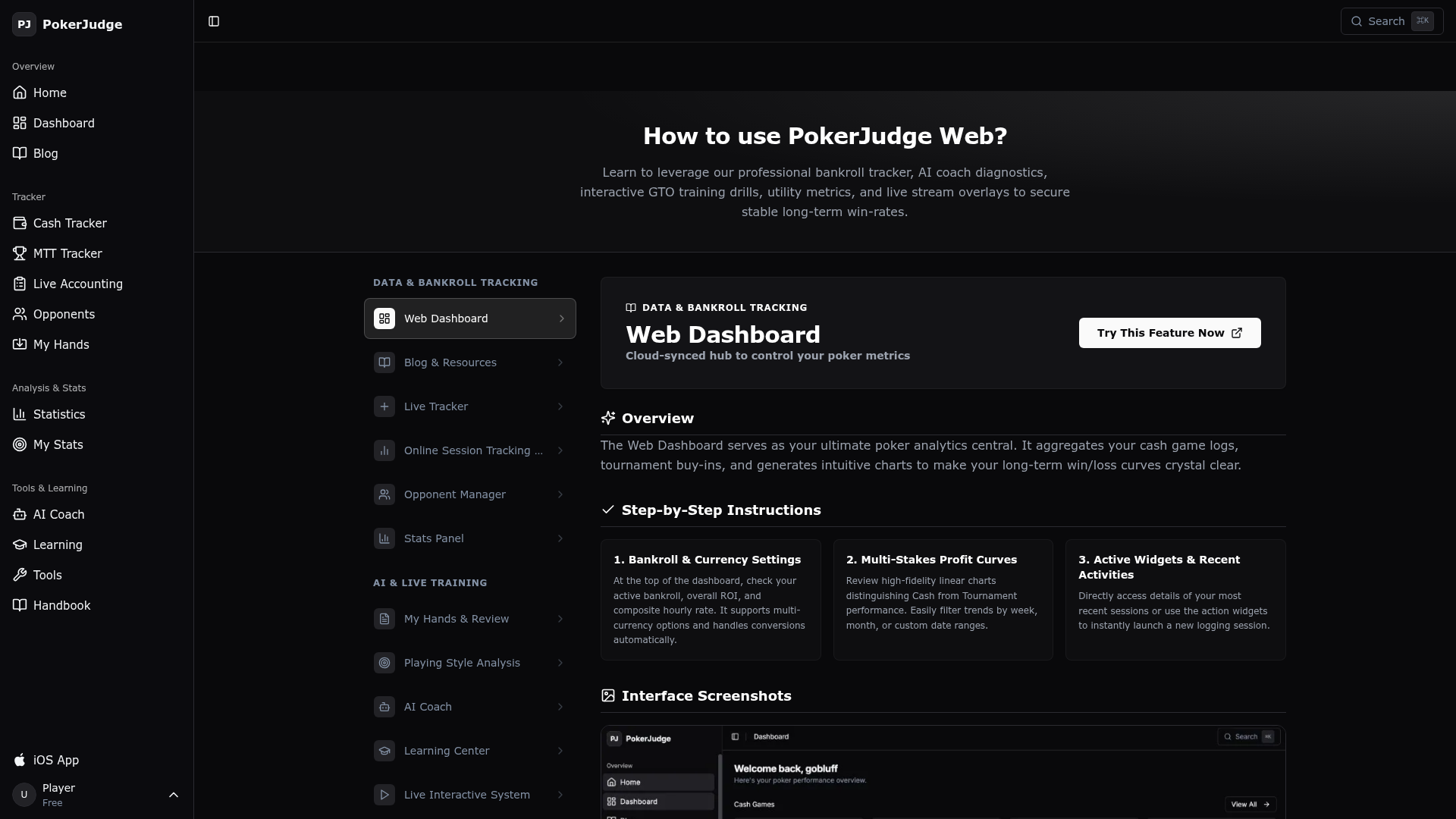
The poker software market has been organized around a single assumption for two decades: serious players study on a desktop, with a HUD overlay running live on their tables and a solver crunching postflop trees in the background. PokerJudge is making a different bet. It ships a free, mobile-first suite — calculators, bankroll tracking, hand import, and an AI coach — and explicitly markets a "HUD alternative" workflow. The strategic question is whether the AI-coach post-session loop can substitute for the live-overlay habit that tools like HoldemManager, PokerTracker, and Hand2Note built their franchises on.
The Desktop Tracker Orthodoxy PokerJudge Is Betting Against
The incumbent workflow is well established. A player installs a tracker, imports hand histories from a supported site, and the software builds a database of opponents. A HUD then surfaces VPIP, PFR, 3-bet, and aggression stats directly on the tables. Solvers such as PioSOLVER and GTO+ sit alongside for deep postflop study, and GTO Wizard has pushed much of that into a browser. The whole stack assumes a PC, a supported room, and a tolerance for setup friction.
PokerJudge inverts the order. Its homepage leads with 18 free calculators, a 169 starting-hand guide, and a learning path — the beginner-to-intermediate on-ramp — rather than database depth. The product is synced across iOS and web, with a live session logger that captures VPIP, PFR, and 3-bet stats manually in real time rather than scraping them from a client. That is a meaningfully different product philosophy: it treats the player's own review discipline as the data source, not the poker room's client.
Why the AI Coach, Not the GTO Calculators, Is the Actual Wedge
Calculators are commodities. Pot odds, ICM, MDF, and push/fold charts are available free across dozens of sites, and PokerJudge's own tools page lists them as a decision-type menu rather than a moat. The differentiated surface is the AI Coach: post-session strategy questions and structured hand review, with daily quotas that scale by tier (3/day free, 10/day Pro, 20/day Ultra).
This is a bet on a specific behavioral shift. Solvers answer "what is the equilibrium play here?" The AI coach answers "why did I lose money in this spot, and what pattern should I fix?" Those are different jobs. The first requires tree-building skill; the second requires only a hand history and a question. If PokerJudge can make the second job good enough, it captures players who would never open a solver — and it does so without touching the live-table overlay that rooms increasingly police.
The No-HUD Positioning and the RTA Compliance Minefield
The company's own blog is unusually direct about the risk it is navigating. A September 2026 post on "When the Vendor Films the Cheat" describes a GTO overlay demoed on an ACR cash table, Moneymaker's public reaction, and ACR's promised lifetime bans — framing real-time assistance (RTA) as the industry's central integrity problem. That is not incidental content. It is positioning. By marketing a "HUD alternative" and a post-session review loop, PokerJudge is staking out the compliant side of a line that is actively being redrawn by operators.
That positioning has a cost. A post-session tool cannot deliver the in-the-moment edge that a HUD provides, so it will not convert the multi-tabling cash grinder who depends on live stats. It also inherits ambiguity: the FAQ asks whether it is allowed to use PokerJudge while playing, which signals that the boundary between "study tool" and "assistance" remains contested. The upside is that if rooms continue tightening overlay rules, the compliant study layer becomes a larger share of the addressable market, not a smaller one.
Freemium Quotas as Strategy: Reading the $0 / $19.99 / $39.99 Ladder
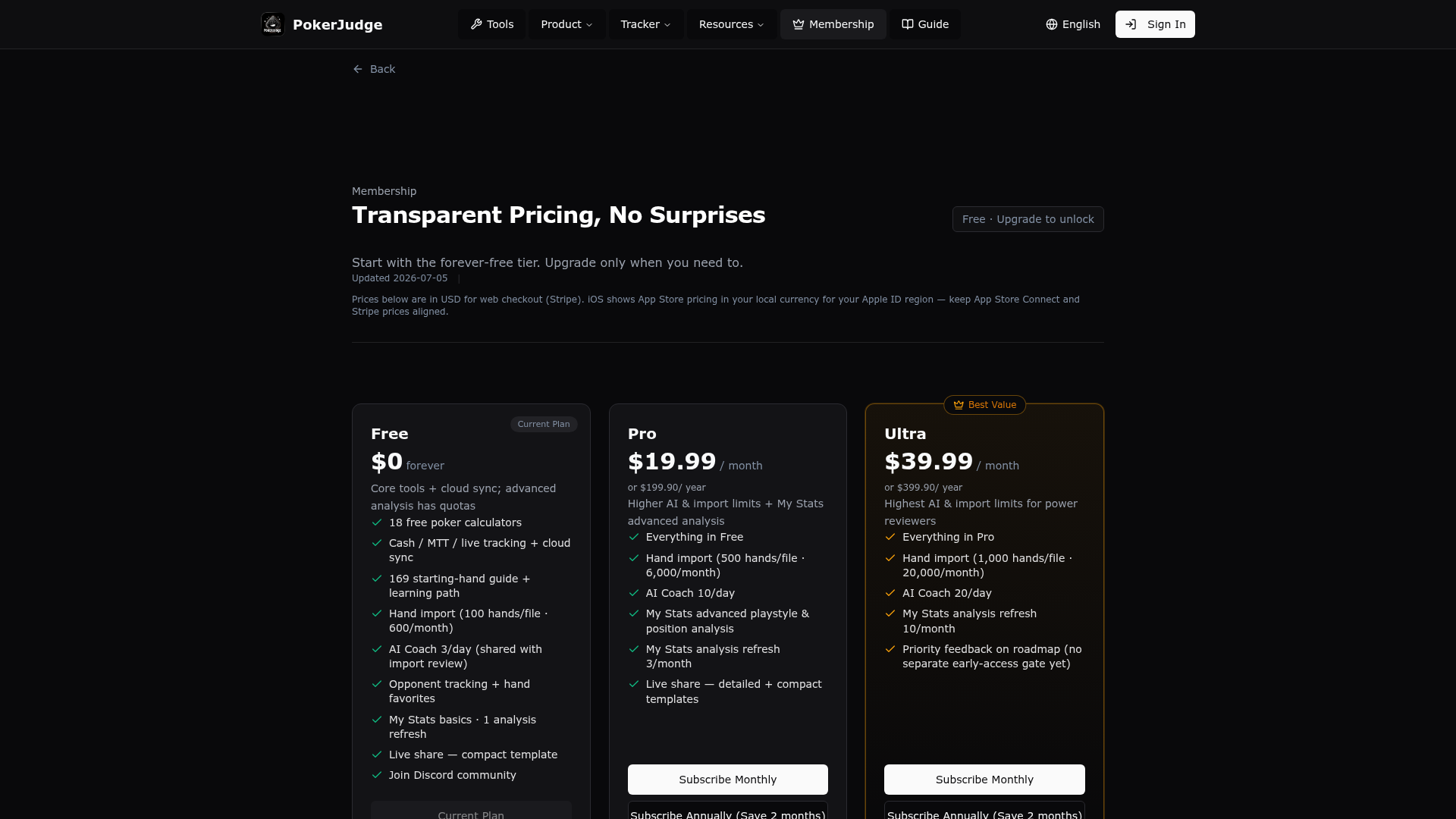
The pricing page is the clearest statement of strategy. Free is not a trial; it is a functional product: 18 calculators, cash/MTT/live tracking with cloud sync, the starting-hand guide, hand import at 100 hands per file and 600 per month, and 3 AI Coach queries per day. Pro at $19.99/month (or $199.90/year) raises import to 500 hands per file and 6,000 per month, AI Coach to 10/day, and unlocks advanced playstyle and position analysis. Ultra at $39.99/month (or $399.90/year) pushes those to 1,000 hands per file, 20,000 per month, and 20 AI Coach queries per day.
The ladder is metered on exactly the two resources that cost PokerJudge money: AI inference and import processing. That is a rational design — it converts the heaviest users into the highest tier without gating the calculators that drive acquisition. The 7-day money-back guarantee and annual discount are standard consumer SaaS mechanics. What is not disclosed is any team, coach, or affiliate plan; the FAQ acknowledges the question but public materials do not show a B2B motion. That absence matters, because coaching marketplaces are a plausible adjacent revenue line the company has not visibly opened.
Competing With Solvers, Trackers, and Free YouTube Coaching
PokerJudge's competitive set is not one product but three. Against desktop trackers, it wins on accessibility and price and loses on database depth and live overlay. Against solvers and GTO Wizard, it wins on simplicity and loses on rigor — an AI coach is not a verified equilibrium engine. Against free content (YouTube breakdowns, Discord study groups, free calculator sites), it wins on integration and loses on price, since free is hard to beat.
The realistic defensible position is the middle: a player who has outgrown free content but will not pay for a solver plus a tracker plus a coaching subscription. Bundling those into one $19.99 tier is the pitch. The risk is that a well-funded incumbent — GTO Wizard already has a browser footprint, and trackers have loyal databases — bundles downward faster than PokerJudge moves upmarket.
What a Consumer Poker Subscription Can Realistically Become
PokerJudge is a consumer subscription business in a niche with a hard ceiling. There is no disclosed funding, no founder information, and no enterprise motion in public materials, which suggests a lean, bootstrapped operation. That is consistent with the product: a free tier that costs little to serve, paid tiers metered on inference, and an App Store distribution channel that avoids the friction of desktop installs.
The next three to five years will test one thing: whether the AI coach becomes genuinely better than a solver for the questions most players actually ask. If it does, PokerJudge owns the mobile-first study layer and can expand into coaching, staking, or affiliate partnerships with rooms. If it does not, it remains a well-executed free toolbox with a modest paid conversion — useful, but not a category. The compliance tailwind is real, but it is a tailwind, not a moat.