PrintyMed
Latvian startup turns lab-grown spider silk into medical devices and cosmetics.
NewName Editorial
Editorial Team
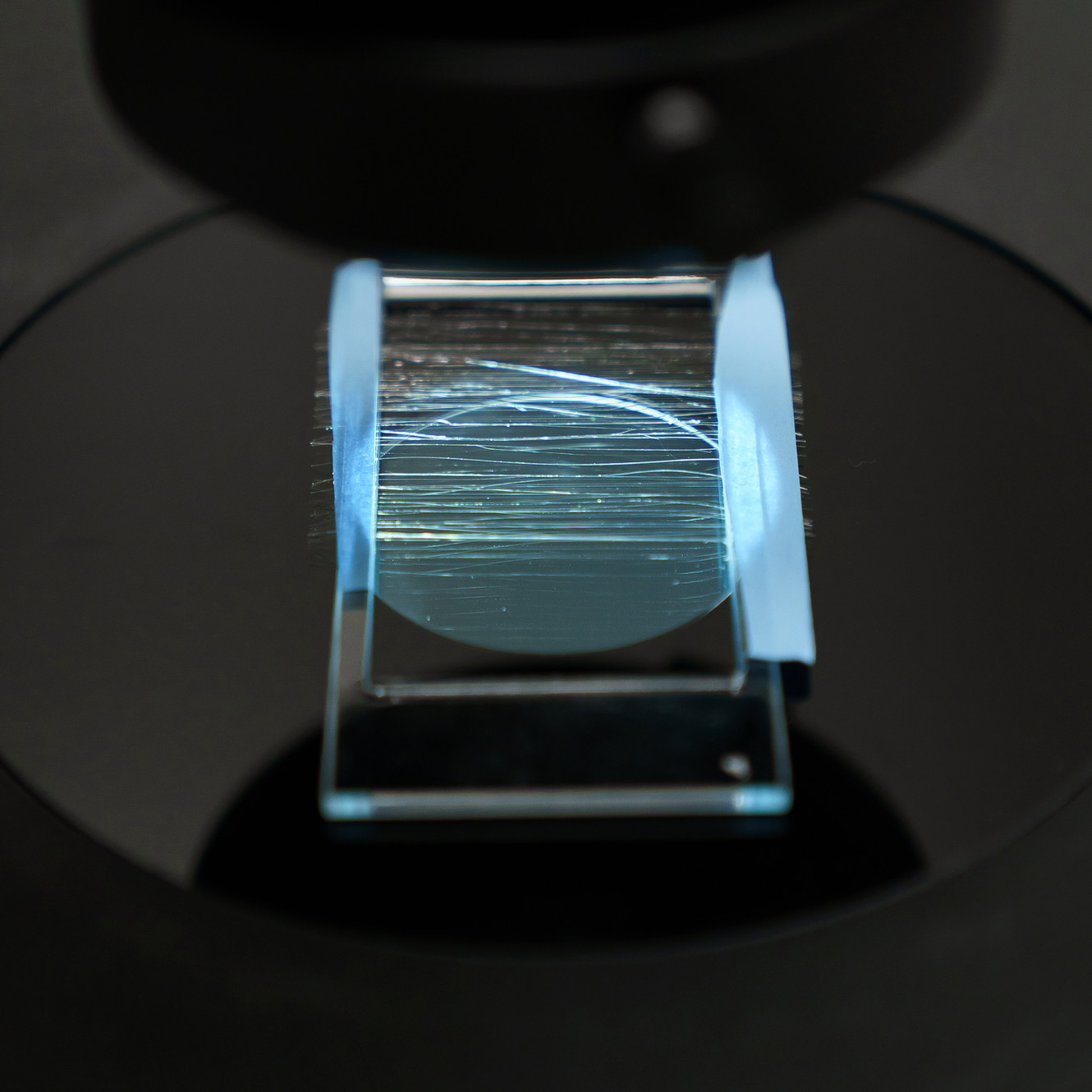
Spider silk is one of nature's most impressive materials—stronger than steel by weight, more elastic than nylon, and biocompatible enough to support cell growth. For decades, scientists have dreamed of manufacturing it at scale, but the spiders themselves are too territorial and too cannibalistic to farm. PrintyMed, a Latvian startup founded in January 2023, thinks it has cracked the code by growing the silk in bacteria, and it is betting that this material can become a platform for everything from organ-on-a-chip membranes to heart valve prostheses.
From a Latvian Lab to a Medical Material
PrintyMed's technology did not start in a garage or a startup accelerator. It emerged from the Latvian Institute of Organic Synthesis, a state-funded research center in Riga with a long history in drug discovery and chemical biology. The institute's spider silk program, led by Prof. Kristaps Jaudzems, has been running for more than a decade, and its researchers have published multiple peer-reviewed papers on the structure and spinning of engineered silk proteins.
The company's intellectual property is built on this academic foundation. PrintyMed licenses the technology from the institute and collaborates closely with its laboratory team. In fact, three of the company's five core team members—CTO Prof. Gints Smits, COO PhD Viktors Romanuks, and founder Prof. Kristaps Jaudzems—are current or former institute scientists. This tight coupling between the startup and the lab is both a strength and a potential constraint: it gives PrintyMed access to world-class research, but it also means the company's fate is tied to the institute's priorities and funding.
The Properties That Make Spider Silk a Medical Material
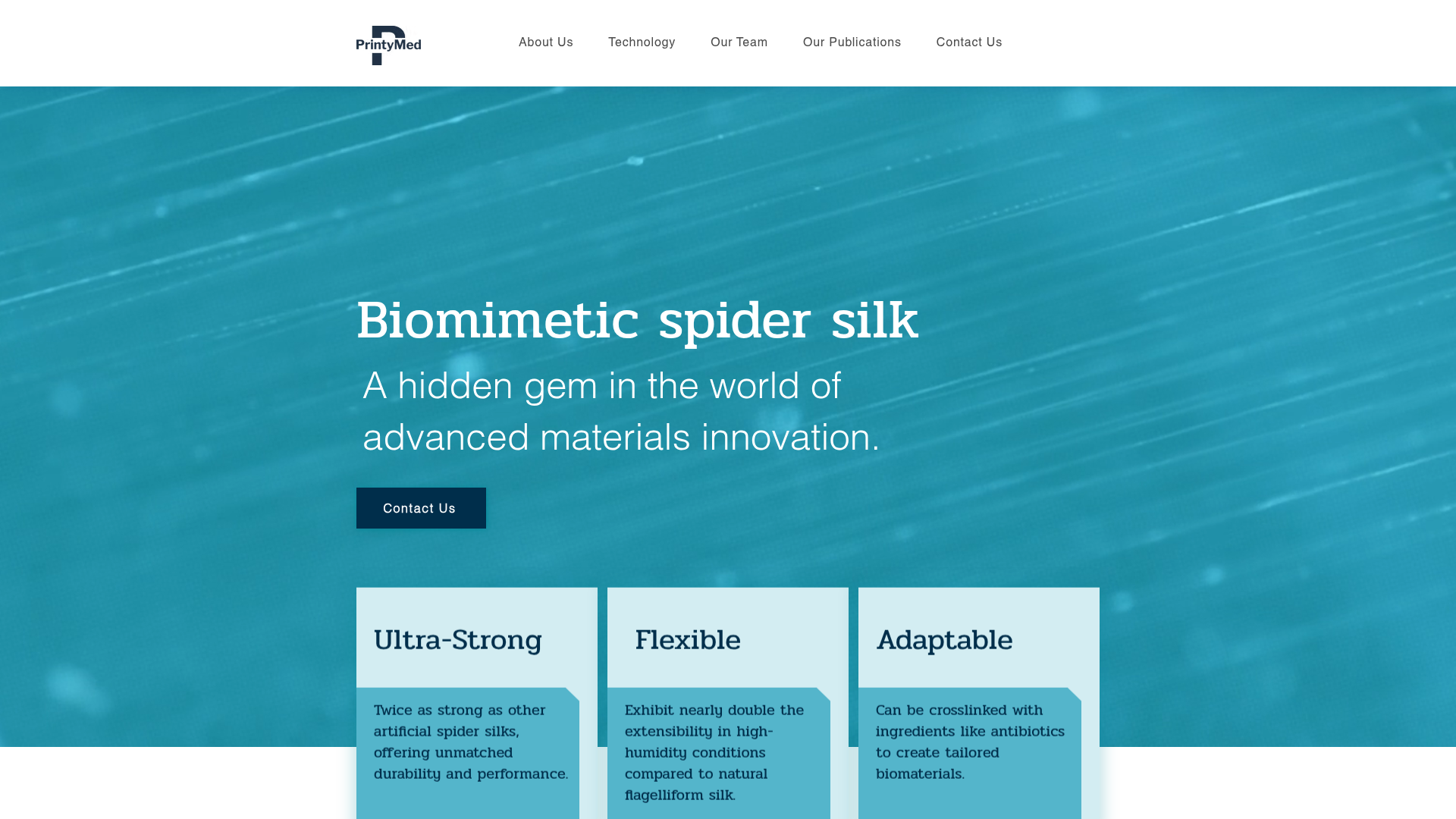
PrintyMed's website makes bold claims about its biomimetic spider silk: it is "twice as strong as other artificial spider silks," exhibits "nearly double the extensibility in high-humidity conditions compared to natural flagelliform silk," and can be crosslinked with antibiotics to create tailored biomaterials. These properties matter because they directly address the limitations of existing medical materials.
Take heart valve prostheses. Current mechanical valves are durable but require lifelong blood thinners; biological valves from animal tissue don't need blood thinners but wear out in 10 to 20 years. Spider silk, with its combination of strength, flexibility, and biocompatibility, could offer a third path: a valve that lasts longer and reduces clot risk. Similarly, in wound care, a silk dressing that promotes cell regeneration and reduces infection could be a significant advance over standard gauze or synthetic films.
The material is also produced without any animal-based components—the silk proteins are made in bacteria using fermentation. This is a key differentiator from other silk-based products on the market, which often rely on silkworms. It also aligns with the growing demand for sustainable, animal-free materials in both medical and cosmetic applications.
Five Product Lines, One Material Platform
PrintyMed is not a single-product company. Its website lists five distinct applications: organs-on-a-chip membranes, cosmetic ingredients, heart valve prostheses, advanced wound dressings, and artificial organs and scaffolds. This breadth is unusual for a startup at its stage, and it reflects the versatility of the underlying material.
Organs-on-a-chip membranes are the closest to market. These microfluidic devices mimic human organ functions and are used for drug screening and disease modeling. PrintyMed's silk membranes provide a more physiologically relevant environment for cell cultures than the synthetic polymers currently used. The company has already signed an innovation voucher contract with the Investment and Development Agency of Latvia to research cell viability on artificial spider silk hydrogel, suggesting this application is progressing.
Cosmetic ingredients are another near-term opportunity. Silk proteins are already used in high-end skincare products for their regenerative properties, and PrintyMed's sustainable, animal-free version could appeal to premium brands. This is a lower-regulatory-barrier market compared to medical devices, which could generate revenue while the company pursues longer-term clinical applications.
The heart valve, wound dressing, and artificial organ programs are more ambitious and will require years of preclinical and clinical work. But they also represent the upside: if spider silk proves viable in these applications, it could redefine standards in regenerative medicine.
A Founding Team Built for the Valley of Death
PrintyMed's founding team is deliberately constructed to navigate the so-called "valley of death"—the gap between research and commercial product. CEO Jekaterina Romanova brings over a decade of experience in medical deep-tech startups and a master's in economics; CMO Dr. Sandra Treide has 25 years in pharma commercialization and has already transitioned two university technologies to industry; CTO Prof. Gints Smits and COO PhD Viktors Romanuks are the scientists who have been working on spider silk for years.
This mix of scientific rigor and commercial experience is rare in deep-tech spinouts. Many academic startups fail because they lack business expertise; many commercial teams fail because they don't understand the science. PrintyMed's team appears to have both, which is a positive signal for potential partners and investors.
The Hardest Part: Clinical Validation and Regulation
The most significant challenge for PrintyMed is not material science—it's the regulatory and clinical pathway. Heart valve prostheses and artificial organs are Class III medical devices, the most heavily regulated category. They require years of animal testing, human clinical trials, and regulatory approval from bodies like the FDA or EMA. The cost can run into hundreds of millions of dollars, and the timeline is typically 5 to 10 years.
PrintyMed is currently funded by grants, not venture capital. The company received an innovation voucher from the Latvian government, and its CEO has participated in the Women TechEU program. But grants alone won't fund a clinical trial. The company will need to raise significant private capital or partner with a larger medical device company to advance its heart valve and organ programs.
The cosmetic and organ-on-a-chip applications offer a faster path to revenue, which could help bridge the gap. But they also create a strategic tension: should PrintyMed focus on near-term commercial wins or double down on the high-risk, high-reward medical devices? The answer will likely determine the company's trajectory over the next five years.
PrintyMed's story is a reminder that some of the most promising medical innovations come from materials science, not software. The company has a strong scientific foundation, a versatile material, and a team that understands both the lab and the market. The question is whether it can survive the long, expensive journey from lab bench to patient bedside.