Rise Reforming
Turning stranded biogas into supply-secure chemicals, one shipping container at a time.
NewName Editorial
Editorial Team


The chemical industry runs on a fragile premise: that feedstocks will always flow from centralized, fossil-fuel-dependent sources. A geopolitical hiccup or a natural disaster can ripple through supply chains, leaving manufacturers scrambling for inputs. Rise Reforming, a YC S26 startup, is betting that the future of chemical production is not in sprawling refineries but in shipping containers parked next to wastewater plants and landfills, turning waste gases into valuable chemicals.
The Chemical Industry's Fragile Supply Chain
Chemical production is the backbone of modern manufacturing, yet its reliance on centralized, fossil-fuel-based feedstocks makes it acutely vulnerable. The website states that "chemical production is centralized and fossil fuel-dependent, making it vulnerable to geopolitical events and natural disasters." This is not a hypothetical concern; recent events have shown how quickly supply chains can be disrupted. Rise Reforming's thesis is that resilience comes from decentralization—producing chemicals where the feedstock is, rather than shipping it across the globe.
The company's answer is to convert "stranded biogas" from wastewater plants, farms, and landfills into chemicals like dimethyl ether (DME), methanol, and dimethyl carbonate (DMC). These are not exotic compounds; they are workhorses of the chemical industry, used in fuels, solvents, and plastics. By producing them locally, Rise Reforming aims to insulate buyers from supply shocks.
Biogas: The Overlooked Domestic Feedstock
Biogas is an abundant but underutilized resource. The website claims that "the U.S. produces enough biogas to make over $20 billion worth of chemicals annually, but 60% is wasted or flared in low-margin applications." This statistic, if accurate, represents a massive opportunity. Most biogas is currently used for electricity generation or flared, which is both wasteful and environmentally harmful. Rise Reforming sees this as an ideal feedstock: it's domestic, renewable, and cheap.
The key is that biogas is often stranded—located far from industrial consumers. By deploying modular units on-site, Rise Reforming can access the cheapest biogas and avoid the logistical costs of transporting it. This is a classic distributed-manufacturing play, but applied to chemicals, a sector that has remained stubbornly centralized.
Inside the Shipping Container: Rise Reforming's Modular Chemistry
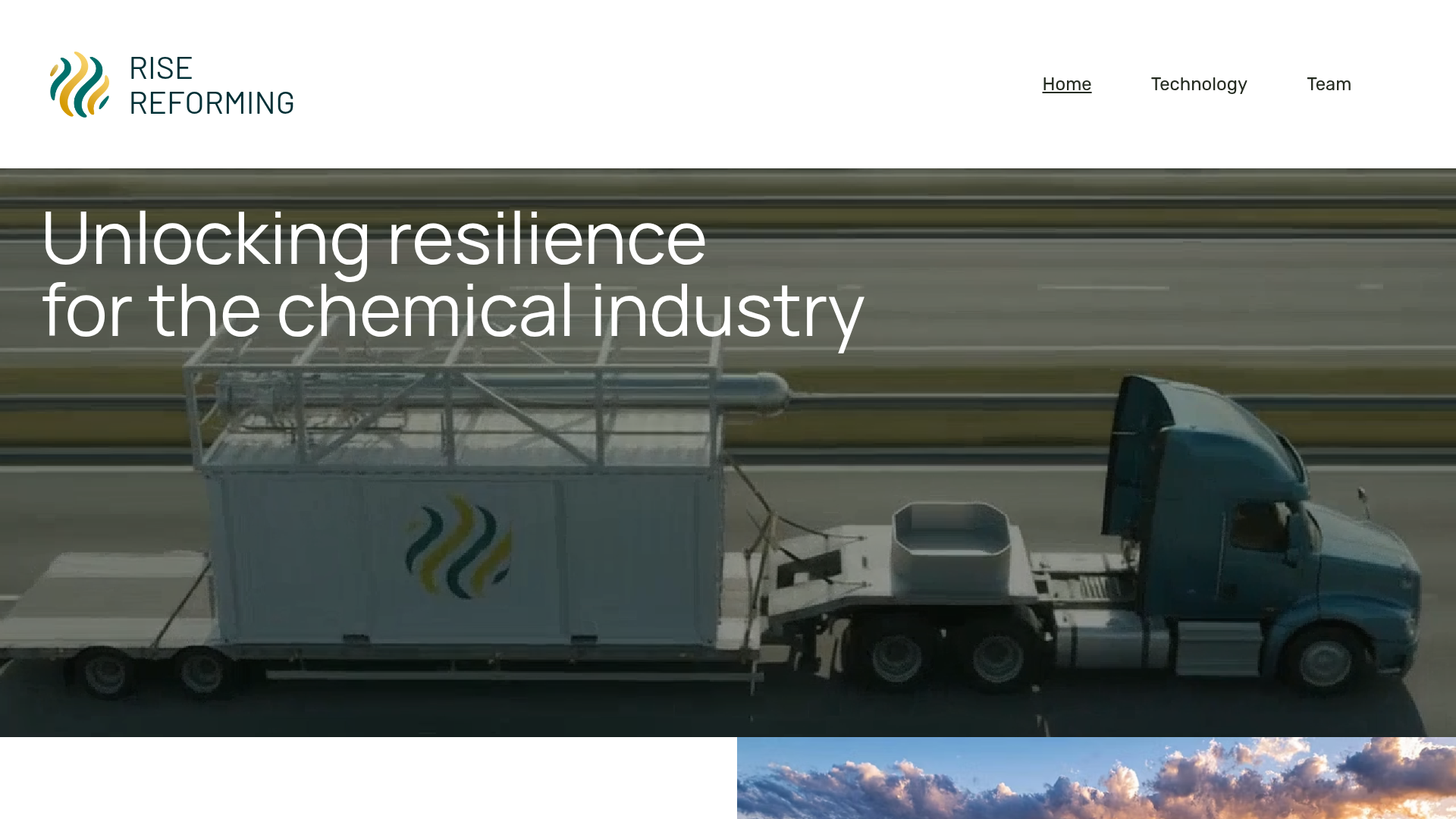
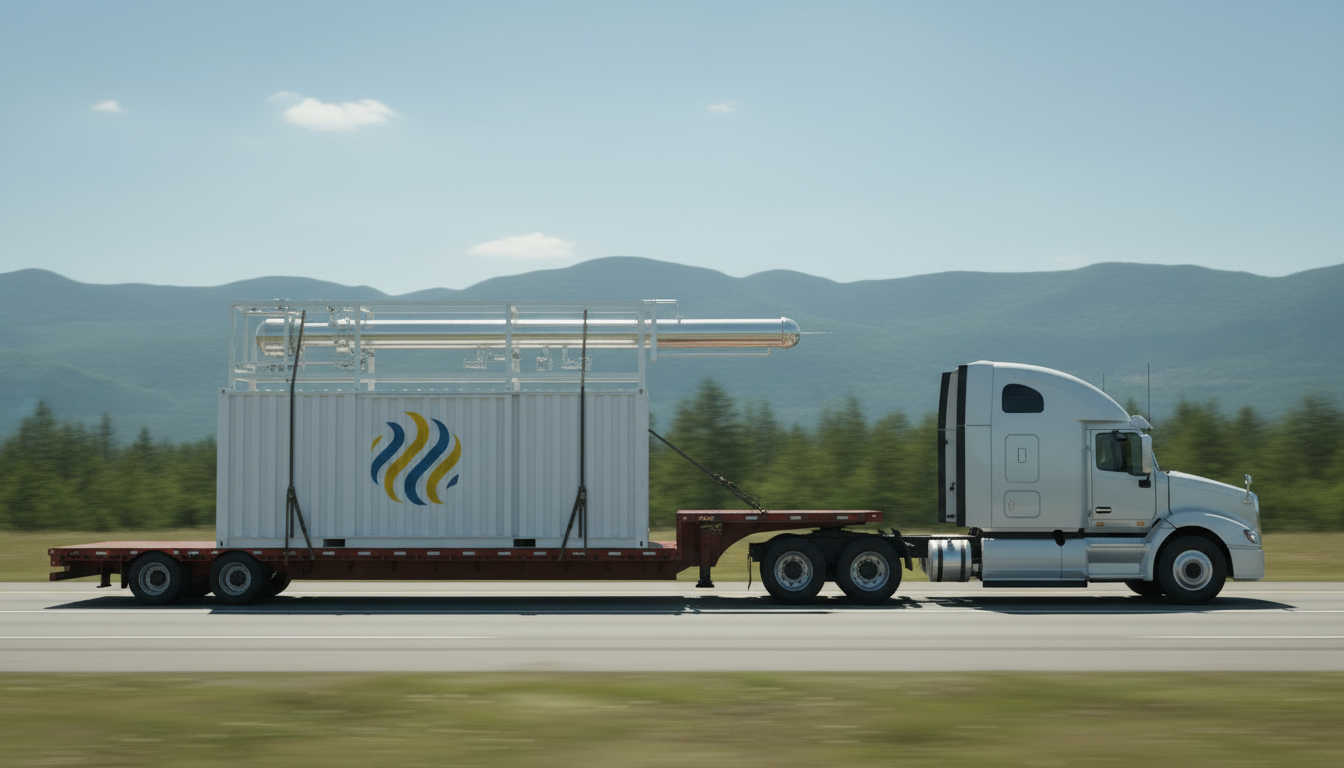
The heart of Rise Reforming's technology is a proprietary process that converts biogas into synthesis gas (syngas), which is then used to produce chemicals. The company's proof-of-concept has completed "1800+ hours of stable syngas production," according to a March 2026 update. The technology is designed to fit inside a shipping container, enabling rapid deployment and scalability.
The modular approach offers several advantages. First, it reduces capital costs and permitting hurdles, as each unit is a self-contained system. Second, it allows for incremental scaling—facilities can add or subtract modules as demand grows. Third, it brings production closer to raw materials, reducing transportation costs and carbon footprint. The company emphasizes that its process is "price competitive" with petrochemical DME and "the cheapest green methanol & DMC available," which is crucial for market adoption.
From Waste to Value: The Product Portfolio
Rise Reforming targets three key chemicals: DME, methanol, and DMC. DME is a clean-burning fuel and aerosol propellant, methanol is a versatile chemical and fuel, and DMC is a green solvent and electrolyte. By focusing on these, the company addresses markets with established demand and clear applications.
The choice of DME is particularly strategic. It can replace propane in many uses, and its production from biogas offers a low-carbon alternative. The company has already signed a "conditional DME offtake agreement for our first commercial unit," indicating market interest. Methanol and DMC broaden the addressable market, allowing Rise Reforming to pivot based on demand and pricing.
The Road to Commercialization: Milestones and Momentum
Rise Reforming has made steady progress since its founding. The timeline on the website shows a clear trajectory: in May 2025, the team won the European Aerosols Federation Start-Up Award and presented at Paris Packaging Week. By December 2025, they had closed a $650k pre-seed round and set up an incubator lab at Illinois Institute of Technology. In March 2026, they completed the proof-of-concept. In April 2026, they signed a binding supply agreement and multiple MOUs with biogas producers, along with a conditional DME offtake agreement. In May 2026, they joined Y Combinator's S26 batch, and by July 2026, their pilot container arrived at a Chicagoland wastewater plant.
This timeline demonstrates execution capability. The company is not just developing technology; it is building commercial relationships and moving toward deployment. The YC backing adds credibility and access to a network that can accelerate growth.
What the Name Signals: 'Rise' and 'Reforming' in Context
The name "Rise Reforming" is a deliberate choice. "Rise" suggests upward movement, growth, and resilience—fitting for a company that aims to lift the chemical industry out of its vulnerability. "Reforming" is a technical term in chemistry (catalytic reforming) but also implies transformation and improvement. Together, the name conveys a mission to elevate chemical production through a reforming process. The domain, rise-reforming.com, is straightforward and memorable, though the hyphen is a minor inconvenience. The branding aligns with the company's positioning as a provider of supply-secure, low-carbon chemicals.
As Rise Reforming moves from pilot to commercial scale, it faces the classic challenges of hard tech: scaling chemistry, securing financing, and winning customers. But with a modular design, a clear value proposition, and early commercial traction, it is well-positioned to make a dent in the chemical industry's carbon footprint and supply chain fragility.