Impact-Site-Verification: 41b53a0c-6d04-458b-a457-fe9e29acde1a

AI & Machine Learning·Undisclosed··5 min read

Taalas

Hardwiring AI models into silicon for 1000x efficiency, now part of AMD.

NN

NewName Editorial

Editorial Team

Taalas product image 1
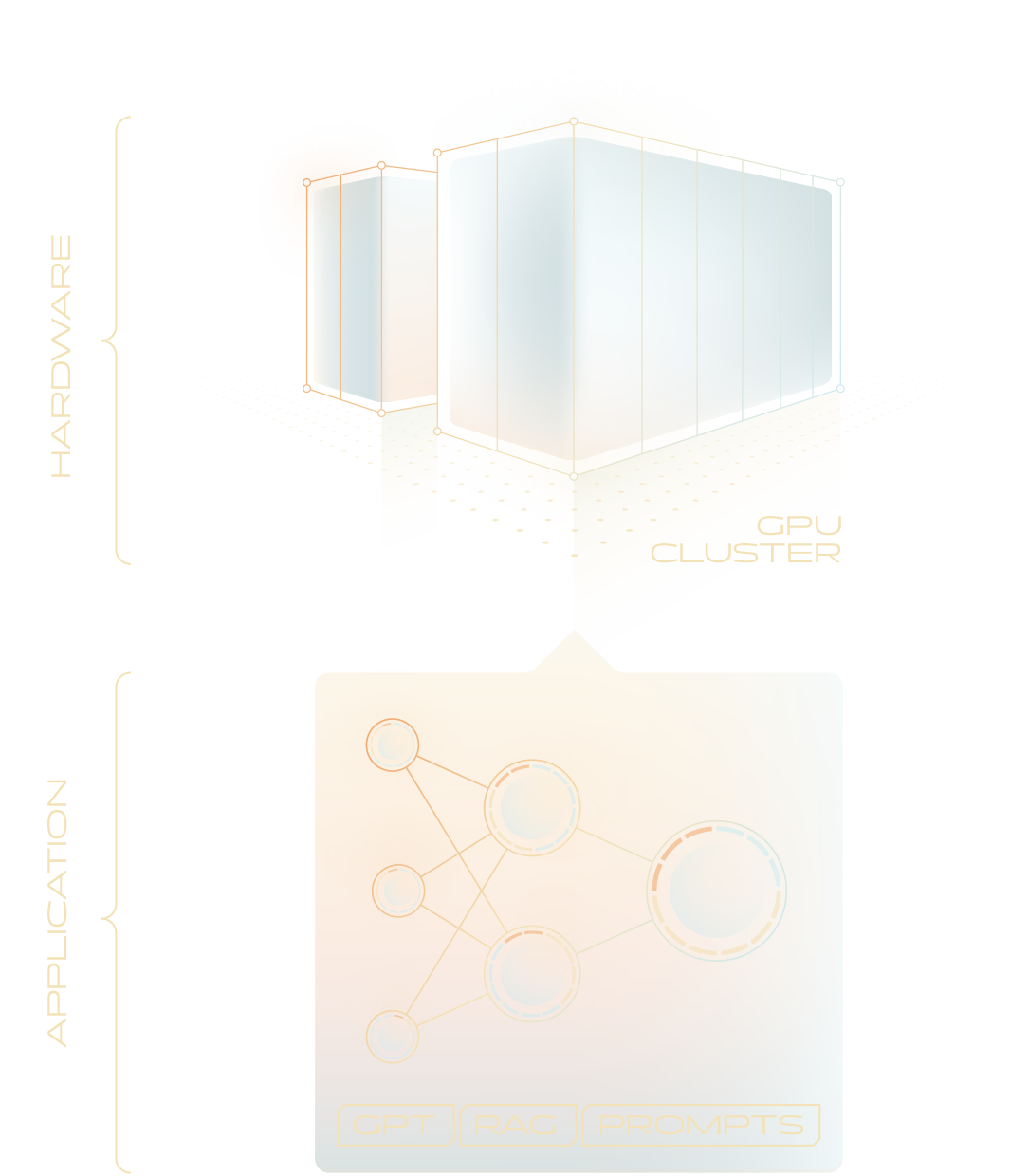
Taalas product image 2

In an industry where the default answer to AI's compute hunger is more GPUs, Taalas proposed something almost heretical: stop simulating the model on a general-purpose computer and instead turn the model itself into the computer. The Toronto-based startup, founded by former AMD and Tenstorrent leaders, emerged from stealth in 2024 with a bold claim—that its "Hardcore Models" could deliver a 1000x efficiency improvement over software counterparts. Within months, AMD agreed to acquire the company, a move that validates the thesis but also raises questions about the road not taken.

The Model is The Computer: A Radical Thesis

Taalas's core idea is elegantly disruptive: instead of running AI models on general-purpose hardware, hardwire the model directly into silicon. The website repeats the mantra "The Model is The Computer" like a religious incantation, and it's not just marketing. The company's philosophy is that AI models, as software, are computationally demanding, and a 1000x improvement in efficiency is needed—a goal far out of reach of the best general-purpose computers. By embodying the model in native hardware, Taalas aims to achieve optimal, hardwired, silicon-based inference.

This is not merely an incremental step in chip design; it's a fundamental shift in how we think about computation. Rather than a CPU or GPU executing instructions, the model's architecture becomes the physical circuit. The implications are profound: potentially massive gains in speed and energy efficiency, but also a loss of flexibility. A chip hardwired for one model cannot easily run another.

From Software Simulation to Hardwired Silicon

Taalas's approach is a direct challenge to the status quo in AI hardware. Today's AI accelerators, from Nvidia's GPUs to Google's TPUs, are still general-purpose in the sense that they can run a variety of models. They simulate the model's operations through software and hardware that is designed for flexibility. Taalas's bet is that this flexibility is a luxury we can no longer afford.

The company's platform, the Taalas Foundry, aims to automate the process of turning any AI model into custom silicon. This is a significant engineering challenge: designing a chip for a specific model requires deep co-design of algorithms and hardware. Taalas claims that its platform can do this quickly, but public materials do not detail the exact methodology or the time required. The website mentions that "Any AI model can be made Hardcore through Taalas Foundry" and that these models support fine-tuning—a crucial feature for real-world deployment, as models often need to be adapted after initial training.

The 1000x Efficiency Claim and Its Skeptics

The central promise of Taalas is a 1000x improvement in efficiency. This is a staggering figure, and the company does not provide detailed benchmarks on its website. The claim is plausible in theory: hardwiring a model eliminates the overhead of instruction fetching, decoding, and general-purpose computation. However, skeptics might note that such gains are often theoretical and may not translate to real-world workloads, especially when considering the costs of design and manufacturing.

Moreover, the AI landscape is evolving rapidly. Models are getting larger and more complex, and a chip hardwired for one generation of models may become obsolete quickly. Taalas's answer is that its Foundry can rapidly produce new silicon for new models, but the economics of chip fabrication—mask costs, lead times, and volume—are daunting. The company's acquisition by AMD, a major player with deep pockets and manufacturing expertise, could help address these challenges.

Taalas Foundry: A Platform for Custom Silicon

The Taalas Foundry is the company's answer to the question of practicality. It is described as a platform for quickly turning any AI model into custom silicon. This is not a trivial feat; it requires a compiler that can map a neural network's operations onto hardware logic gates, a place-and-route tool that can optimize the physical layout, and a verification process to ensure correctness. Taalas's founders, with backgrounds at AMD and Tenstorrent, have deep expertise in chip design, which lends credibility to their ability to build such a platform.

The website also mentions that "Apps for it are written in human languages." This is an ambitious claim, suggesting that developers could interact with Hardcore Models using natural language, rather than traditional programming languages. This would be a paradigm shift, but public materials do not provide details on how this would work in practice. It's possible that this is a forward-looking vision rather than a current feature.

The AMD Acquisition: A Validation and an Exit

AMD's definitive agreement to acquire Taalas is a significant validation of the startup's technology and team. It also marks a swift exit for a company that emerged from stealth only in 2024. According to BetaKit, AMD's acquisition is part of a trend of Canadian tech firms selling to foreign buyers when it's time to scale, citing difficulties in securing domestic clients, capital, and talent. Taalas's founders, who are former AMD employees, may have found the acquisition a natural fit, given their existing relationships.

For AMD, the acquisition bolsters its AI inference capabilities, potentially allowing it to offer custom silicon solutions that are far more efficient than general-purpose GPUs. This could be a strategic move to differentiate from Nvidia, which dominates the AI training market. However, the acquisition also means that Taalas's technology will be integrated into AMD's product roadmap, and it remains to be seen how the startup's radical vision will be adapted to the realities of a large semiconductor company.

The Name 'Taalas': A Brand of Mystery and Ambition

The name "Taalas" is unusual and does not immediately convey what the company does. It has a mythical, almost Nordic ring to it, but it is not a real word. This ambiguity is a double-edged sword. On one hand, it allows the brand to be defined by the company's own narrative—"The Model is The Computer"—rather than by a descriptive label. On the other hand, it may be confusing to potential customers who are not already familiar with the company's mission.

The domain, taalas.com, is clean and memorable, which is a plus. The brand's visual identity, as seen on the website, is minimalist and futuristic, with bold typography and a repeating mantra. This reinforces the company's self-image as a revolutionary force in AI hardware. However, the name does not hint at the company's Canadian roots or its focus on AI inference, which could be a missed opportunity for clarity.

Ultimately, the name "Taalas" is a brand of mystery and ambition. It invites curiosity but requires explanation. In a market where clarity is often valued, this is a risk. Yet, for a company that aims to redefine the relationship between models and hardware, a name that defies easy categorization may be fitting.

As Taalas becomes part of AMD, the brand may fade into the larger corporate identity. But the ideas it championed—hardwiring AI models into silicon, achieving 1000x efficiency, and treating the model as the computer—will likely influence AMD's future products. The acquisition is a testament to the power of a bold thesis, even if the ultimate impact remains to be seen.