Take.Skin
Free, no-signup CS2 skin prices, case odds, and pro inventories in one live reference layer.
Take.Skin
Submitted by the team
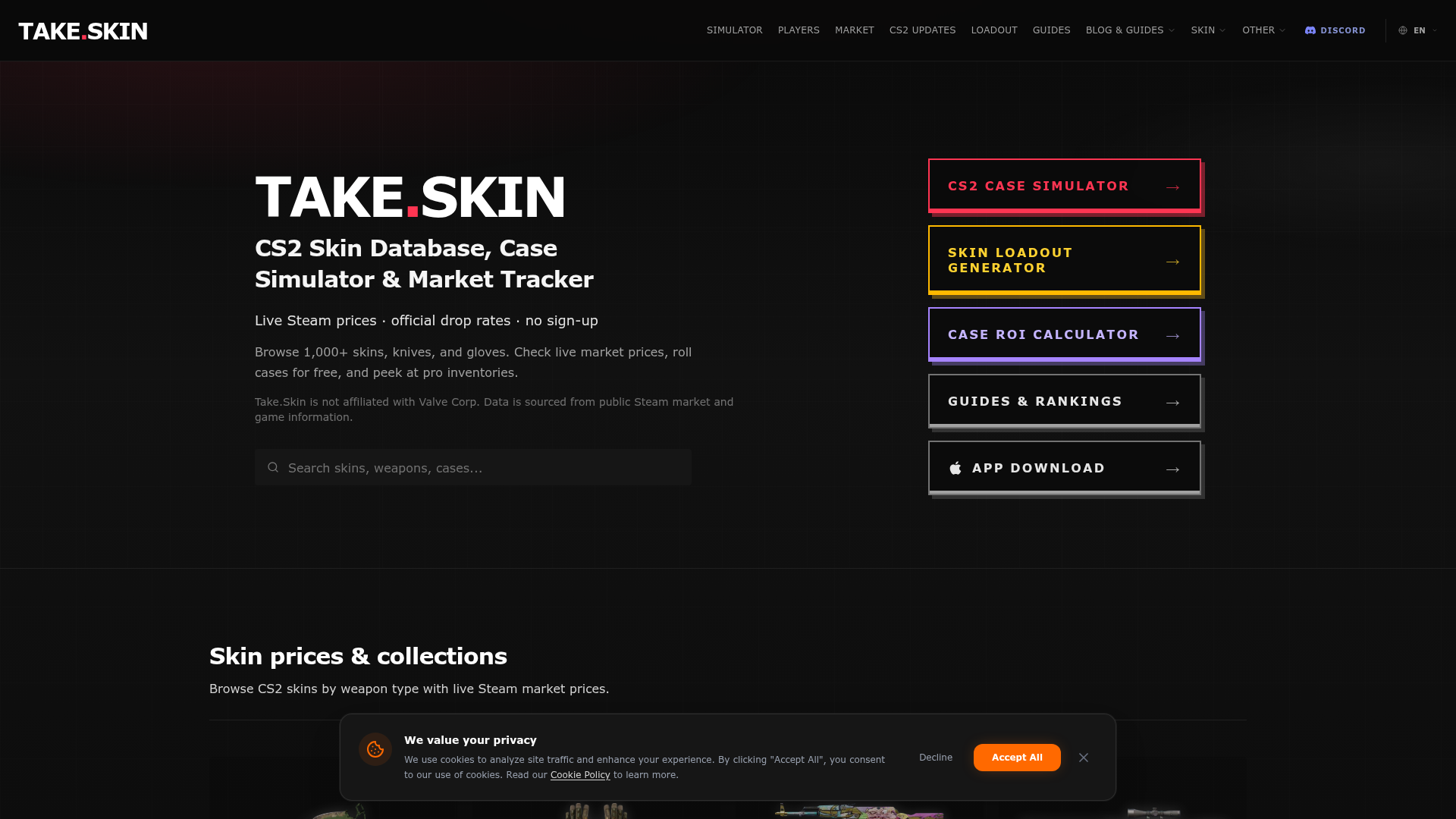
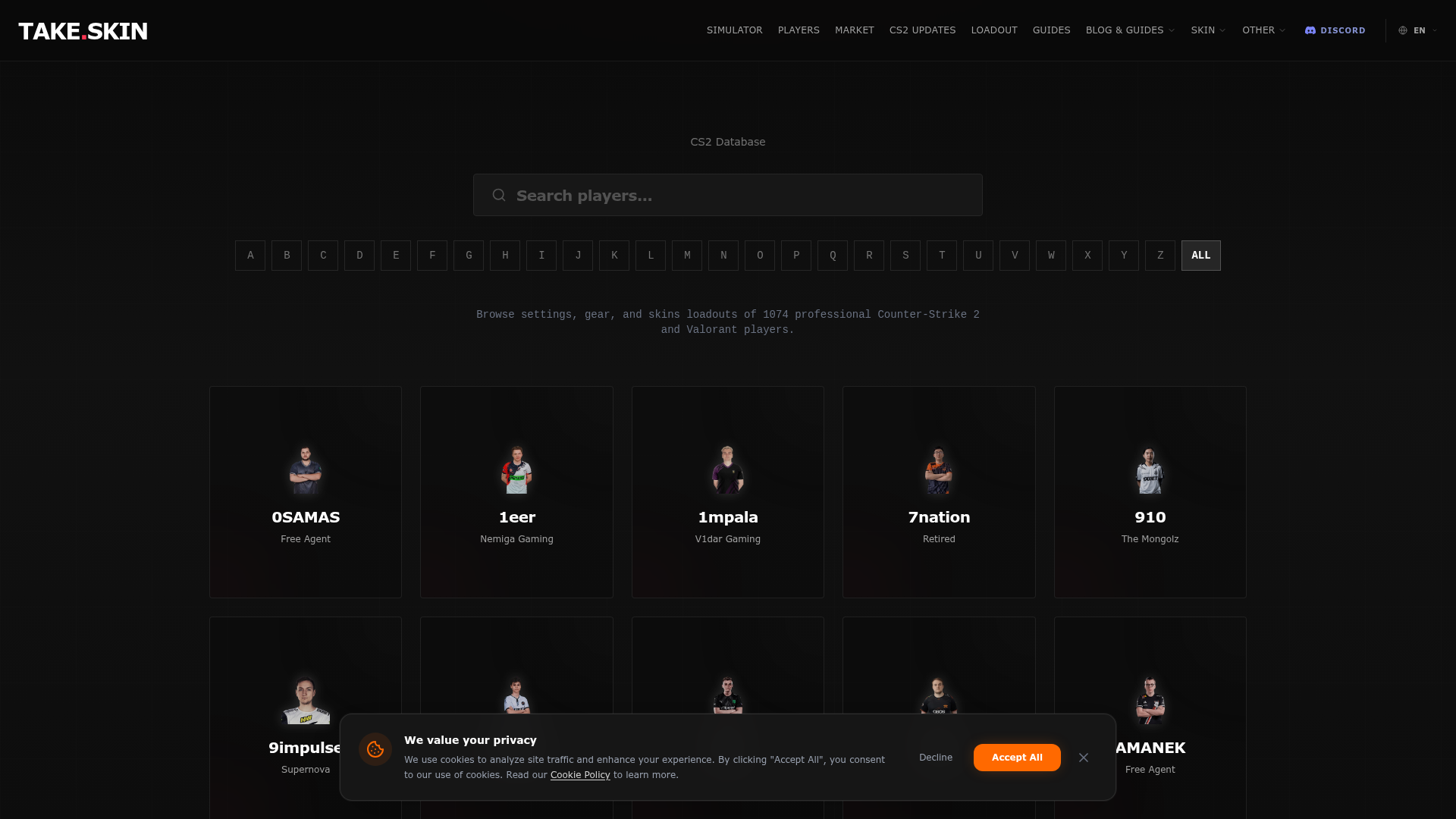
The CS2 skin market has a liquidity problem that isn't really a liquidity problem. Millions of items change hands, Steam's Community Market clears transactions continuously, and third-party marketplaces compete on fees and float filters. What the market lacks is a neutral, fast, no-friction reference point that a player can check before they commit money anywhere. Take.Skin is an attempt to become that reference point — not a marketplace, not a broker, not a case-opening site, but the free data layer that sits upstream of every skin transaction.
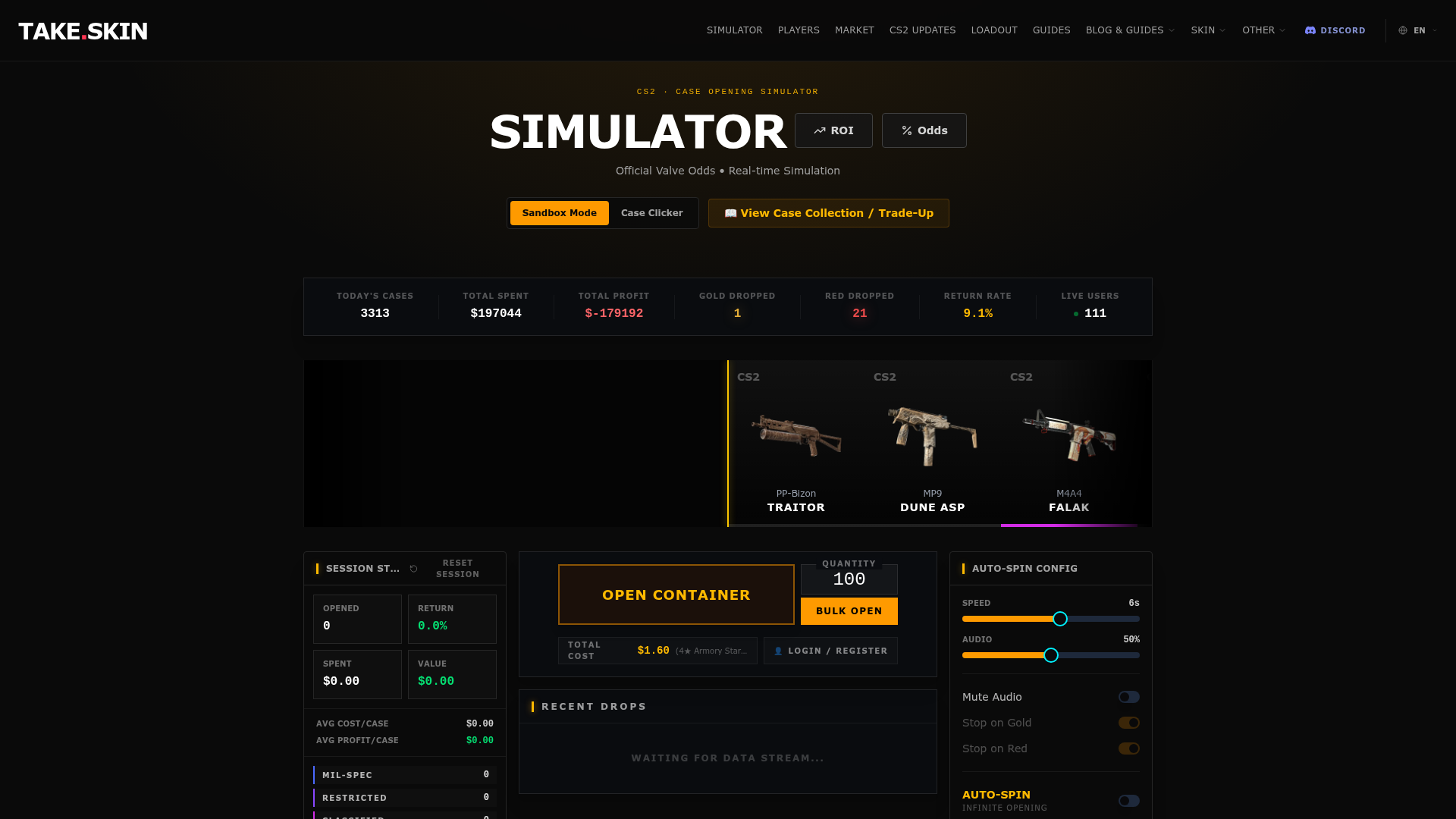
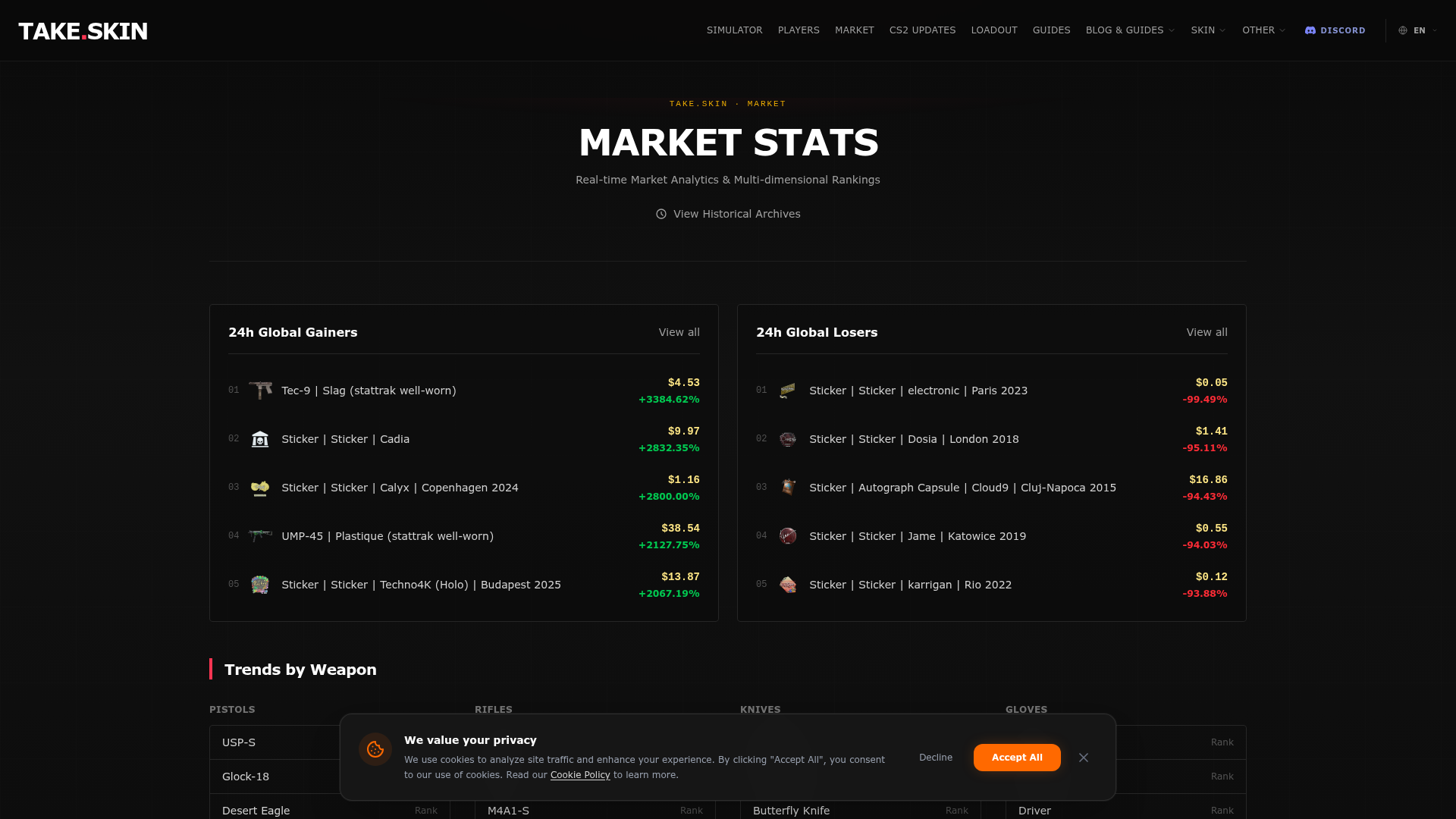
That positioning matters because the CS2 skin economy is unusually data-hungry. Prices move on patch notes, pro loadouts, case rotations, and Valve's own drop tables. A player deciding whether to open a case, buy a knife, or accept a trade-up contract needs live Steam prices, official odds, and float context in the same place. Take.Skin assembles those pieces — 1,000+ items, live Steam Community Market pricing, a simulator using the 2017 drop table, an ROI calculator, pro inventories, and summarized patch notes — behind a no-account, no-signup interface. The strategic question is whether a free reference layer can be a business, or whether it is merely a well-executed SEO asset waiting to be absorbed by a marketplace.
The Skin Economy Has a Data Problem, Not a Liquidity Problem
The friction in CS2 skins is not finding a buyer or a seller. It is knowing what a fair number looks like before you act. Steam's own market page shows a price, but it does not contextualize that price against drop odds, float ranges, trade-up economics, or what professional players are actually carrying. Third-party marketplaces show prices too, but they are incentivized to route you into a transaction on their rails. Neither is a neutral reference.
That gap produces predictable behavior. Players open cases without knowing expected value. Traders overpay for a skin because they lack float context. Collectors chase a pro loadout without knowing whether the items are liquid. Take.Skin's pitch is that these decisions all start with the same question — what is this actually worth right now — and that the answer should be free, fast, and not gated behind an account.
The no-signup constraint is the sharpest part of the thesis. Most price trackers and portfolio tools require an account because they want retention, alerts, or eventual monetization through premium tiers. Take.Skin deliberately removes that wall for browsing and simulation. That is a distribution decision, not a product decision: it makes the site linkable, shareable, and indexable in a way that account-walled tools are not.
How Take.Skin Turns Steam Market Data Into a Free Reference Layer
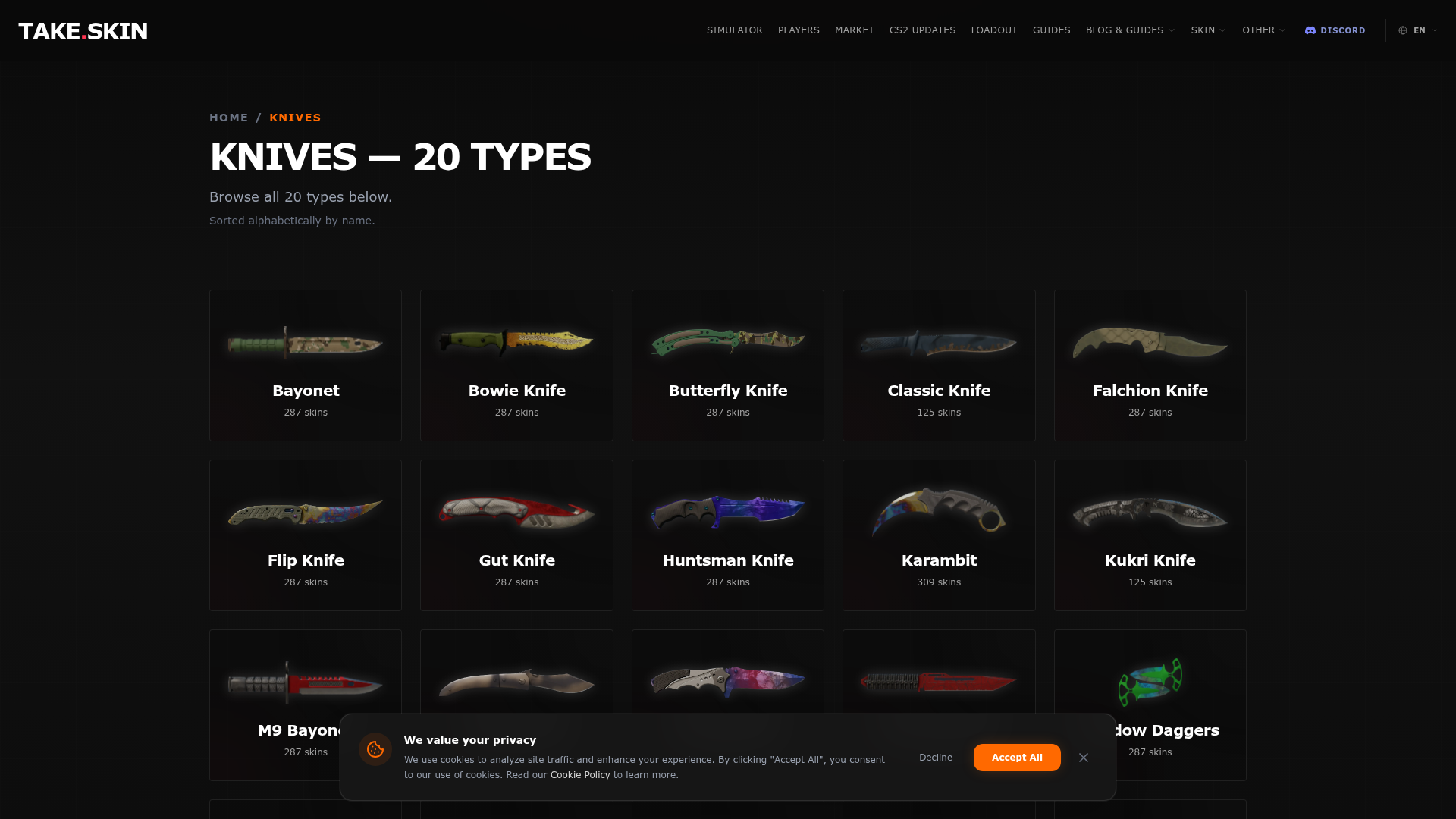
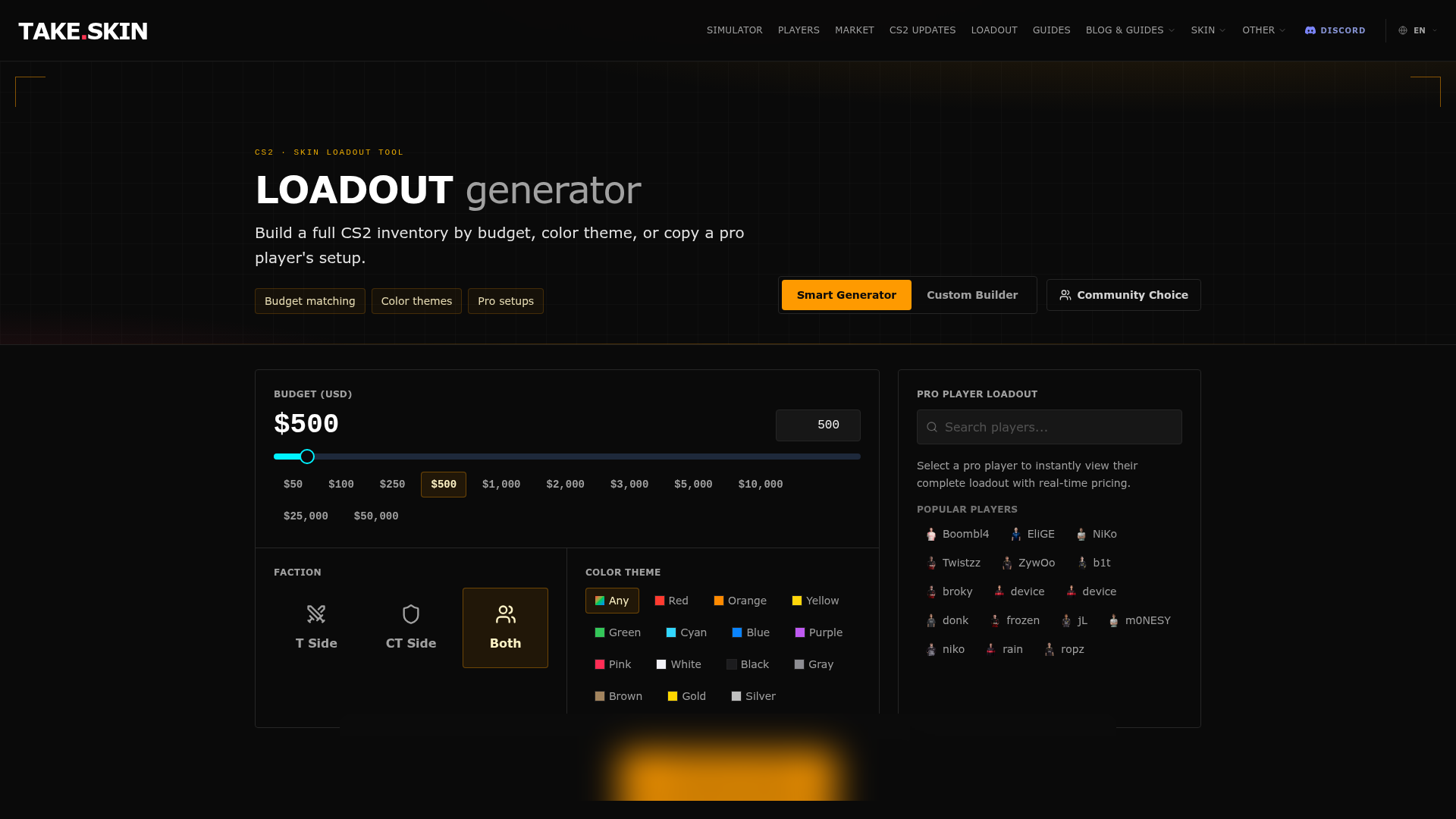
The core mechanism is straightforward and worth stating precisely. Take.Skin pulls prices from the Steam Community Market and presents them against a structured item database organized by weapon type — knives, gloves, AK-47, AWP, M4A4, M4A1-S, Desert Eagle, agents — with float values and price history attached. The site also surfaces a skin loadout generator, a case ROI calculator, pro player inventories, and summarized CS2 patch notes.
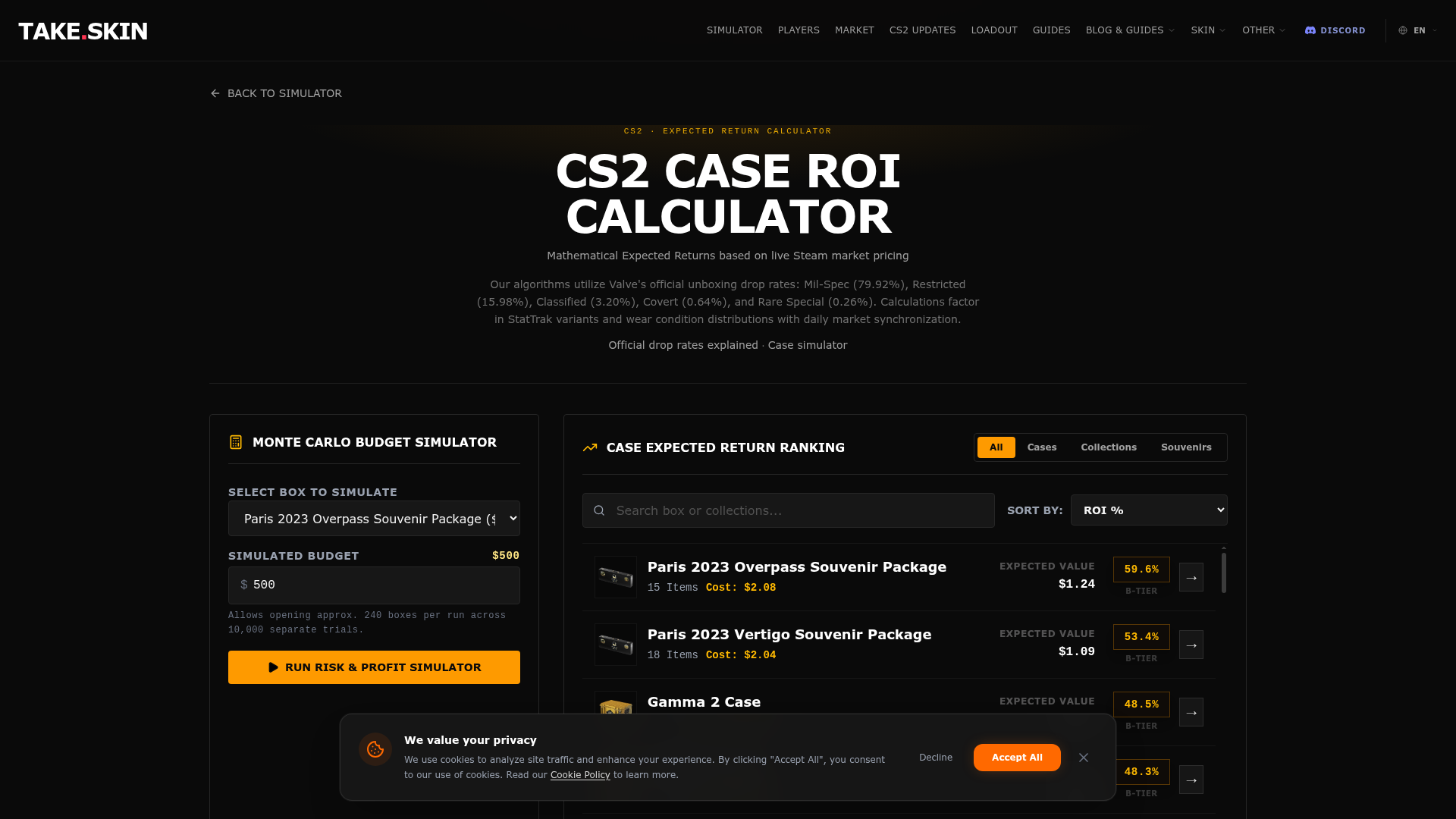
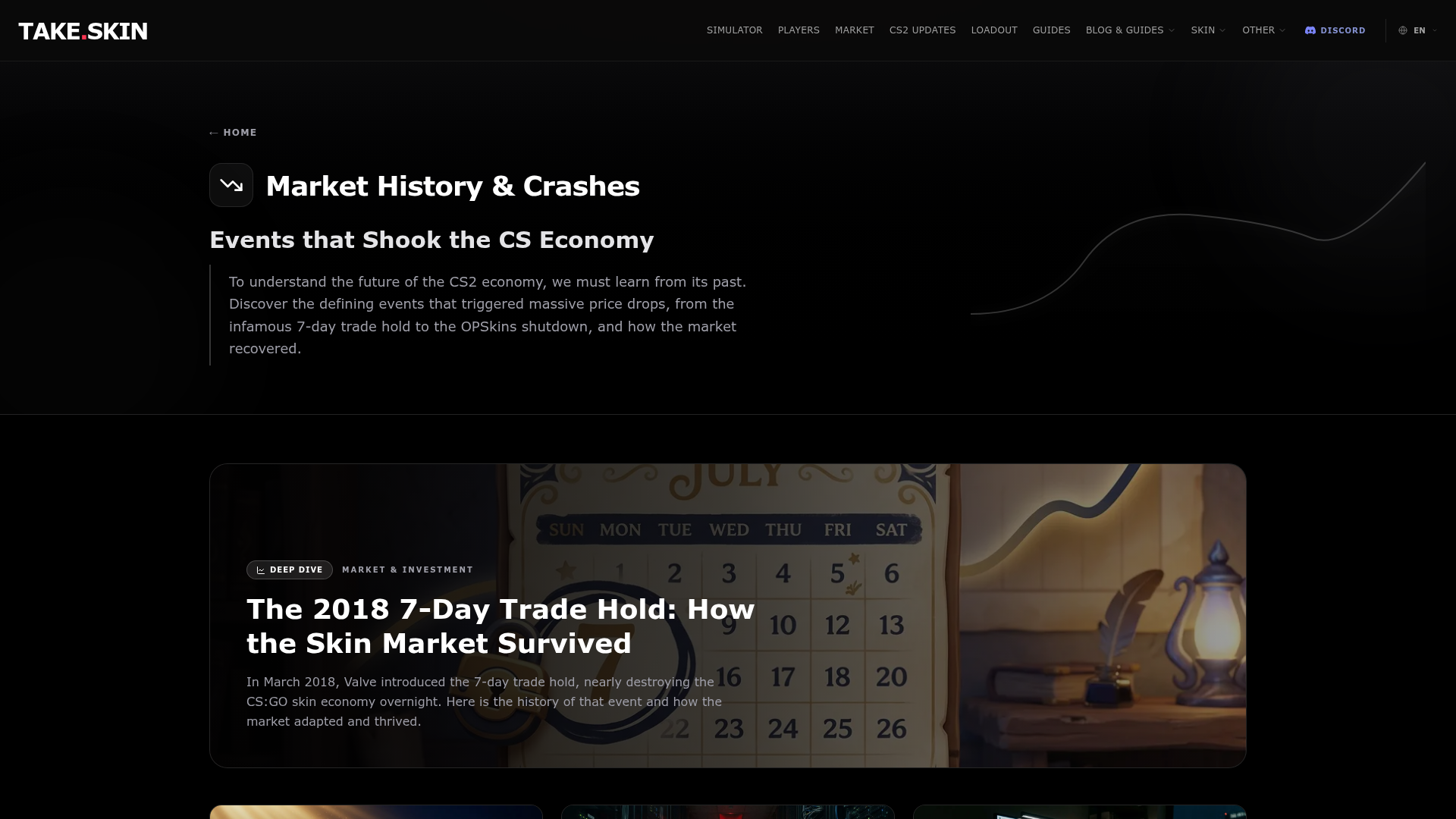
What makes this more than a price table is the linkage between surfaces. The simulator uses the same drop rates as in-game cases, and results are priced against live market data, so a simulated unboxing produces a real expected-value signal rather than a cosmetic animation. The ROI calculator ranks weapon cases by live expected value. The guides — cheap knives, best ROI cases, knife rankings, case drop rates — are not standalone content; they are entry points back into the database. Patch notes are summarized so that a player can connect a gameplay change to a market move.
That architecture is the actual product. Take.Skin is not selling a single tool; it is building a graph of items, prices, odds, and context where each page reinforces the others. The risk is that the graph depends almost entirely on Steam's public market data, which is a dependency rather than a moat.
The Case Simulator as Customer Acquisition, Not a Product
The case simulator is the most visible feature and the least monetizable one in isolation. It exists because case opening is the emotional entry point to the skin economy: it is the moment a player first cares about drop rates, float, and item value. A free simulator that uses official odds and real prices converts that curiosity into a reason to return to the database.
Competitively, this puts Take.Skin in a different lane from case-opening sites that charge for virtual openings or route users toward gambling-adjacent mechanics. Take.Skin's simulator is explicitly framed as risk-free and free, which is both a trust position and a regulatory-adjacent one: it avoids the reputational and legal exposure of paid case sites while still capturing the same search intent.
The ROI calculator extends this logic. By ranking cases by live expected value, it turns a novelty feature into a decision tool. That is the difference between a toy and a reference layer — and it is the piece most likely to generate repeat visits from traders rather than one-time curiosity from casual players.
Competing With Account-Walled Trackers and Marketplace-Owned Price Feeds
The competitive field splits into three groups. First, account-walled price trackers and portfolio tools that offer alerts, inventory valuation, and premium tiers. Second, marketplace-owned price feeds — the pricing pages inside third-party skin marketplaces — which are accurate but structurally biased toward their own order books. Third, the raw Steam Community Market itself, which is authoritative but context-poor.
Take.Skin's differentiation against all three is the same: free, no-signup, and neutral. Against account-walled trackers, it wins on friction and loses on depth — no portfolio tracking, no alerts, no personalized inventory valuation. Against marketplace feeds, it wins on neutrality and loses on execution — it cannot match a marketplace's order-book depth or its ability to actually complete a trade. Against Steam itself, it wins on context and loses on authority.
That is a real but narrow wedge. The defensible part is the combination: live prices plus official odds plus float context plus pro inventories plus patch notes, all ungated. The vulnerable part is that any of the three competitor groups could replicate the ungated browsing experience if they chose to. The bet is that marketplaces will not want to, and account-walled trackers cannot afford to.
Where the Money Actually Comes From When Nothing Is Sold
Public materials do not disclose Take.Skin's revenue model, and the site presents no visible pricing, subscription, or transaction fee. That is the central commercial uncertainty. A free, no-signup reference layer has a few plausible monetization paths: display advertising against high-intent skin searches, affiliate or referral arrangements with marketplaces, a premium tier for portfolio tracking and alerts layered on top of the free base, or an eventual data or API product sold to traders and analysts.
Each path has a different implication. Advertising monetizes attention but caps revenue per user and creates pressure to maximize page views rather than decision quality. Affiliate arrangements monetize intent but compromise the neutrality that is the site's main differentiator. A premium tier preserves neutrality but reintroduces the account wall the product was built to avoid. A data or API product is the most defensible but requires a customer base that the consumer site has not yet demonstrated.
The iOS app is a signal here. A mobile presence suggests the team is investing in retention and habitual use rather than pure search acquisition, which is consistent with an advertising or premium-tier model rather than a pure affiliate play. But without disclosed pricing or partnership terms, the unit economics remain unverifiable from outside.
The Multilingual Bet and the Limits of a Steam-Dependent Moat
The site ships in English, Simplified Chinese, and Russian, with a Discord community and an iOS app. That is a deliberate bet on the geography of the CS2 skin economy: Chinese and Russian-speaking markets are large, active, and underserved by English-only trackers. Localized price references and guides are a genuine distribution advantage in those regions, and they are harder for a US-centric tracker to replicate quickly.
The constraint is the data dependency. Take.Skin sources prices from the Steam Community Market and game information from Valve. It is explicitly not affiliated with Valve. That means the core asset — live pricing — is rented, not owned. If Steam changes its market API, rate-limits scraping, or alters how prices are exposed, the reference layer degrades immediately. The float and odds data are more stable, but they are also replicable.
A durable moat would have to come from something else: proprietary historical price data, a user-contributed inventory graph, or a reputation for neutrality that marketplaces cannot credibly copy. None of those are visible yet in the public materials, which is why the moat question is the one to watch.
What a Skin Data Business Looks Like in Three Years
The realistic trajectory for Take.Skin runs through one of two outcomes. In the first, it becomes the default free reference layer for CS2 skins — the page players check before they open a case or buy a knife — and monetizes that attention through advertising, affiliate arrangements, or a premium analytics tier. In that scenario, the multilingual footprint and the simulator-to-database funnel are the assets that matter, and the business looks more like a high-intent media property than a SaaS product.
In the second, the reference layer gets absorbed. Either a marketplace copies the ungated browsing experience to defend its funnel, or Valve's own tooling improves enough to reduce the need for third-party context. In that scenario, Take.Skin's value is its audience and its data graph, which makes it an acquisition target rather than a standalone business.
Both outcomes are plausible, and the deciding variable is whether the team can convert free attention into a proprietary asset — historical data, user inventory graph, or API — before the Steam dependency or a marketplace competitor closes the window. The product is well-built for the first phase. The second phase is where the business case is still unproven.