Impact-Site-Verification: 41b53a0c-6d04-458b-a457-fe9e29acde1a

Fintech & Web3·Seed··5 min read

tash

Index-based investing for trading cards, turning collectibles into regulated financial assets.

NN

NewName Editorial

Editorial Team

tash product image 1
tash product image 2

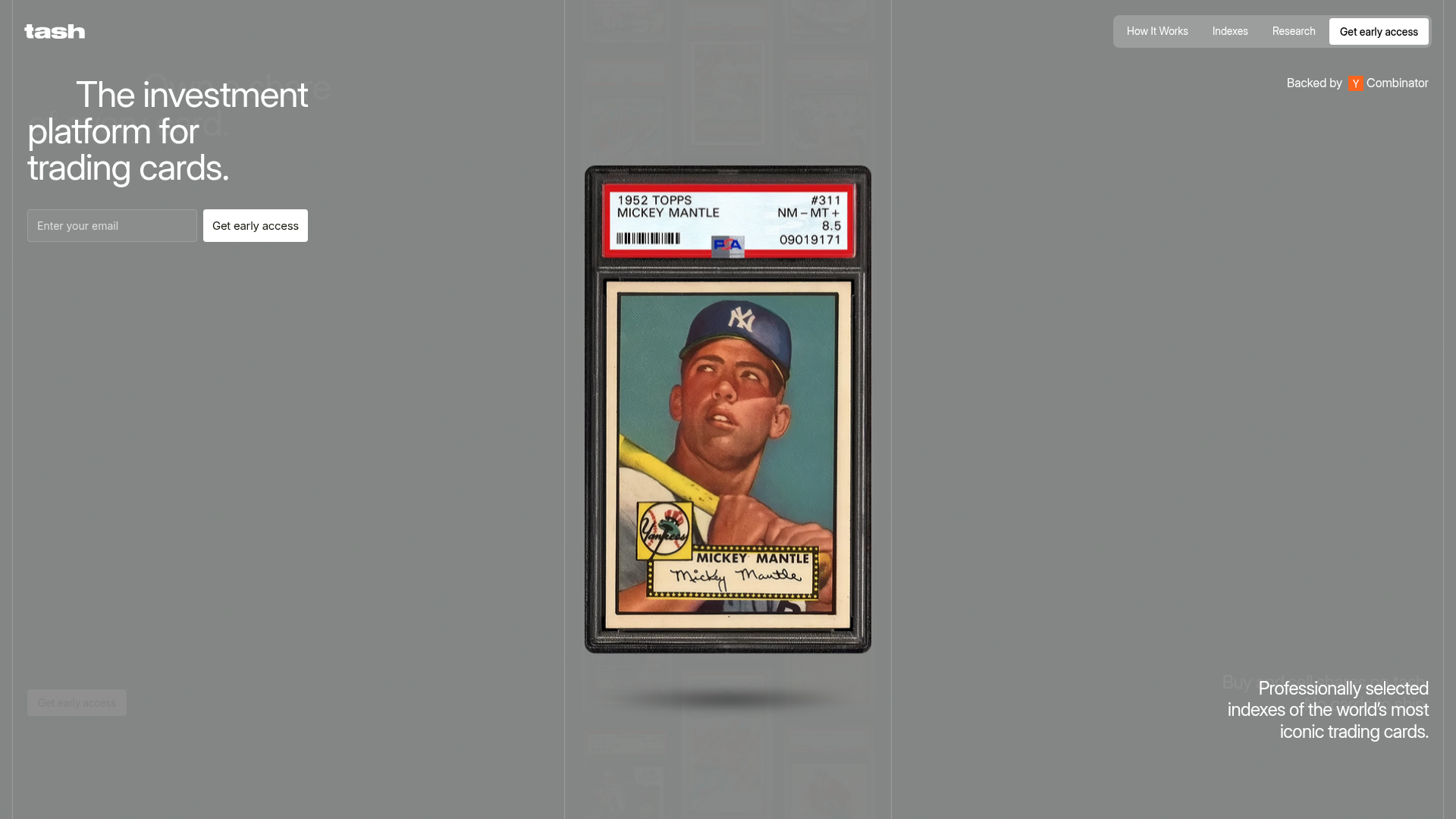
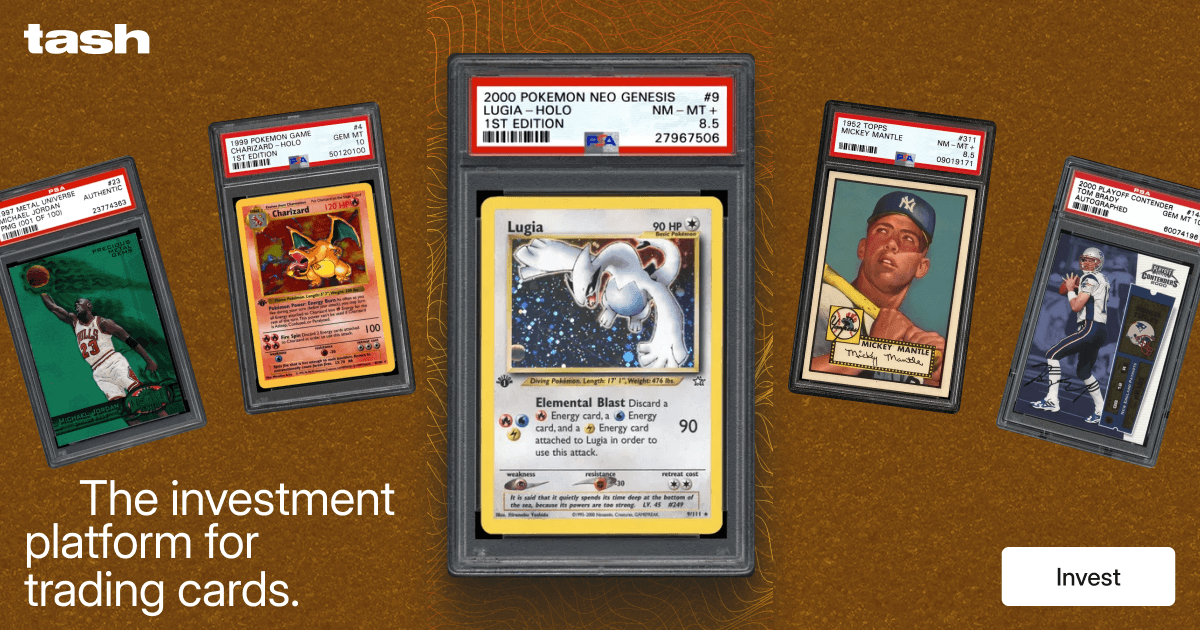
The trading card market has a liquidity problem. You can buy a rare Charizard for half a million dollars, but selling it takes weeks, requires grading, and often depends on finding one wealthy buyer. tash, a Y Combinator-backed startup (S26 batch), wants to change that by turning cards into a regulated asset class. Instead of selling you a card, it sells you a share of an index that holds fifty of them.

The pitch is bold: a chart on its homepage shows the CL50 index — a basket of 50 iconic cards — quietly outperforming the S&P 500 over two decades. From 2004 to 2026, the S&P 500 grows to $10,163, while the CL50 reaches $23,632. That's the kind of return that makes a traditional investor pause. But the real story isn't the chart; it's the infrastructure tash is building to make that chart legal.

The Card Market's Liquidity Problem

Trading cards are a multi-billion dollar market, but they're stuck in the past. Monthly trading card market volume has grown from near zero in 2010 to over $600 million in 2026, according to tash's own chart. Yet most transactions happen on eBay or through private dealers, with all the friction that implies: shipping, authentication, and the risk of fraud. The market is illiquid, opaque, and inaccessible to anyone who doesn't want to physically own a slab of cardboard.

tash's thesis is that the market has matured enough to support financial infrastructure. Rising liquidity, institutional interest, and global demand are turning cards into an investable asset class. But to do that, you need more than a marketplace; you need a brokerage.

An Index, Not a Card

The core innovation is the index. Each tash index holds a diversified portfolio of cards inside a registered investment vehicle. The CL50, for example, tracks 50 of the hobby's most significant cards, selected based on liquidity, significance, market depth, and demand. You don't buy a card; you buy a share of the whole index. One card is a collectible; fifty make an index.

This isn't just a gimmick. Diversification reduces the risk that a single card's value collapses. It also makes the investment more liquid: you can buy and sell shares on tash's exchange without ever shipping a card. The website shows ownership percentages for each card in the index, ranging from 2.3% to 27%, giving investors a clear picture of what they own.

From Marketplace to Brokerage

tash is explicit about the distinction: a marketplace sells you merchandise, with carts, listings, and shipping. A brokerage issues ownership, with positions, portfolios, and vaulted custody. tash aims to be the latter. The cards are held in professional custody, and shares trade on a secondary market. This is a fundamental shift from the traditional model.

The company is building the financial infrastructure to bring collectibles into public markets. That means SEC oversight, registered broker-dealers, and Regulation A qualification. The website notes that SEC qualification is in progress, and that any securities offering will be conducted through registered broker-dealer partners, including Rialto Markets LLC and North Capital Private Securities Corporation.

The SEC Question

This is the crux. tash's entire model depends on regulatory approval. The site says "SEC qualification in progress" and mentions Regulation A, which allows companies to raise up to $75 million from the public. But getting there is not trivial. The SEC will scrutinize the valuation of the cards, the custody arrangements, and the index methodology. If tash can't clear that hurdle, it's just another marketplace with a fancy chart.

The risk is real. The card market is volatile — the CL50 dropped 23% in 2022 and 9% in 2023, according to tash's own data. An index doesn't eliminate that volatility; it just spreads it. And the SEC may question whether an index of 50 cards is truly diversified enough to protect investors.

What the CL50 Actually Tracks

The CL50 is the flagship index, but tash also mentions segments like Low-Pop and Vintage. The chart on the homepage shows all three outperforming the S&P 500, but the methodology is opaque. The site says the CL50 curve is "anchored to documented values" and that intermediate points are interpolated. The final chart is "to be generated from the Card Ladder daily series." That's a lot of caveats for a headline number.

Investors should be wary of backtested performance. The CL50's 2004-2026 return is impressive, but it's based on a hypothetical index that didn't exist until recently. Past performance doesn't guarantee future results, as the site itself notes. The real test will be live performance after launch.

The Name Says 'Tash', Not 'Card'

The name 'tash' is a deliberate departure from the category. It doesn't say 'card' or 'collectible' or 'invest'. It's short, abstract, and brandable. This suggests tash wants to be more than a trading card platform; it wants to be the infrastructure for all collectibles. The tagline says "Making the world's most iconic trading cards investable," but the mission is broader: "Building the financial infrastructure to bring collectibles into public markets."

The name also avoids the baggage of existing platforms like eBay or StockX. It feels more like a fintech company than a hobbyist site. That's a smart move if you're trying to attract institutional investors and SEC approval. But it also means tash has to educate the market from scratch. The name doesn't tell you what it does; you have to read the copy.

That's a risk. A name like 'tash' is memorable but not descriptive. It could be a brand, or it could be a mystery. The company is betting that the product will define the name, not the other way around.

The Bottom Line

tash is attempting something genuinely new: turning trading cards into a regulated financial asset class. The index approach is clever, and the infrastructure is ambitious. But the success hinges on SEC approval and the credibility of the CL50 index. If tash can pull it off, it could open the door for other collectibles — art, sneakers, even wine. If not, it's a well-designed marketplace with a great chart.

For now, the site is in early access, and the SEC qualification is in progress. The cards are being selected, the shares are being issued, and the market is watching. Whether tash becomes the Vanguard of collectibles or a footnote in the hobby's history depends on the regulators, the index, and the investors who take the leap.