Why You Need a Public Brand Pack Page (Partners and AI Both Read It)
A Brand Pack page is not just a folder for partners. It is a crawlable source of truth—copy bands, links, screenshots, and rules—so humans and AI systems summarize your product the same way.
NewName Editorial
Editorial Team
Most founders treat a “media kit” as something you email once: a ZIP, a Notion doc, maybe a Figma board. That works until three partners paste three different one-liners into three different decks—and until an AI assistant, asked “what does this company do?”, stitches a bio from your homepage hero, a stale Product Hunt tagline, and a blog post you forgot about.
A public Brand Pack page is different. It is a stable URL—ours lives at /brandpack—that holds the name spelling, length-banded copy, official links, logo files, site screenshots, creative rules, and accuracy guardrails in one place. Partners can bookmark it. Crawlers can fetch it. Assistants that browse the open web have a clearer sheet to cite.
This is not a claim that a Brand Pack magically ranks you in AI Overviews. Google’s own guidance still centers on helpful, crawlable pages—not AEO tricks. The practical point is narrower and more useful: when something summarizes you, you want it reading one coherent page instead of five contradictory scraps.
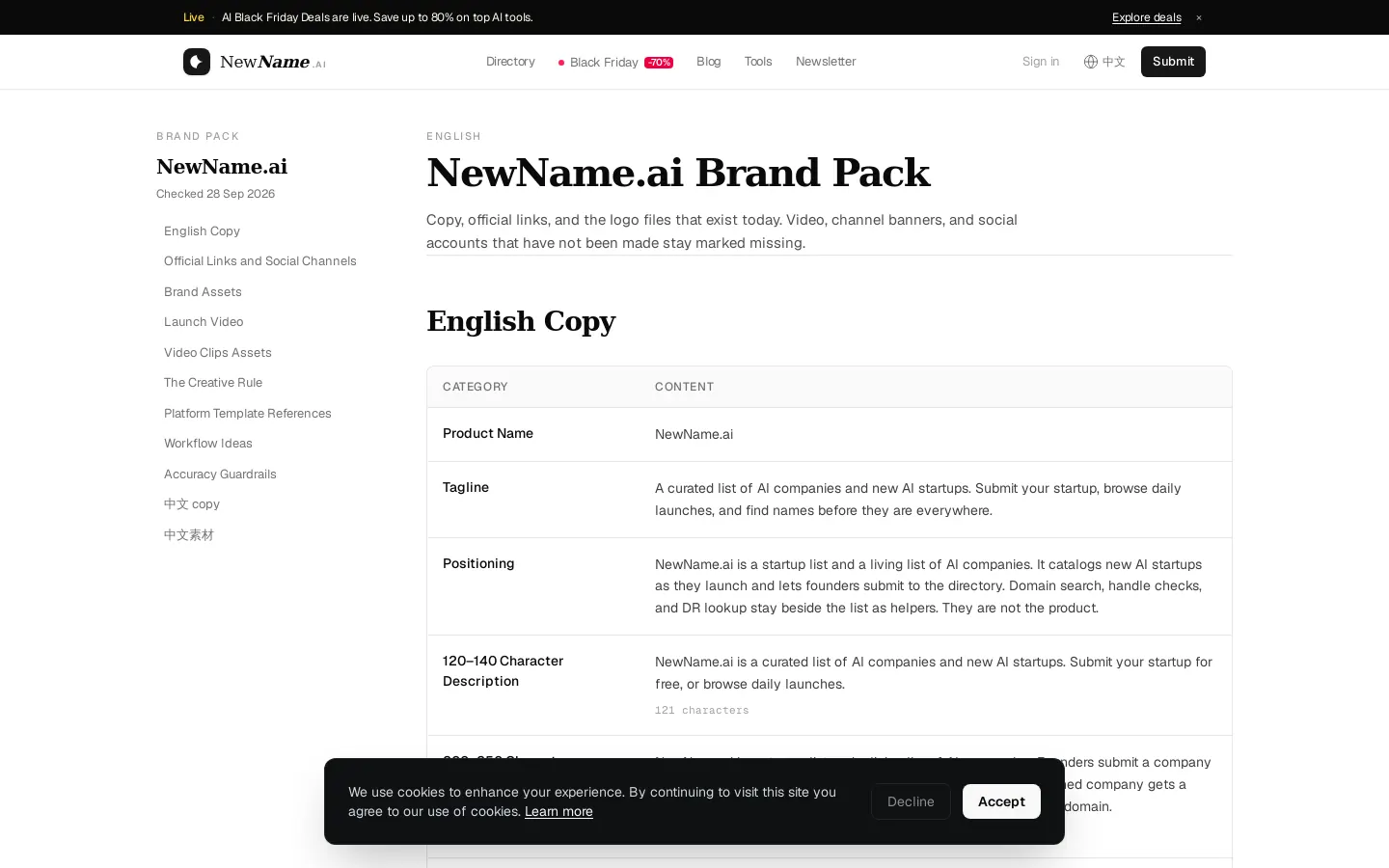
Live example: newname.ai/brandpack — sidebar sections, checked date, English copy bands with character counts.
If you want the DIY section checklist, read How to Create a Brand Media Pack. This article is about why the page itself matters.
Partners are not the only audience
Yes, partners still need the pack. Affiliate pages, podcast show notes, conference listings, and agency intros all ask for the same five things: exact name, one sentence, longer blurb, logo, website. Without a page, you answer in Slack threads that expire.
With a page, you send one link. They download what exists. Channels marked Missing stay Missing—so nobody invents a LinkedIn you never opened.
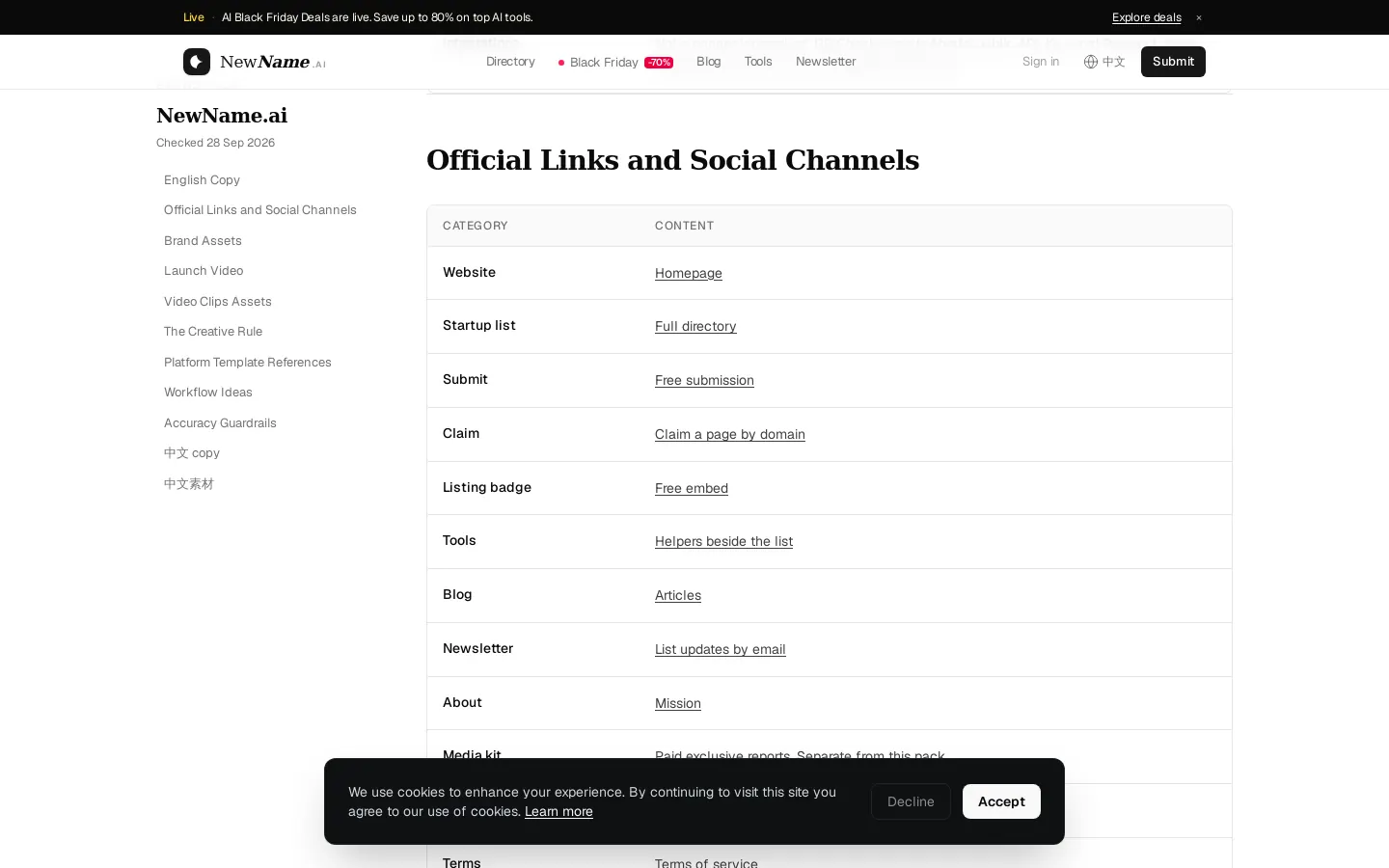
Link inventory: every official route listed; socials that do not exist stay labeled Not created / Missing.
That honesty is a feature. A pack that fabricates handles teaches partners—and models—the wrong graph of your brand.
The contradiction tax across launch surfaces
Product Hunt wants a short tagline. X wants something that fits a bio. LinkedIn wants a paragraph. Your homepage hero wants a punchy line. Email signatures want something shorter still.
Write those ad hoc and you get drift: one place says you are a “directory,” another leads with a side tool, a third invents a user count. Over a quarter that tax shows up as confused investors, mismatched press blurbs, and support tickets asking which description is “official.”
A Brand Pack fixes the process, not the aesthetic. You lock bands once (roughly 120 / 250 / 500 characters plus positioning), then derive posts from the same facts. The page is the place those bands live so the team stops arguing in DMs.
Shared links need a finished card
When someone pastes your URL into Slack, X, or LinkedIn, the preview is often the first impression. A 1200×630 social card (Open Graph / Twitter Card) is not vanity—it is whether the link looks shipped or abandoned.
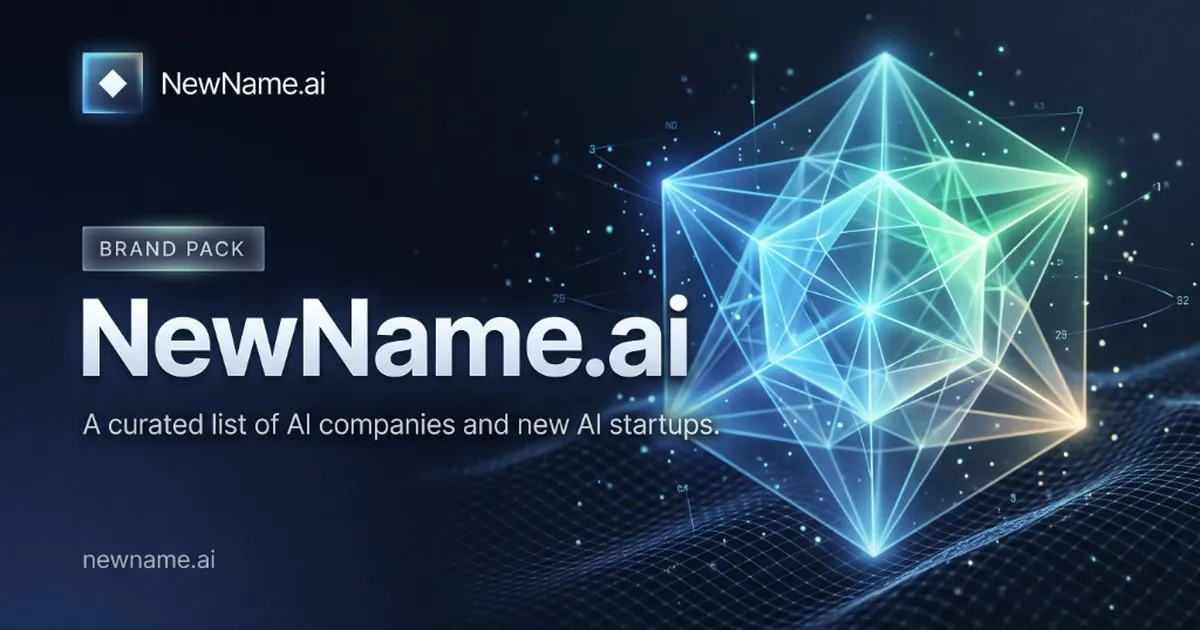
Example social card stored with the pack (1200×630). Same asset can be referenced from og:image tags.
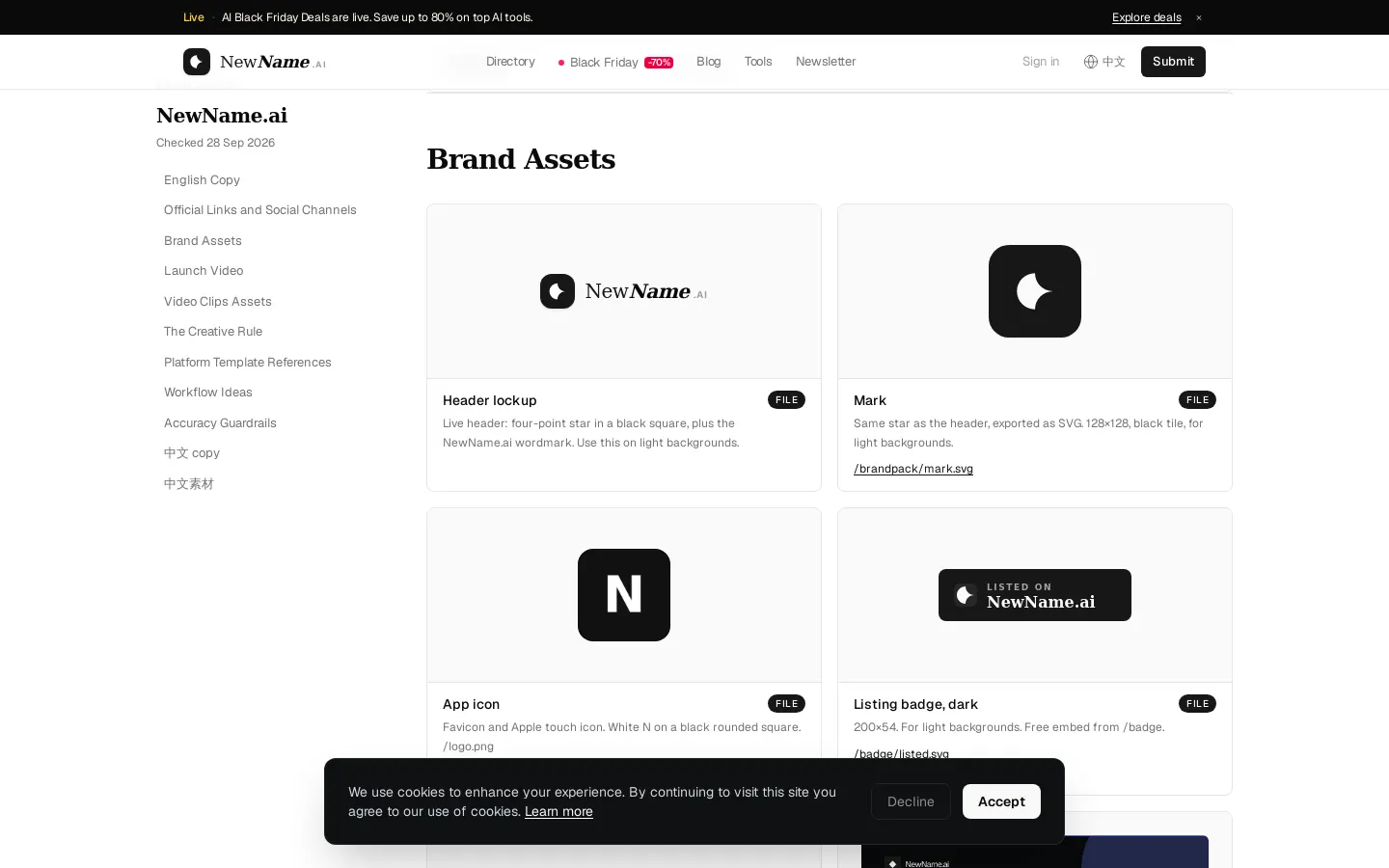
Brand assets on the page: lockup, SVG mark, listing badges, file paths—downloadable, not “ask design later.”
AI crawlers and assistants follow what you publish
Here is the angle founders underweight.
Search engines and many AI systems that fetch pages do not get a private briefing. They see HTML: headings, tables, lists, alt text, and links. If your only “official” story lives in a Google Drive PDF, crawlers never see it. If your public story is scattered across a poetic homepage, a sales deck PDF, and three social bios, summarizers average the mess.
A Brand Pack page gives them—and anyone pasting your URL into ChatGPT, Claude, Perplexity, or an agent workflow—a single, structured source:
- Product name as an exact string
- What the product is (and what it is not)
- Length-banded descriptions ready to quote
- Canonical URLs for site, list, submit, blog
- Explicit Missing slots so invented socials are harder to justify
- Creative rules and guardrails that constrain overclaiming
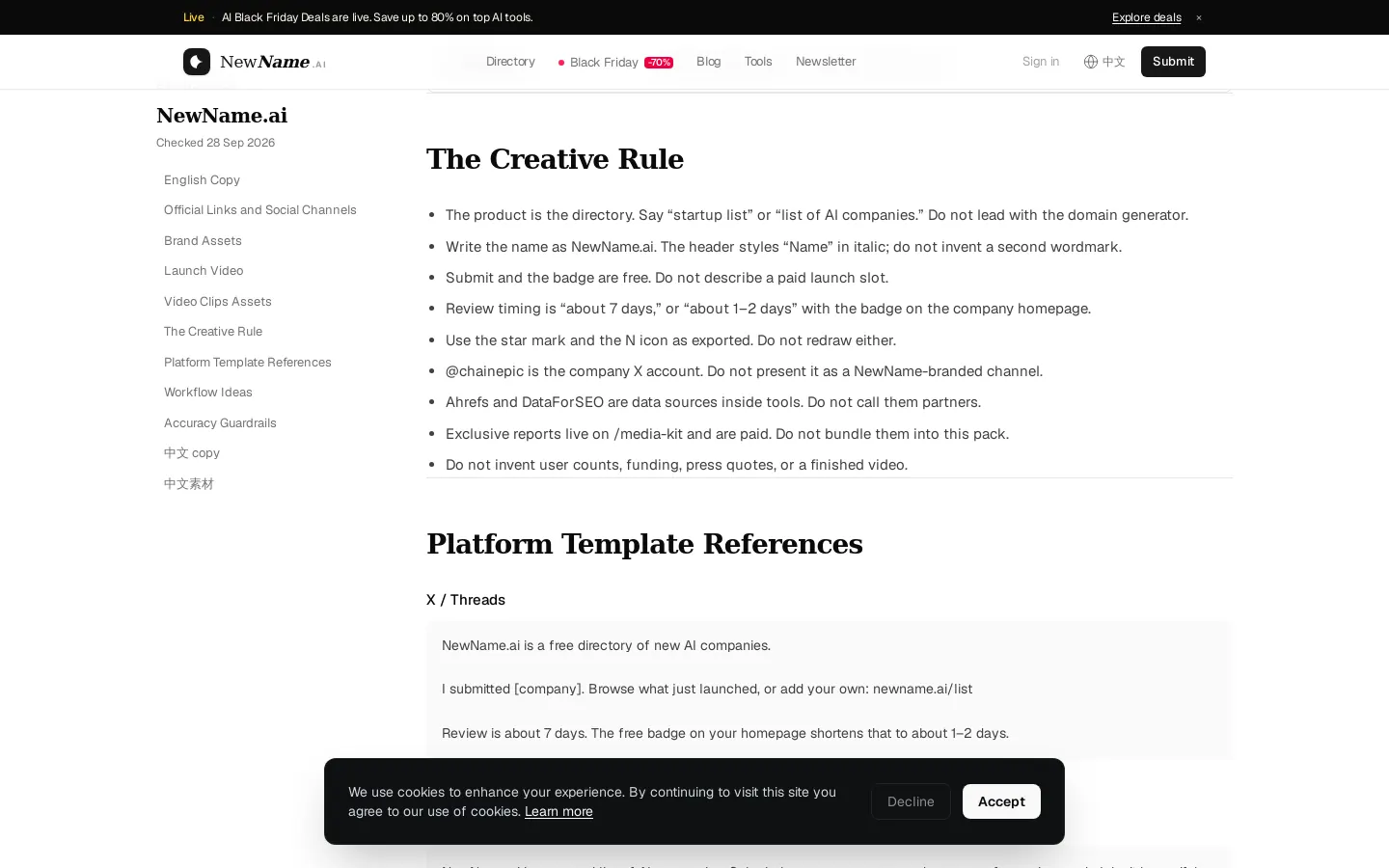
Creative rules on our pack: lead with the directory, not the domain generator; do not invent metrics; do not redraw the mark.
That last point is first-hand for us. NewName.ai is a startup list of new AI companies. Side tools (domain generator, handle checker, DR) sit next to the list—they are not the product. Without a written rule on the Brand Pack, an assistant that only reads the tools marketing can summarize us as a naming tool. The pack page is where we correct that bias in public.
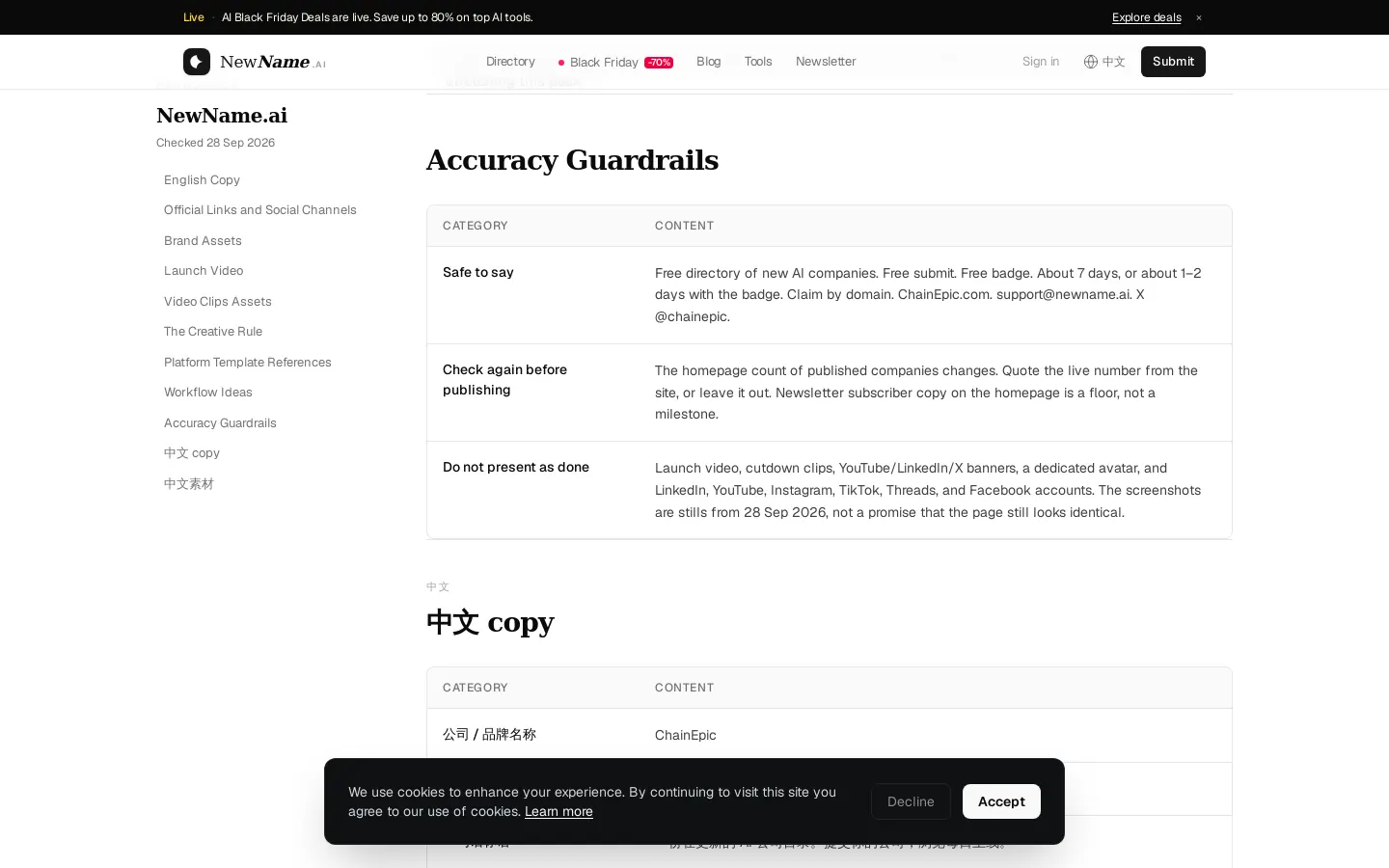
Accuracy guardrails: claims we will not make without a source—useful for humans writing posts and for models that overgeneralize.
What this is not: a secret schema that forces AI Overviews to cite you. Keep doing normal SEO—crawlable pages, clear titles, unique useful content. The Brand Pack is the brand’s fact sheet inside that same web.
Screenshots beat abstract promises
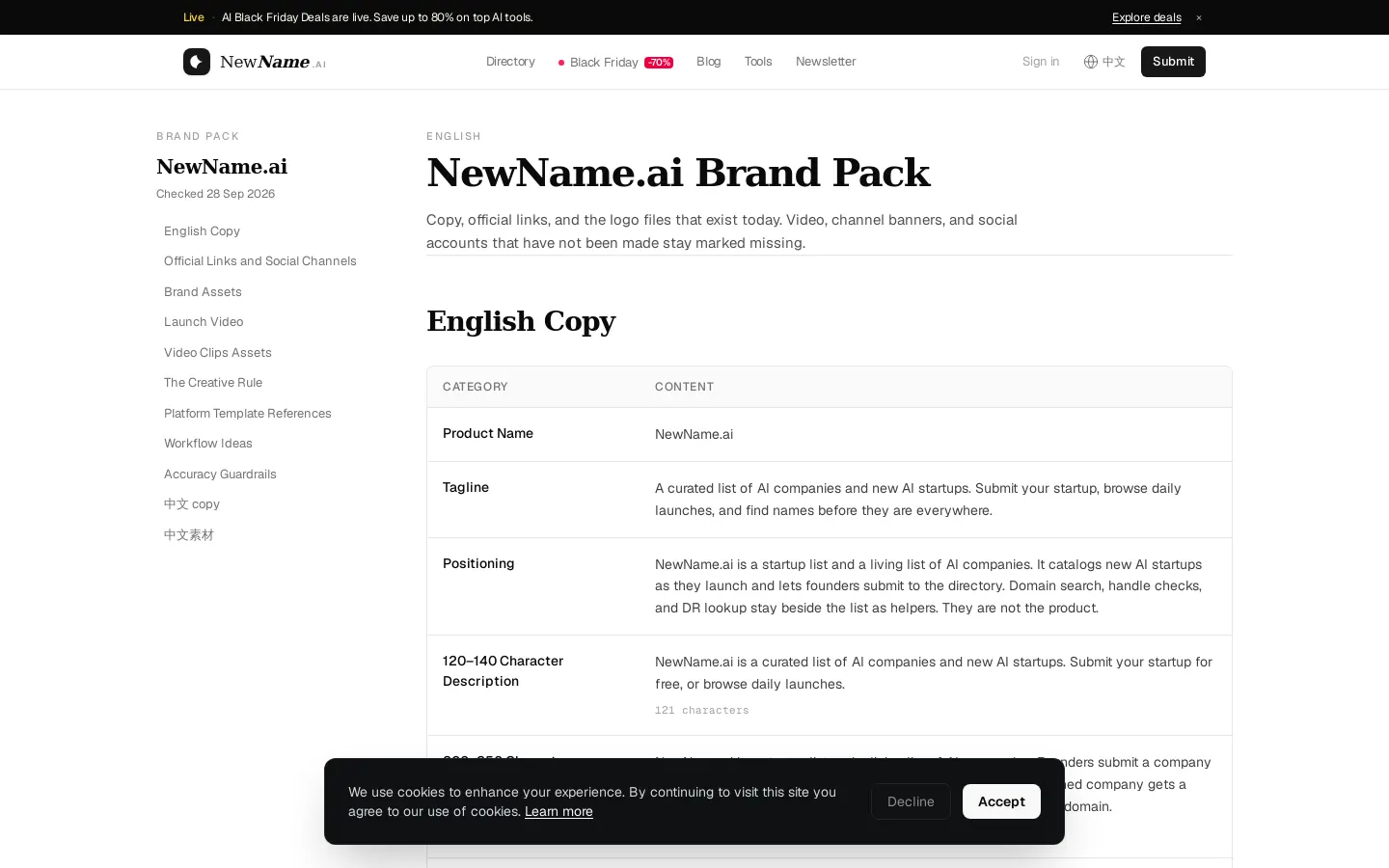
Partners and models both trust evidence they can see. Homepage and first-level screenshots (pricing, about, list) show what ships today. Deep product URLs go stale; a capped gallery of real pages ages better.
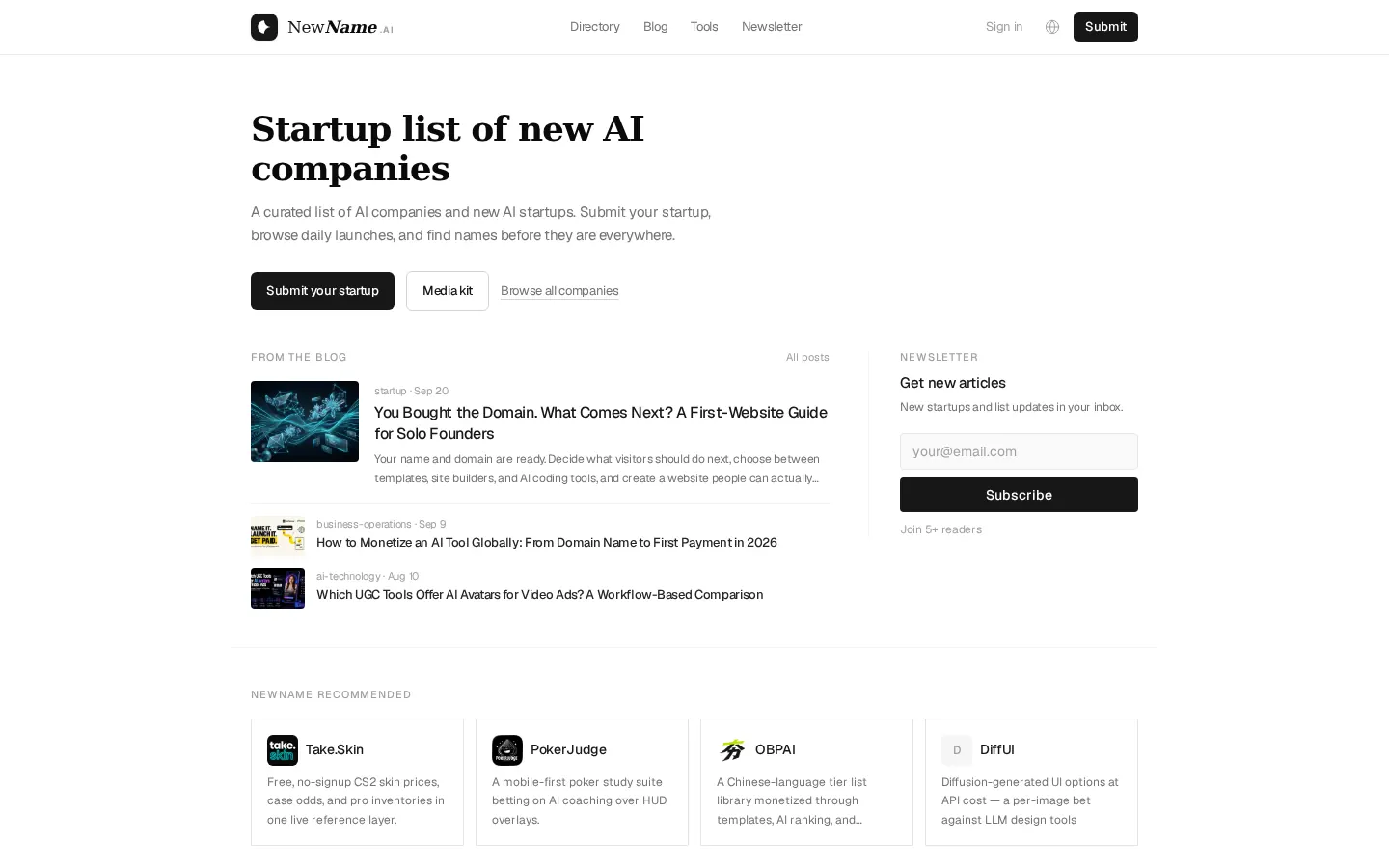
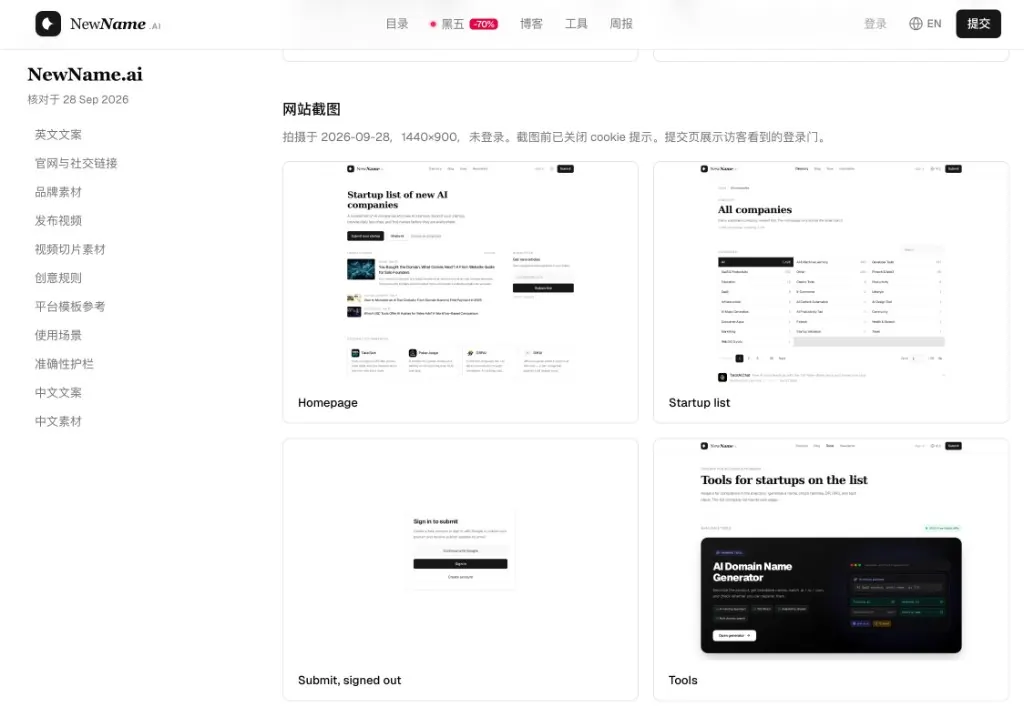
Homepage capture from the pack gallery (1440×900, signed out).
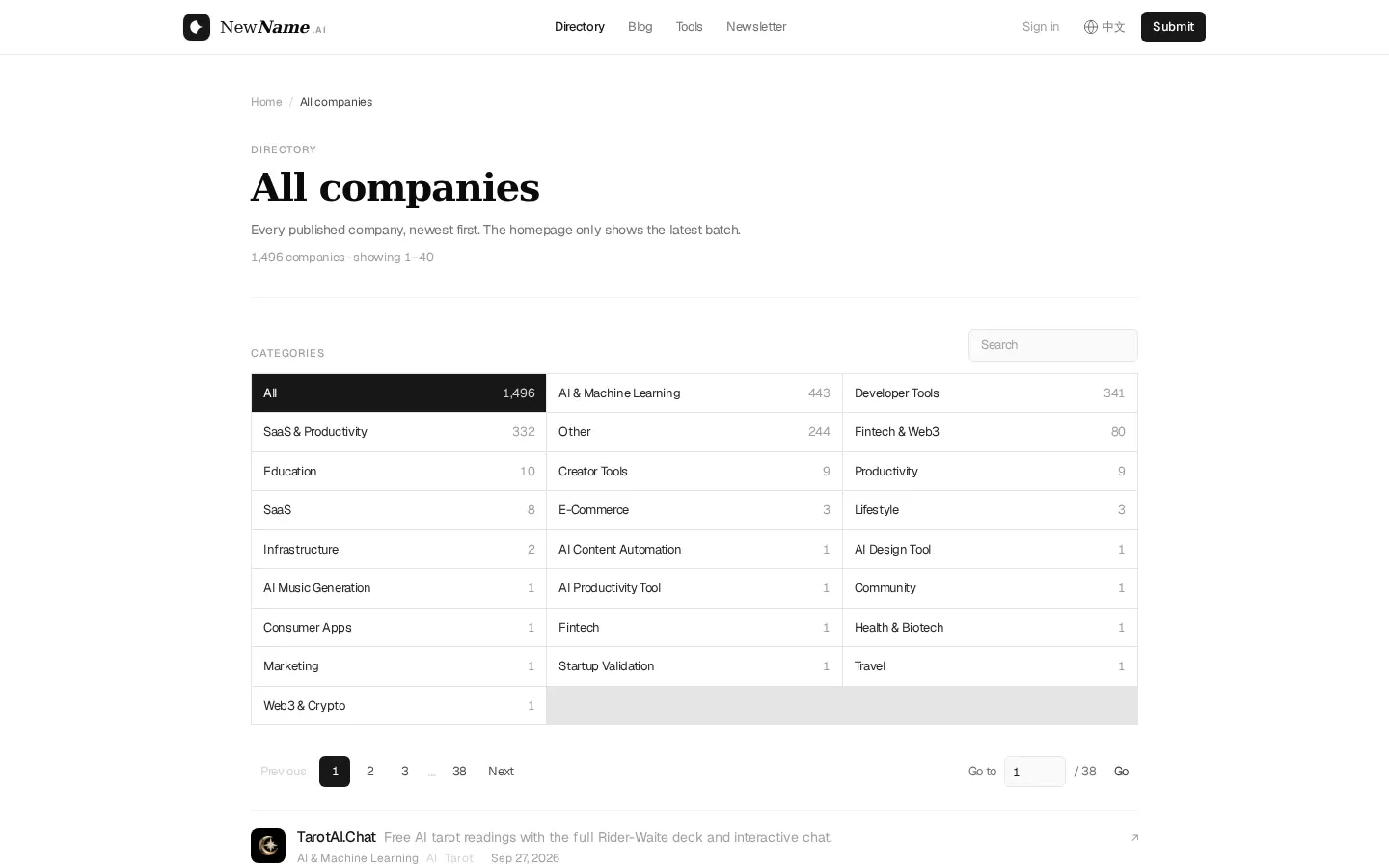
Directory / list capture—the product surface the copy claims to describe.
When an assistant or a journalist asks “is this real?”, screenshots on the pack page answer faster than a marketing adjective.
A page beats a private ZIP
| Format | Partners | Crawlers / AI fetch | Team reuse |
|---|---|---|---|
| Slack paste | Expires | Invisible | Chaotic |
| Drive ZIP | Works if shared | Usually invisible | Version drift |
| Notion (private) | Needs access | Blocked | OK internally |
| Public Brand Pack URL | One link | Fetchable | One source of truth |
You can still ship a ZIP for offline use. The hosted page is what makes the pack part of the open web.
How to get one without rebuilding from scratch
We publish our own pack at /brandpack because we use the same structure we sell. Brand Pack Creator builds a similar page from your website URL: evidence-backed copy bands, link inventory, 1200×630 card, homepage + priority secondary screenshots (up to 20), creative rules, guardrails, hosted page (90 days), and a ZIP—Black Friday early-bird $4.98 for one language (was $9.99, 50% off).
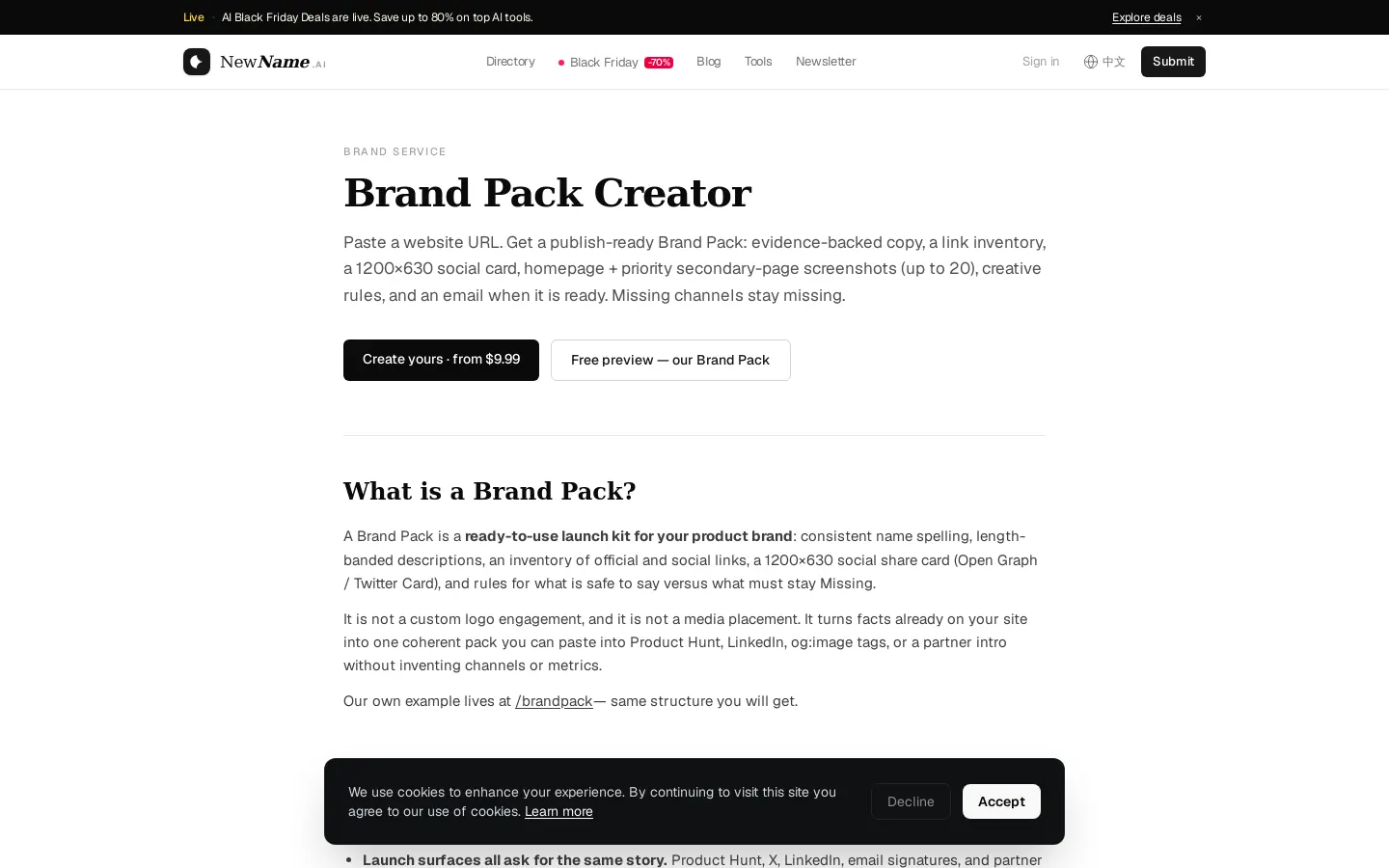
Creator entry: paste a URL, preview our free example, then generate your pack.
Need a written exclusive report instead of assets? That is a separate path: Media Kit.
Bottom line
You need a Brand Pack page because brand consistency is no longer only a partner-ops problem. Launch surfaces multiply your one-liner. Link previews need a real card. And anything that crawls or summarizes the public web will invent a story from whatever it can see—unless you put a clear, honest fact sheet at a stable URL.
Publish the page. Mark Missing as Missing. Write the rules you wish every intern—and every model—would follow. Then point every partner, every launch form, and every “what do you do?” prompt at that same link.