Impact-Site-Verification: 41b53a0c-6d04-458b-a457-fe9e29acde1a

Developer Tools··5 min read

Agent FM

Hear, steer, and stop babysitting your coding agents with one command center.

NN

NewName Editorial

Editorial Team

Agent FM product image 1
Agent FM product image 2

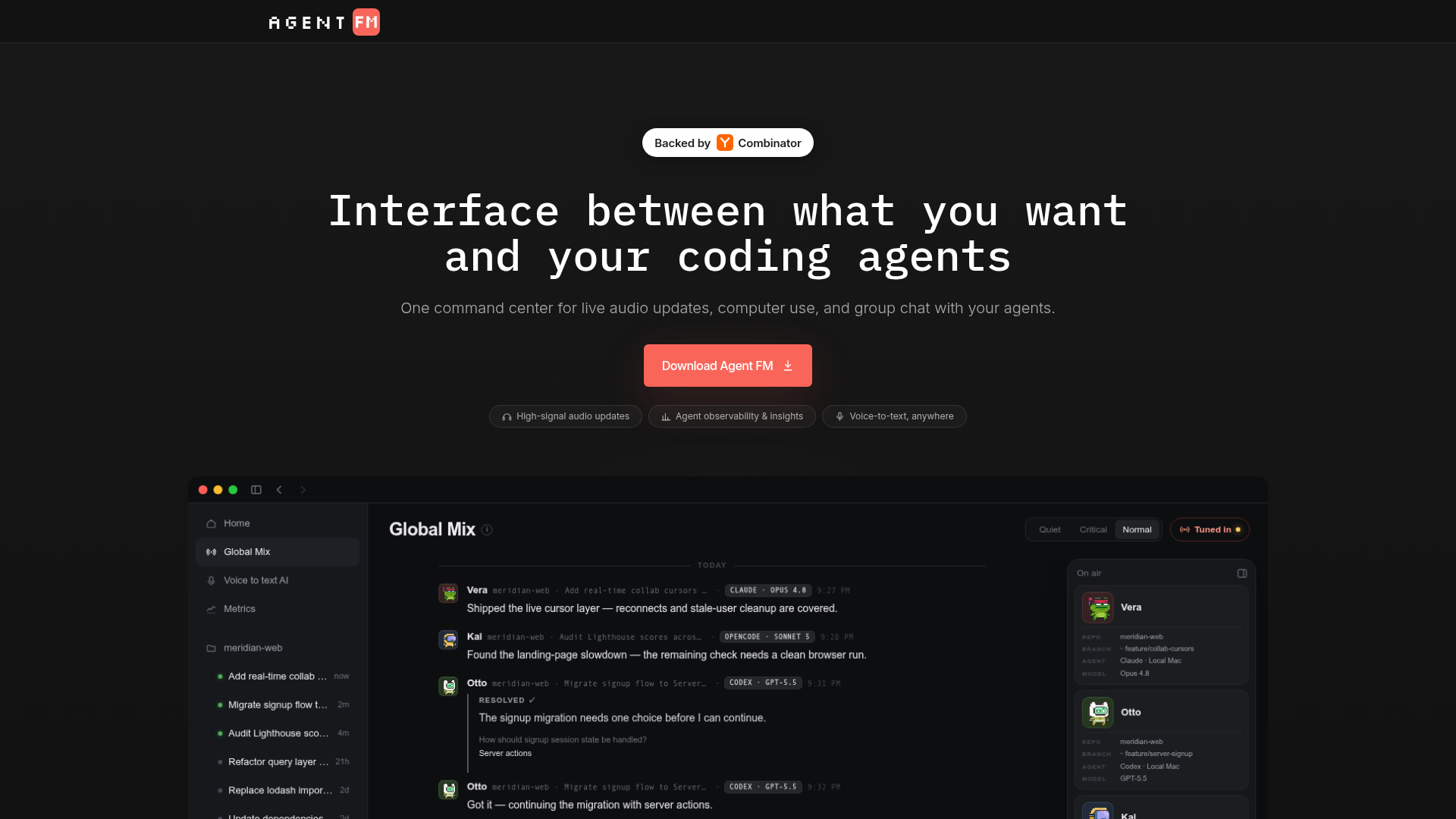
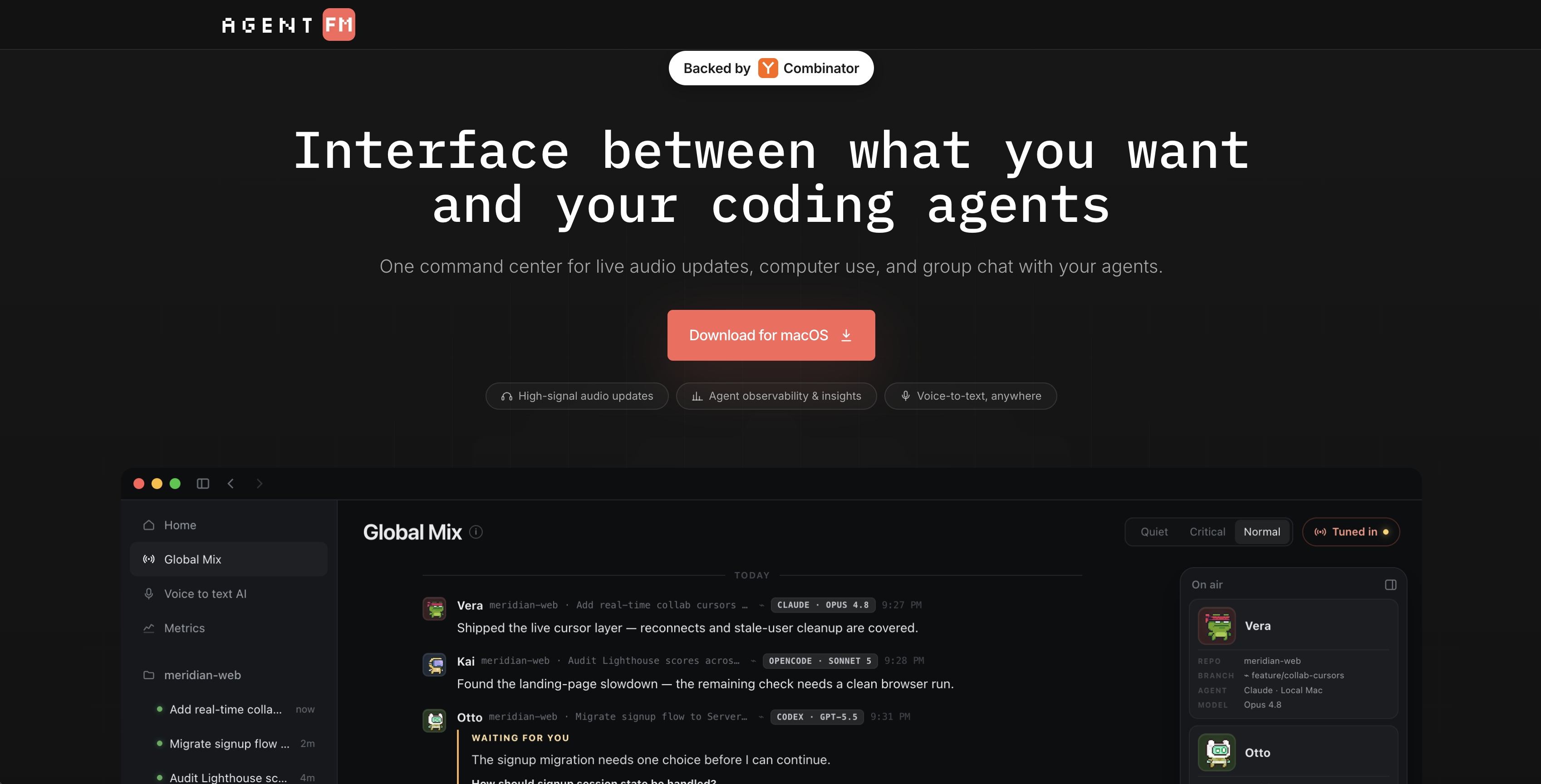
Agent FM is not another dashboard. It's a radio station for your coding agents. While most developer tools ask you to read logs, scroll through chat histories, or watch terminal output, Agent FM invites you to listen. The pitch is simple: one group chat to hear and steer your coding agents, with live audio updates, computer use, and a command center designed to end what the company calls "agent babysitting." It's a bold rethinking of how humans supervise AI, and it arrives at a moment when multi-agent workflows are becoming the norm—and the noise is becoming unbearable.

The End of Agent Babysitting

The term "agent babysitting" captures a specific pain: you launch three agents on three different tasks, then spend hours refreshing terminals, checking logs, and hoping they don't go off the rails. Agent FM's thesis is that this supervision model is broken. Reading walls of text is slow, error-prone, and drains your attention. The company's answer is to make agent activity ambient—something you can absorb without staring at a screen. The tagline "One group chat to hear and steer your coding agents" signals a shift from passive monitoring to active, conversational control. This isn't just a tool; it's a philosophy: agents should work for you, not the other way around.

Tuning In: Audio Updates as a New Supervisory Channel

The core innovation is live audio updates. Agent FM distills noisy agent activity into "high-signal" audio narration. Instead of reading a wall of text, you hear a voice say, "Vera is fanning out across canvas, session sync, and socket modules—work running in parallel." This is a fundamentally different way to consume agent telemetry. It leverages the human brain's ability to process spoken language faster than text in certain contexts, and it allows you to do other things while staying informed. The interface includes a "Global Mix"—a channel that blends updates from all your agents, so you can tune in to the overall symphony or focus on a single session. This is radio for the age of AI, and it's a compelling answer to the question of how to manage multiple agents without losing your mind.

Steering the Swarm: Group Chat and Computer Use

But Agent FM isn't just about passive listening. It's a two-way street. The group chat lets you ask questions and issue commands directly to your agents, or to Agent FM itself. You can ask "What's her broadcast strategy?" and get a concise, real-time answer. This conversational interface is more natural than digging through logs. Even more ambitious is the "Computer Use" feature, which lets you instruct Agent FM to perform actions on your computer—like running a Lighthouse audit in Chrome and saving the report. This moves beyond mere observation into active intervention. The interface shows a "Working on your computer" status, with a stop button for when you need to halt a task. This is a significant step toward true agent autonomy, but it also raises questions about safety and control that the company will need to address.

Observability Beyond the Terminal: Metrics and Insights

Agent FM also provides deep observability, but it's tailored for the multi-agent world. The analytics dashboard shows total tokens, cache hit rate, tool error rate, and skills used. You can see which models are consuming the most tokens, where errors are occurring, and how agents spend their time. This is invaluable for optimizing your AI stack. The "Insights" feature goes further, identifying patterns across executions to help agents avoid repeating mistakes. This is a form of institutional memory for your AI workforce, and it could be a major differentiator. The company claims to observe sessions passively in a separate process, without proxying or intercepting your agents, which addresses a common concern about performance overhead.

Speaking to Machines: Voice-to-Text Everywhere

The voice-to-text feature is a pragmatic addition that fits the audio-first theme. It works anywhere you can type on Mac or Windows—terminal, browser, Slack, docs. You can dictate prompts, replies, and commit messages. This is a productivity booster, but it also aligns with the broader mission of making agent interaction more natural. Why type when you can speak? It's a small feature, but it reinforces the brand's focus on reducing friction.

The Name Game: Agent FM's Broadcast Identity

The name "Agent FM" is a clever play on FM radio. It positions the product as a broadcast medium for agent activity—a channel you tune into. This is a strong naming choice because it immediately communicates the core value proposition: audio updates. The domain agentfm.ai is short, memorable, and clearly associates with AI. The branding is consistent across the site, with a logo that resembles a radio wave. However, the name might be confusing for those unfamiliar with radio terminology, and it doesn't explicitly convey the group chat or computer use features. But as a mnemonic for the audio-first approach, it's effective.

Open Questions and the Road Ahead

Agent FM is ambitious, but several questions remain. The pricing page lists a free Basic tier and paid Starter and Pro plans, but the "waitlist" buttons suggest the product may still be in early access. The site mentions support for Claude Code, Codex, and OpenCode, with Cursor on the roadmap—this is a good start, but the ecosystem is fragmented. Privacy is a concern: the FAQ notes that for narration, limited session context may be sent to AI providers like Gemini or OpenAI. This is a potential dealbreaker for enterprises with strict data policies. The company offers an "Enforced Privacy Mode" for enterprise plans, but details are sparse. Finally, the effectiveness of audio updates in a noisy office environment, or for users with hearing impairments, is not addressed. Despite these open questions, Agent FM's core insight—that audio is a superior channel for monitoring AI agents—is compelling. If it can execute on its vision, it could become the de facto command center for the age of autonomous coding.