Fokal
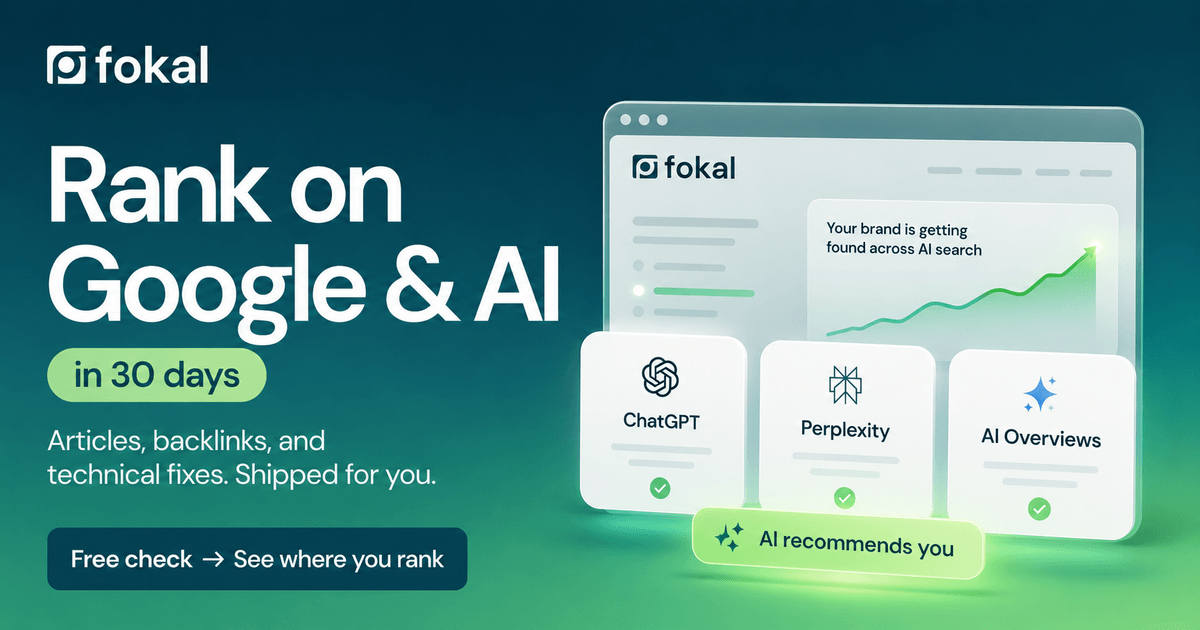
Fokal gets your brand cited by ChatGPT, Perplexity, and Google—automatically.
NewName Editorial
Editorial Team


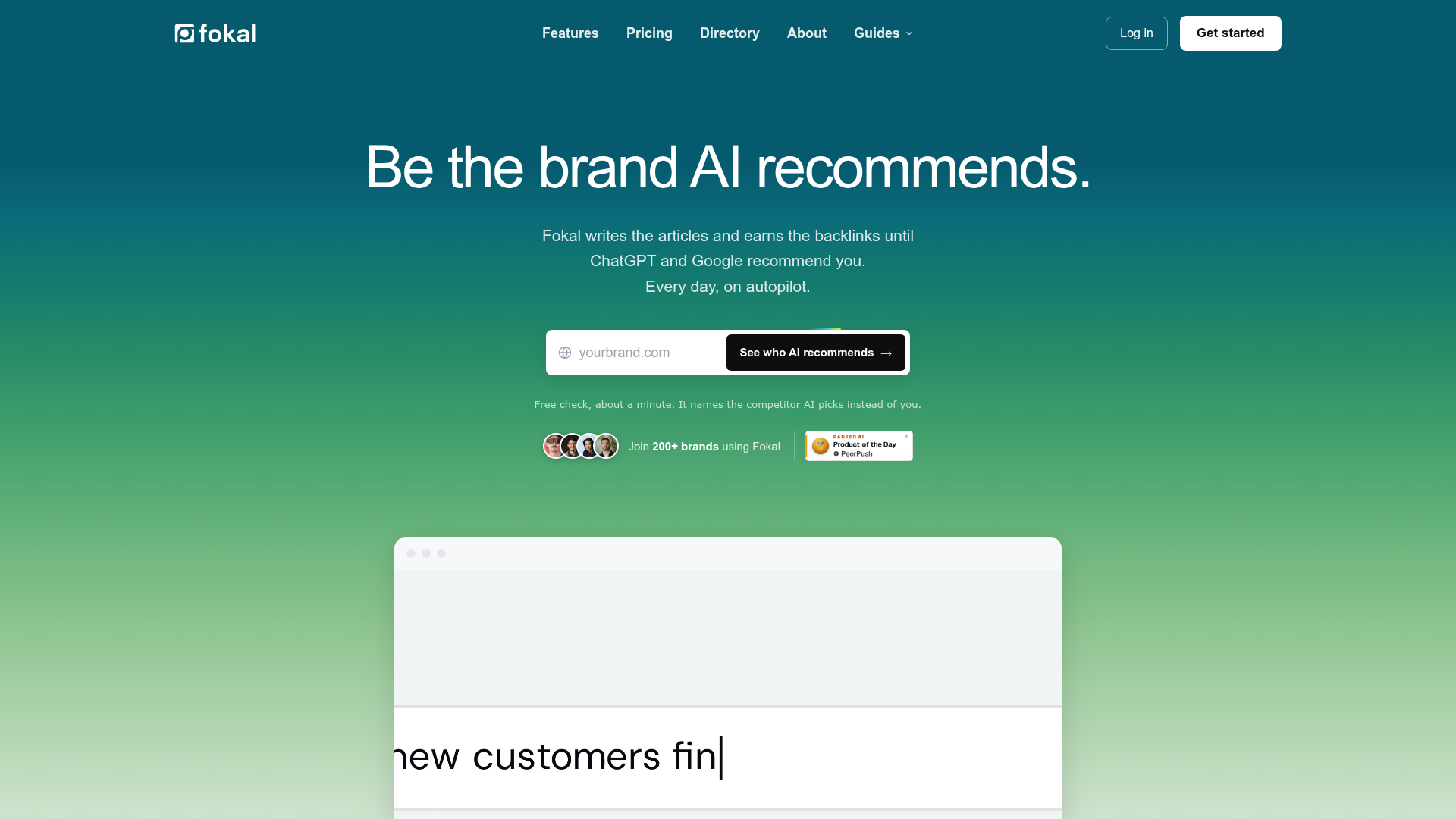
For most companies, SEO now has two fronts: the classic Google ranking war, and a newer, murkier one where AI engines decide whether to name your brand in an answer. Fokal, an AI SEO tool from the team behind the Fokal.com domain, is built specifically for that second front. Its pitch is blunt: "Be the brand AI recommends." And it's not just another rank tracker—it's a full-service loop that writes articles, earns backlinks, and monitors citations across ChatGPT, Perplexity, and Google AI Overviews.
That's a bold claim, and the evidence on Fokal's site suggests it's not vaporware. Case studies show real clients like Re., an Australian running sunglasses brand, going from 218 to 114,677 monthly Google impressions in sixteen months, and Zerentry, a B2B finance tool, climbing from a Domain Rating of 4 to 28. But the real story is in how Fokal is positioning itself for a category that's still being defined.
The new visibility problem: being cited, not just ranked
Traditional SEO is about ranking high on a search engine results page. AI search changes the game: when a user asks ChatGPT or Perplexity a question, the engine synthesizes an answer and cites sources. If your brand isn't in that citation, you're invisible—even if you rank on page one of Google. Fokal's entire premise is that this citation gap is the new battleground. Its homepage doesn't talk about keywords and meta descriptions; it talks about being "cited by ChatGPT, Perplexity, and Google AI Overviews."
This is a smart pivot. Most SEO tools are still anchored to Google's SERP, measuring rankings and clicks. Fokal is explicitly tracking AI citations, which is a different metric with different implications. A citation in an AI answer can drive traffic, but more importantly, it builds brand authority in a space where trust is algorithmically determined. Fokal's free report is designed to show you exactly where you stand.
What the free report actually shows you
The entry point to Fokal is a free check that claims to take about a minute. You enter your domain, and Fokal queries ChatGPT, Perplexity, and Google AI Overviews to see which brands they recommend for your keywords. The report names the competitor AI picks instead of you, and it gives you a keyword you can win—plus a free article written for that keyword, published to your site, with a real editorial link back.
That's a clever lead magnet. It's not just a report; it's a demonstration of the core loop. You see the gap, you get a piece of content that starts to close it, and you're hooked. The report is saved to your dashboard, so you can see the progress over time. It's a low-friction way to show value before asking for a credit card.
The loop: articles, backlinks, and the citations that follow
Fokal's core offering is a compounding loop: it researches topics based on your Search Console and Analytics data, writes on-brand articles, publishes them to your site (auto-publishing to Wix, Webflow, Shopify, or via GitHub for developers), earns do-follow backlinks from relevant sites, and tracks AI citations. Each week, new articles and links stack on top of the old, so month three beats month one.
The case studies illustrate this. Re. shipped 56 articles in about three months and saw impressions climb from 218 to 114,677. CardTracker, a Pokémon card price tracking site, published a pre-order guide 24 days before search volume spiked, and it became the most-visited page on the site, with a 9,000% increase in clicks. These are concrete numbers, though they're self-reported and should be taken with a grain of salt.
What's notable is that Fokal doesn't just write content—it also handles the backlinks, which is the part most SEO tools leave to you. The site claims it finds relevant sites, secures the link, and checks it stays live weekly. This is a differentiator, because backlinks are hard to automate and often require outreach and relationship building.
Why the backlink part is the hard part
Backlinks are the currency of SEO authority, and they're notoriously difficult to earn at scale. Fokal's approach is to bundle them into the subscription, which is a significant value proposition. The Zerentry case study shows a do-follow backlink from a DR 22 finance site, earned via outreach and verified live. That's the kind of thing that would cost hundreds of dollars if you bought it separately, and it's risky to do yourself.
But there's a tension here. Fokal is an AI tool, and AI-generated content often struggles to earn editorial links. The site addresses this by saying it writes "on-brand" articles and generates realistic product images, but the proof is in the results. The case studies suggest it works, but they're selective. The broader question is whether Fokal can scale this for every client, or if the backlink service is more of a concierge feature for a few.
The name says 'focus' — but on what?
Fokal is a clever name. It sounds like "focal," suggesting focus and clarity. It's short, memorable, and easy to spell. The domain fokal.com is a strong asset—it's a .com, which is still the gold standard, and it's a brandable word, not a generic keyword. The name doesn't tell you what the product does, which is a risk, but it's distinctive enough to stand out in a crowded SEO tool market.
The branding is consistent: the site uses a clean, modern design with a focus on the "Be the brand AI recommends" tagline. The name doesn't scream "SEO," but it does suggest precision and visibility, which aligns with the product's promise. The main risk is that "Fokal" could be confused with other brands or misspelled, but it's short enough to overcome that.
What Fokal doesn't tell you
The site is transparent about some things—it lists pricing tiers (Free, and presumably paid plans) and shows client logos—but it doesn't disclose the cost of paid plans or the details of the backlink outreach process. It also doesn't address the potential downsides of AI-generated content, like Google's stance on it or the risk of algorithmic penalties. The case studies are impressive, but they're a small sample, and the site doesn't show a full list of clients or their results.
There's also the question of sustainability. AI citation tracking is a new field, and the algorithms that decide citations are opaque and change frequently. Fokal's research section, which is based on patents and official docs, suggests a thoughtful approach, but it's a moving target. The tool's effectiveness could diminish if AI engines change how they cite sources.
Despite these open questions, Fokal is making a compelling case for a new category of SEO. It's not just a tool; it's a service that does the work for you. For busy founders who don't have time to write articles or build links, that's a powerful pitch. The free report is a smart way to get in the door, and the case studies suggest real results. Whether it can sustain that momentum at scale remains to be seen, but Fokal is definitely a brand to watch in the AI SEO space.