Bizmark
An operating system for physical industries, promising applied intelligence without the AI hype.
NewName Editorial
Editorial Team


The Name Says 'Boring' — That's the Point
In a sea of AI startups with names like "Cognify" or "DeepMind," Bizmark stands out for its deliberate plainness. The name sounds like a utility — something you'd find in a logistics yard or a factory floor, not on a tech conference stage. That's not an accident. Bizmark's tagline, "Transforming physical industries," and its self-description as "the operating system for companies that make, move, or sell physical goods" signal a clear intent: this is software for the real economy, not for the cloud-native crowd.
The name itself is a portmanteau of "business" and "mark," suggesting a stamp of operational efficiency. It's unglamorous, almost industrial. For a company targeting manufacturers, freight movers, and retailers, that's a strategic choice. It tells potential customers: we're not here to dazzle you with algorithms; we're here to run your operations.
What 'Applied Intelligence' Means for Physical Industries
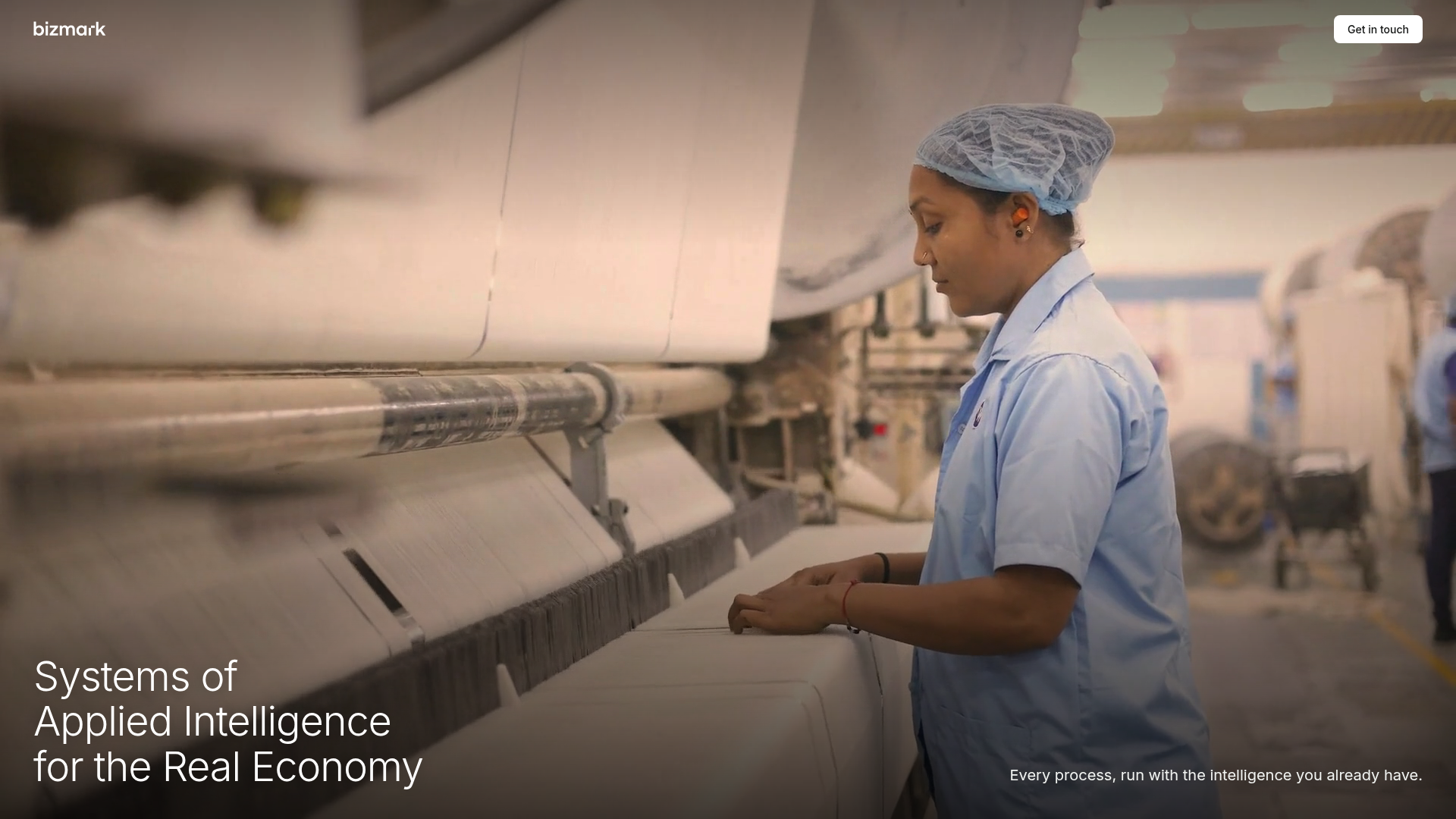
Bizmark's website copy is sparse but deliberate. "Systems of Applied Intelligence for the Real Economy" is the headline, followed by "Every process, run with the intelligence you already have." That last phrase is the most telling. It suggests that Bizmark isn't trying to replace human expertise with black-box AI — it's trying to systematize the knowledge that already exists inside a company.
For a manufacturer, that could mean capturing the tacit know-how of a veteran plant manager and embedding it into daily workflows. For a distributor, it might mean optimizing inventory decisions based on years of demand patterns. The pitch is less "AI will do your job" and more "your organization already knows how to do this; we'll make that knowledge operational."
This is a fundamentally different value proposition from generic AI copilots that promise to write emails or generate code. Physical industries have complex, messy, real-world constraints: machine downtime, supply chain delays, safety regulations. Bizmark's positioning suggests it understands that intelligence must be applied within those constraints, not abstracted away from them.
The Missing Evidence: What Bizmark Hasn't Said Yet
Public materials about Bizmark are thin. The website is a single page with a tagline and a contact link. The Y Combinator launch listing adds tags — Artificial Intelligence, Manufacturing, Automation — but no specific product details, no customer names, no metrics, no founder background. This is a company in its earliest seed stage, and it's choosing to stay quiet.
That silence is itself a signal. Many startups launch with a press release and a demo video. Bizmark is doing the opposite: it's asking interested parties to "get in touch" via a LinkedIn profile, suggesting a relationship-driven sales approach rather than a broad marketing blitz. For a product aimed at legacy industries, that might be smart. Buyers in manufacturing and logistics are skeptical of flashy tech; they want to talk to a human who understands their problems.
But the lack of detail also creates risk. Without concrete examples of what Bizmark actually does — which processes it automates, which industries it serves first, how it integrates with existing ERP or MES systems — the promise of "applied intelligence" remains abstract. Potential customers and investors are left to fill in the gaps with their own assumptions, which may or may not align with the company's actual roadmap.
Why the Real Economy Needs a Different Operating System
The phrase "operating system" is overused in tech, but for physical industries it carries real weight. Companies that make, move, or sell physical goods run on a patchwork of software: ERPs, CRMs, spreadsheets, whiteboards, and tribal knowledge. The promise of an "operating system" is that it unifies these disparate tools into a single, coherent layer — much like Windows or iOS unified personal computing.
Bizmark is entering a crowded field. Giants like SAP and Oracle already claim to serve this market, and a wave of vertical SaaS startups are nibbling at specific niches. What could differentiate Bizmark is its focus on "applied intelligence" — not just storing data or automating workflows, but embedding decision-making into the core of operations. If it can deliver on that, it could carve out a meaningful position.
However, the bar is high. Physical industries are risk-averse and slow to adopt new technologies. A single failed implementation can cost millions. Bizmark's quiet, consultative approach might be the right way to build trust, but it also means the company will need to prove itself in small, concrete wins before it can claim to be an industry standard.
The Risk of a Name That Promises Too Much
"Bizmark" is a safe name, but it's also a generic one. It doesn't evoke intelligence, automation, or even physical goods. It's a name that could belong to a marketing agency or a financial services firm. That's a double-edged sword. On one hand, it avoids the hype trap; on the other, it fails to communicate what the company does.
The tagline "Transforming physical industries" is more descriptive, but it's also a bold claim. Transformation is a heavy word — it implies fundamental change, not incremental improvement. For a seed-stage startup with no public case studies, that's a high bar to set. If Bizmark can't deliver visible transformation in its early pilots, the name and tagline will feel like overpromises.
Yet there's a counterargument: the name's very blandness could be a strategic asset. In a market tired of AI buzzwords, "Bizmark" sounds like a company that gets down to business. It's the kind of name that might appeal to a plant manager who's been burned by overhyped software. The key will be whether the product can live up to the understated confidence the name projects.
For now, Bizmark remains an intriguing question mark. Its positioning is clear, its name is deliberate, but its proof is absent. The next few quarters will reveal whether it can turn "applied intelligence" from a slogan into a reality.