OpenVector
Turning any camera into an autonomous worker that acts inside your existing systems.
NewName Editorial
Editorial Team


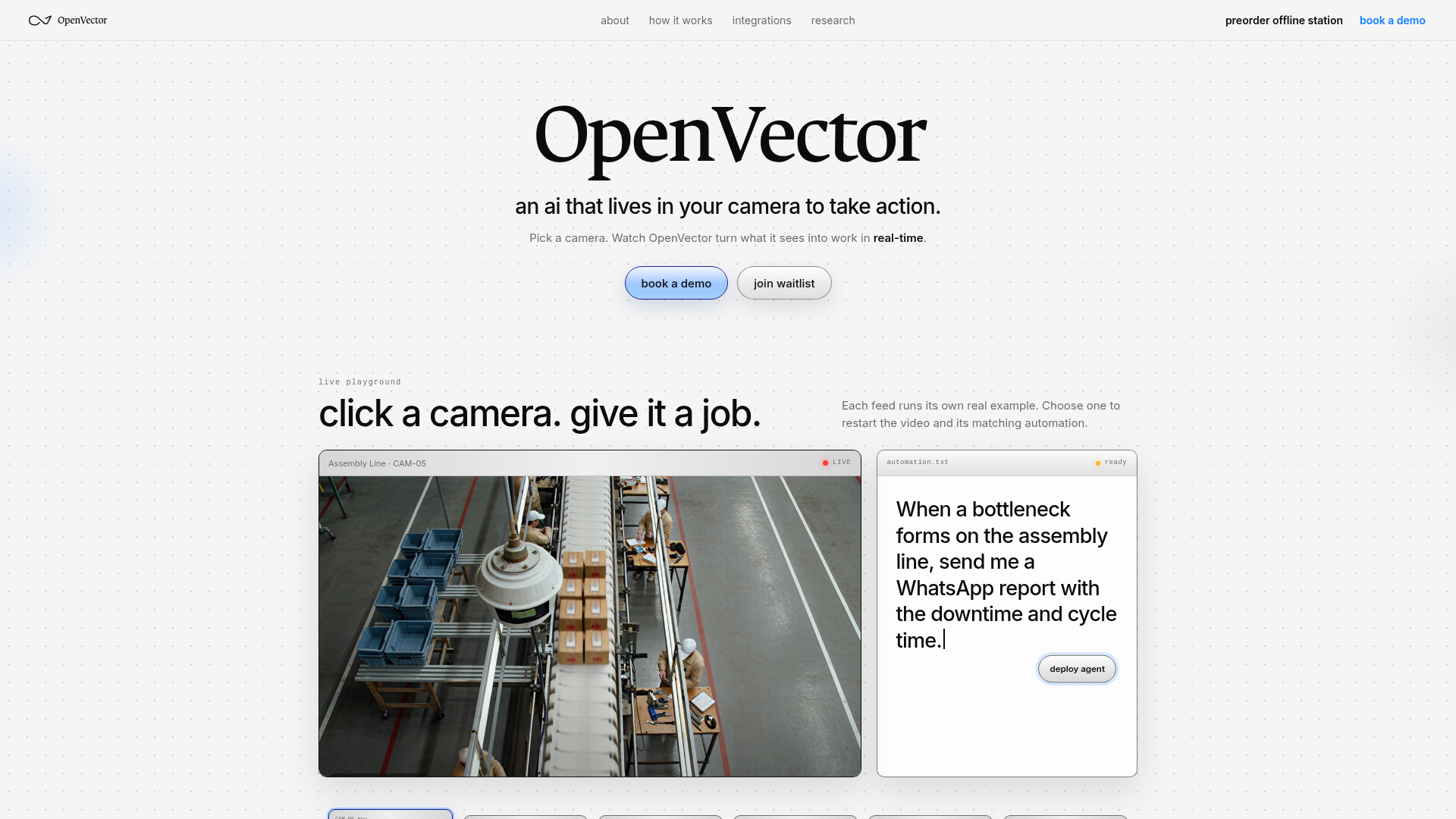
OpenVector is not another video analytics dashboard. Its pitch is blunt: "Most cameras just record. We give them the ability to do real work." The company, founded by a Harvard PhD dropout and a Carnegie Mellon embedded systems engineer, wants to transform the humble camera from a passive observer into an autonomous worker. The thesis is that the hardest part of computer vision isn't recognizing objects—it's deciding what to do about them and then doing it. OpenVector aims to close that loop, and its website offers a live playground that makes the promise tangible.
From passive surveillance to active work
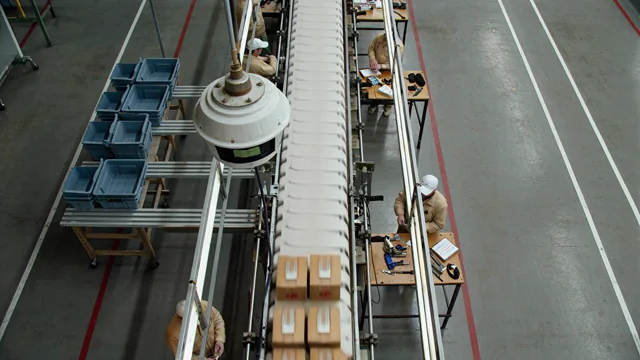
For decades, cameras have been the eyes of industry, but they've lacked hands. They watch assembly lines, parking lots, and clean rooms, but they don't act. A traditional system might flag a bottleneck or a safety violation, but a human still has to read the alert, open the right app, and send the email. OpenVector skips that chain. It doesn't just detect a bottleneck on an assembly line; it sends a WhatsApp report with the downtime and cycle time. It doesn't just notice a missing PPE; it files an incident report in your CRM. The camera becomes a worker, not a witness.
The company's tagline—"Self-improving AI that turns any camera into an autonomous worker"—is a mouthful, but it captures the ambition. The "self-improving" bit is a promise, not a proven feature, but the core idea is clear: OpenVector wants to be the layer that converts pixels into actions.
The live playground: proof before pitch
Most AI startups show you a demo video. OpenVector shows you a live playground. On its homepage, you can click a camera feed—an assembly line, a floor entry, a clean room—and watch OpenVector detect a bottleneck, a PPE violation, or a tailgating incident in real time. The interface displays a confidence score (e.g., BOTTLENECK 0.89) and a preview of the automation it would trigger. You can even restart the video and watch the automation run again.
This is a clever go-to-market move. Instead of asking you to trust a case study, OpenVector lets you see the system work on real examples. It also demonstrates the product's core value: not just detection, but action. The playground shows a WhatsApp report being sent, a daily report being generated. It's a small but powerful proof that the camera is doing work, not just watching.
Acting inside the systems your industry already runs
The playground is compelling, but the real substance is in the integrations. OpenVector doesn't want to be another siloed tool; it wants to live inside the systems you already use. The website lists a dizzying array of acronyms—IWMS, ERP, WMS, POS, KDS, CRM, ACS, POST, CSP, ACS, HRIS—and explains that OpenVector turns camera events into actions in the operational system of record behind gyms, car washes, offices, warehouses, and restaurants.
For example, a gym might use Mindbody or Salesforce as its CRM. OpenVector can sync camera events with those systems: a member who tailgates through the gate could trigger an automatic update to their profile. A warehouse using a WMS might have OpenVector flag a bottleneck and create a work order. The company's pitch is that it works with any CRM or system you run, not just a proprietary stack.
This is a smart positioning. It acknowledges that cameras are already everywhere, but they're not connected to the software that runs the business. OpenVector bridges that gap, making the camera an input device for your operational systems.
The name says it all: vectors of action
The name "OpenVector" is a deliberate choice. In mathematics and physics, a vector has both magnitude and direction. OpenVector suggests a force that is not just observing but moving toward a goal. The "Open" prefix hints at openness—integration with existing systems, a platform approach. The name is abstract enough to cover multiple industries but specific enough to convey motion and purpose. It's a strong name for a company that wants to be the connective tissue between vision and action.
The domain, openvector.com, is clean and memorable. It's a .com, which is still the gold standard for credibility. The brand is still young, but the naming sets the right tone: technical, ambitious, and action-oriented.
What OpenVector doesn't tell you yet
The website is polished, but it leaves many questions unanswered. There's no pricing page, no detailed documentation, no case studies. The company is clearly in an early stage, and the "preorder offline station" link suggests it's planning a hardware component, but details are scarce. The "self-improving" claim is intriguing but unproven. How does the AI learn from its mistakes? What's the feedback loop? The site doesn't say.
There are also open questions about privacy and security. Cameras in the workplace are sensitive, and turning them into autonomous actors raises concerns. OpenVector will need to address these head-on if it wants to win trust.
Despite these gaps, OpenVector's approach is refreshing. It's not just another AI startup with a vague promise; it has a clear thesis, a live demo, and a focus on real-world integration. If it can deliver on its promise, it could turn every camera into a worker. That's a future worth watching.