Gamgee
Personalised mRNA cancer vaccines for dogs, built from each tumour.
NewName Editorial
Editorial Team


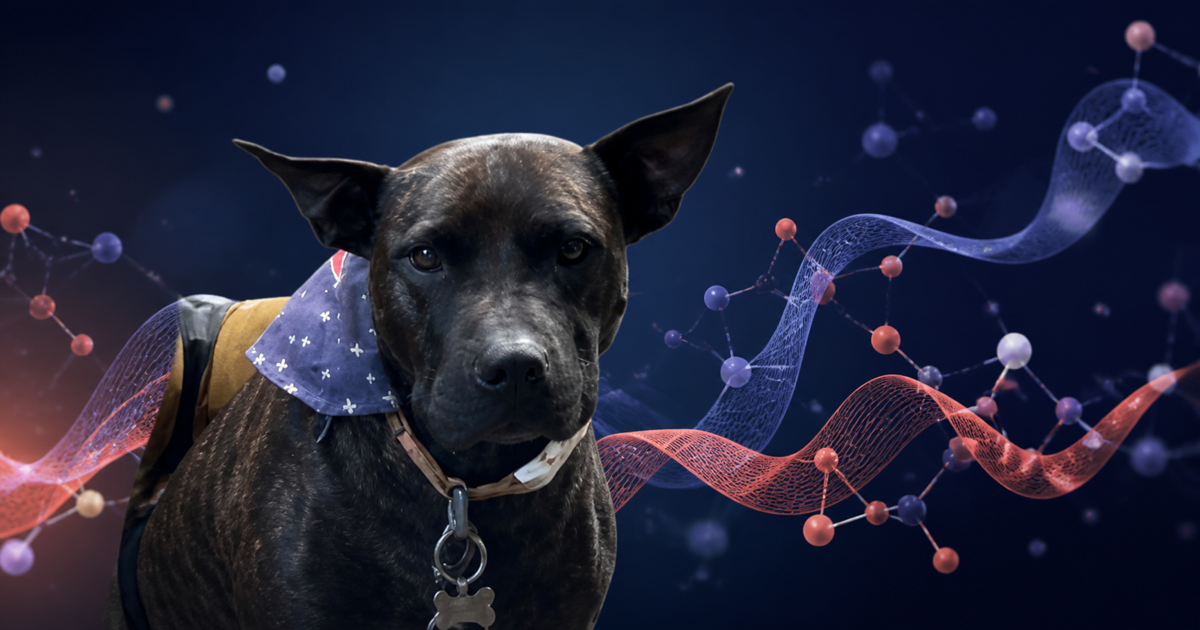
When Paul Conyngham's dog Rosie was diagnosed with mast cell cancer, the vets gave her months to live. Surgery, chemotherapy, and immunotherapy all failed. So Conyngham, a tech entrepreneur with no medical background, did something extraordinary: he used AI tools like ChatGPT and AlphaFold to design a personalised mRNA vaccine for his dog. The treatment added two more years to Rosie's life. Now, that DIY experiment has become Gamgee, a startup with backing from Y Combinator and Founders Fund, and a waitlist of over 300 dogs.
Gamgee's pitch is simple and audacious: input the tumour, output the vaccine. The company develops personalised mRNA cancer vaccines for dogs, built from the dog's own tumour tissue. It's a concept borrowed from human oncology, where mRNA vaccines are being tested against cancers like melanoma and lung cancer. But Gamgee is applying it to pets, and it's doing so with a speed and accessibility that human trials rarely achieve.
This article examines how Gamgee is turning a heart-wrenching personal story into a scalable biotech venture, and why that journey is both promising and fraught with challenges.
One man, one dying dog, and a vaccine built from scratch
Rosie's story is the founding myth of Gamgee. In 2024, the mast cell cancer diagnosis was a death sentence. Conyngham, who had no formal training in biology, decided to take matters into his own hands. He used ChatGPT to navigate the vast literature on mRNA vaccines and cancer immunology, and AlphaFold to predict protein structures. The result was a vaccine designed specifically for Rosie's tumour mutations.
The treatment didn't just shrink the tumours; it gave Rosie two more years of life. That outcome, documented in media outlets from The Australian to NBC News, turned Conyngham into an unlikely hero. But it also raised eyebrows among oncologists. As one expert told The Conversation, "an oncologist urges caution" — the success of a single case is not evidence of efficacy.
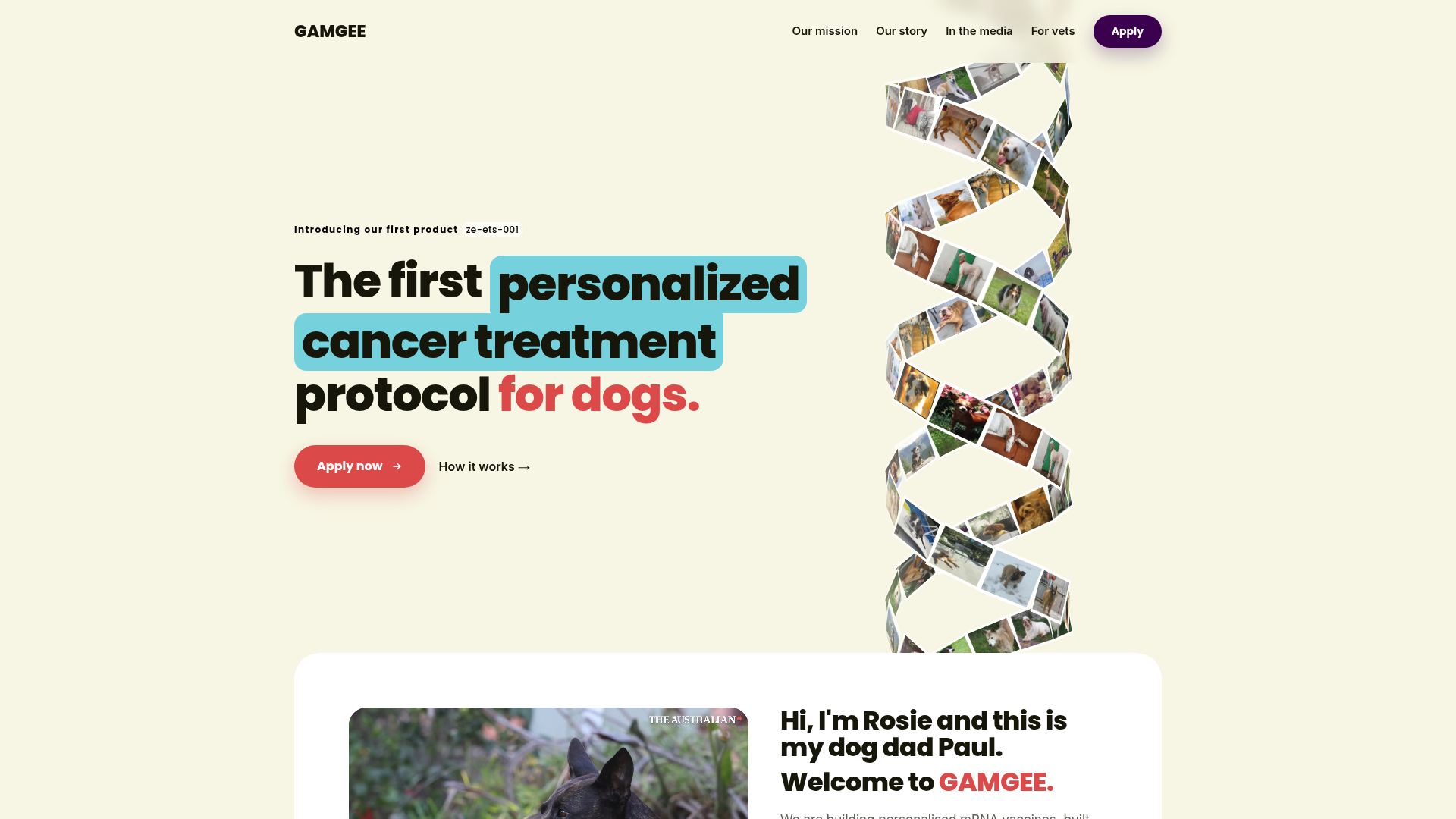
Gamgee is now formalizing that process. The company's website describes a four-step journey: review and intake, vet outreach and collection, vaccine creation, and treatment. It's a pipeline that takes a tumour sample, sends it to a genomics lab, identifies the mutations driving the cancer, and designs a personalised protocol. The entire process is managed end-to-end by Gamgee, from the initial application to monitoring the dog's response.
The process: from tumour sample to tailored vaccine
The core innovation of Gamgee is the personalisation. Unlike traditional cancer treatments that use a one-size-fits-all approach, Gamgee's vaccines are built from the dog's own tumour. This is the same principle behind human mRNA cancer vaccines, which are designed to train the immune system to recognise and attack cancer-specific mutations.
Gamgee's process begins with a tissue sample collected by a veterinarian. That sample is sent to a genomics lab — Gamgee collaborates with the UNSW Ramaciotti Centre for Genomics and the UNSW RNA Institute — where it is sequenced. The data is then analysed to identify the mutations that are driving the cancer. Using AI, Gamgee designs a vaccine that encodes these mutations, essentially teaching the dog's immune system to target the cancer cells.
The vaccine is then administered by a veterinary oncologist, and the dog's response is monitored. It's a closed loop: each case generates data that strengthens the platform. Gamgee's website invites dog owners to "donate data" to make the science stronger, and it encourages vets and labs to partner with them.
This approach is not without precedent. Human trials of mRNA cancer vaccines have shown promise, but they are expensive and slow. Gamgee is leveraging the regulatory environment for veterinary medicine, which is often less stringent than human trials, to move faster. But that speed comes with risks.
Rosie's story: a miracle, but not yet proof
Rosie's case is the emotional heart of Gamgee's marketing. The website features a photo of Rosie and Paul, and the story is told in first person: "One breakthrough treatment later, two more years were added to Rosie's life." It's a powerful testimonial, but it's also a single anecdote. The scientific community is rightly cautious.
The Conversation article, which is linked on Gamgee's media page, urges caution. A single case, no matter how dramatic, does not prove that the vaccine works. It could be a placebo effect, or the dog's immune system might have fought off the cancer on its own. Without a controlled clinical trial, the efficacy of Gamgee's vaccines remains unproven.
Gamgee acknowledges this by stating that it is "currently running clinical trials in Australia." But the details are sparse. The website does not disclose the trial design, the number of participants, or the endpoints. This lack of transparency is a concern for a product that is being offered to desperate dog owners.
The name Gamgee: a quiet nod to a faithful friend
The name "Gamgee" is a deliberate choice. It evokes Samwise Gamgee, the loyal hobbit from J.R.R. Tolkien's The Lord of the Rings. Samwise is the archetype of the faithful companion, the one who never gives up on his friend. It's a fitting name for a company that is built on the bond between a man and his dog.
But the name also carries a subtle message: this is a company that is willing to go to the ends of the earth for its patients. It's a story-driven brand, and the name reinforces that narrative. The domain, gamgee.io, is short and memorable, and the .io extension gives it a tech-forward feel.
The branding is consistent across the website, from the warm, personal tone of Rosie's story to the professional design of the process section. It's a brand that appeals to both the heart and the head: the heart of a dog owner who would do anything for their pet, and the head of an investor who sees the potential of a scalable biotech platform.
The waitlist problem: demand without evidence
Gamgee's waitlist of over 300 dogs is a testament to the demand for new cancer treatments for pets. But it's also a double-edged sword. The waitlist creates a sense of urgency and exclusivity, but it also raises ethical questions. Are these dogs being treated as guinea pigs? Are their owners fully informed of the risks?
Gamgee's website is careful to note that it is "accepting applications globally" and that it will "help you determine whether GAMGEE is right for your dog." This suggests a screening process, but the criteria are not disclosed. The company is also working with vets and oncologists, which adds a layer of professional oversight.
However, the lack of published data is a significant gap. Dog owners are being asked to make a leap of faith, based largely on Rosie's story. While that story is compelling, it is not evidence. Gamgee needs to publish its trial results, even if they are preliminary, to build trust with the veterinary community and the public.
The road ahead: clinical trials, partnerships, and the long game
Gamgee's future depends on its ability to generate solid clinical evidence. The company is running trials in Australia, and it has partnerships with UNSW and the University of Queensland. These collaborations lend credibility, but they are not a substitute for peer-reviewed results.
The company is also backed by prominent investors, including Y Combinator, Founders Fund, Golden Gate Ventures, and Atypical Ventures. This funding suggests that investors see a path to a viable business. The market for pet cancer treatments is growing, and a successful product could be lucrative.
But the challenges are significant. Regulatory hurdles, the high cost of personalised medicine, and the need for a scalable manufacturing process are all obstacles. Gamgee will need to navigate these while maintaining the trust of its early adopters.
For now, Gamgee is a story of hope: a man who refused to accept his dog's fate, and a company that is trying to turn that act of love into a sustainable venture. Whether it succeeds will depend on its ability to move from anecdote to evidence, and from a single dog to a platform that can help many.
If you're a dog owner facing a cancer diagnosis, Gamgee's offer is undeniably tempting. But it's worth asking the hard questions: What are the risks? What is the evidence? And what happens if the vaccine doesn't work? The answers will determine whether Gamgee is a breakthrough or a cautionary tale.