Neuromorphic
An embodiment-agnostic brain that turns plain language into safe robot workflows, deployed in minutes.
NewName Editorial
Editorial Team


The robotics industry has spent decades obsessing over bodies. Arms, legs, wheels, sensors—each new form factor demands its own software stack, its own integration effort, its own months of tuning. Neuromorphic, a Y Combinator-backed startup, is making a different bet: the future belongs not to the body but to the brain. And their brain, they claim, can be dropped into any robot—quadruped, wheeled, or humanoid—and have it working in minutes, not weeks.
That claim is bold, but the company's early traction suggests it's more than vaporware. Their website describes a live deployment with a leading biotechnology company that went from first conversation to daily robot operations within one week. If that holds up, Neuromorphic is not just another robotics startup; it's a potential platform for the entire industry.
The Robot Brain, Not the Robot Body
Neuromorphic's core product is not a robot. It's an intelligence layer—a "brain" that sits on top of any compatible robot body. The company's tagline, "Building an embodiment-agnostic 'brain' that makes robots fast to deploy," captures this clearly. They are not selling hardware; they are selling the software that makes hardware useful.
The brain works through a three-step process: Understand, Compose, Execute. An onboard LLM interprets plain-language requests and turns them into robotic workflows. It then composes those workflows from a library of reusable skills—navigation, manipulation, inspection, tool use—and finally executes them under the watch of sensor loops that ensure safe, reliable action.
This is a fundamentally different approach from traditional robotics programming, where every task is hard-coded and every environment is explicitly mapped. Neuromorphic's brain is designed to generalize, to adapt, to be reprogrammed by conversation rather than code.
One Brain, Many Bodies: The Embodiment-Agnostic Bet
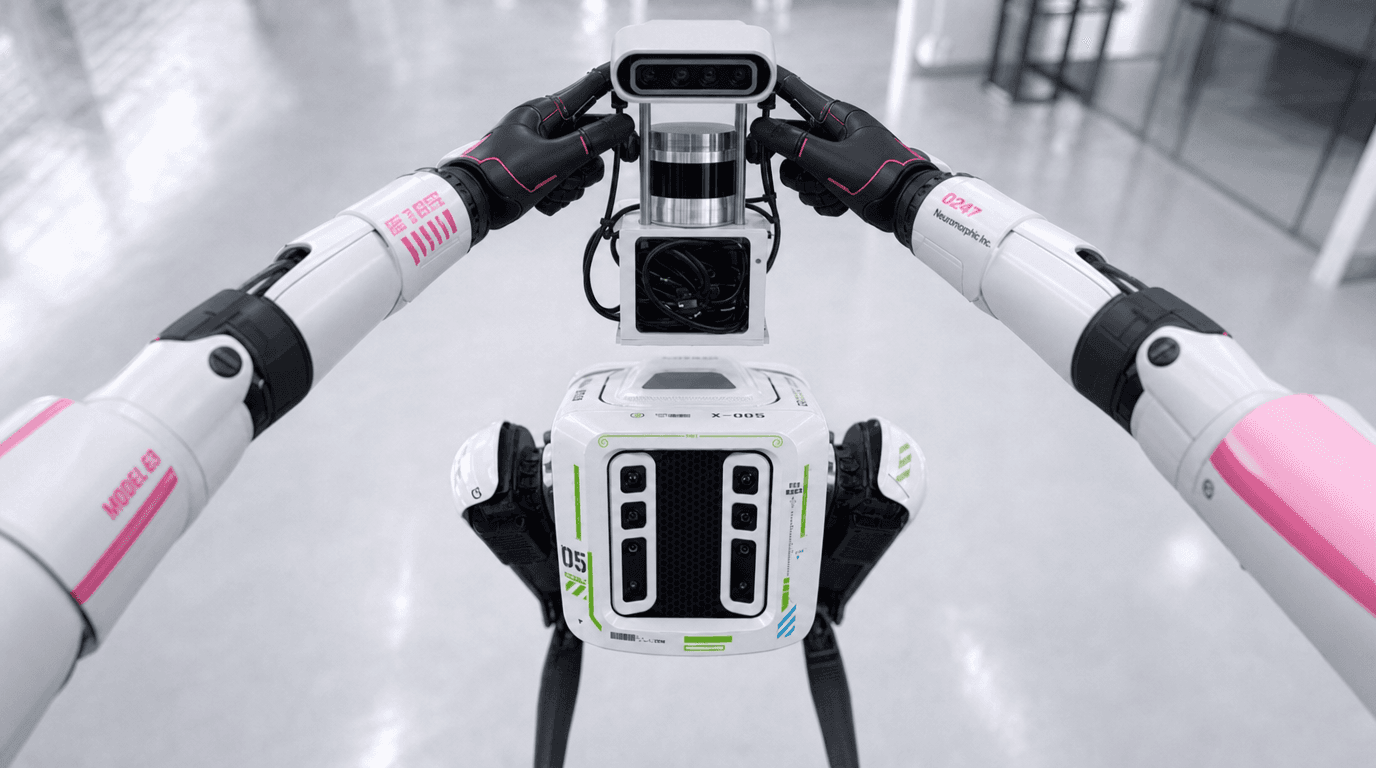
The most striking claim on Neuromorphic's site is that "quadrupeds, wheeled robots, and humanoids share the same intelligence." This is the embodiment-agnostic thesis in action. Instead of building a brain for each robot type, they build one brain that can control any of them.
The implications are profound. For a factory or lab, this means you can deploy a quadruped for inspection today, a wheeled robot for delivery tomorrow, and a humanoid for manipulation next month—all using the same underlying intelligence. You don't need to retrain your team or rebuild your software stack. You just swap the body.
This is a radical departure from the industry norm, where each robot platform is a silo. Boston Dynamics, for instance, has Spot, Stretch, and Atlas, but they don't share a common brain. Neuromorphic is betting that a unified brain will win in the long run, and they're starting with a narrow but high-value vertical: wet labs.
From Conversation to Daily Operations in One Week
Neuromorphic's website features a compelling proof point: "A leading biotechnology company went from first conversation to daily robot operations within one week." That's an extraordinary claim, and they don't name the customer, but the specificity suggests it's real.
What does that deployment look like? The site mentions "a robot scientist" working in a wet lab. The likely tasks are repetitive, dangerous, or tedious—things like pipetting, sample handling, or inspection. The brain's ability to understand natural language means a lab manager can simply describe the task, and the robot figures out how to do it.
If this one-week timeline is repeatable, it changes the economics of automation. Traditional robot deployments take months, require specialized integrators, and often need custom end-effectors and fixtures. Neuromorphic is promising a near plug-and-play experience. That's the kind of step-change that makes enterprises sit up and take notice.
The Wet-Lab Beachhead: Why Biology First?
Neuromorphic's choice to start with wet labs is strategic. Wet labs are environments with high labor costs, repetitive tasks, and a pressing need for automation—especially in the post-pandemic era of biotech R&D. They are also relatively structured, which helps with safety and reliability.
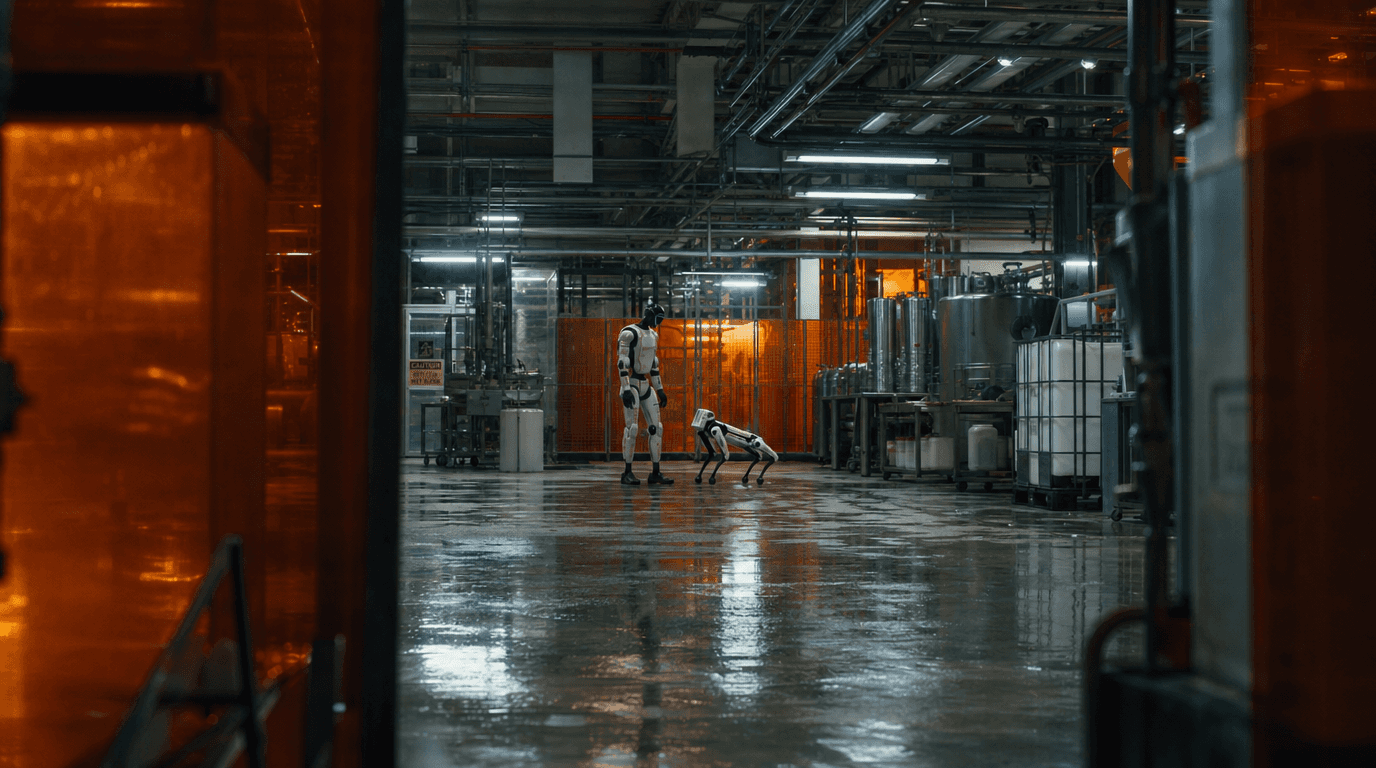
By focusing on a single vertical, Neuromorphic can prove its brain works in a real-world setting, gather feedback, and refine its skills library. Once the wet-lab workflows are solid, they can expand to other domains—factories, warehouses, even homes. The factory image on their site, showing a humanoid and a quadruped working together, hints at that broader vision.
But wet labs are just the start. The real prize is becoming the standard brain for all robots, much like Android became the standard OS for smartphones. If Neuromorphic succeeds, they'll be the platform on which a thousand robot applications are built.
Naming the Invisible: What 'Neuromorphic' Signals
The name "Neuromorphic" is a double-edged sword. On one hand, it evokes the field of neuromorphic computing, which mimics neural architectures in silicon. That's a nod to the brain-like nature of their product. On the other hand, it's a mouthful, and it may confuse people who aren't familiar with the term.
But the name also signals ambition. Neuromorphic isn't just a software company; it's a company that wants to build the substrate for machine intelligence in the physical world. The word carries weight, suggesting a deep understanding of how brains work—and how to replicate that in machines.
The domain, neuromorphic.vision, is a nice touch. The ".vision" TLD hints at foresight and clarity, aligning with the company's mission to give robots vision and understanding. It's not the most obvious choice, but it's memorable and distinctive.
In a market full of generic names like "Robotics Inc." or "AI Solutions," Neuromorphic stands out. It's a name that invites questions, and that's a good thing for a startup trying to explain a novel concept.
The Open Questions: Safety, Complexity, and Trust
Neuromorphic's approach is promising, but it raises serious questions. Safety is paramount: how does a brain that understands natural language ensure that a robot never makes a dangerous mistake? The site mentions "sensor loops" that monitor each action, but the details are thin. In a wet lab, a wrong move could spill a hazardous chemical or ruin a valuable sample.
Complexity is another concern. The brain must handle the messy, unpredictable reality of physical environments. LLMs are good at text, but the physical world is full of edge cases. Will the brain be able to adapt when a lab bench is rearranged or a new piece of equipment appears?
Finally, there's trust. Will biotech companies trust a startup's brain to run their labs 24/7? The one-week deployment suggests that at least one company is willing to take the leap, but broader adoption will require a track record of reliability.
Neuromorphic is at the forefront of a major shift in robotics. They're not just building a product; they're building a platform that could redefine how we think about automation. The road ahead is long, but the direction is clear. For anyone watching the intersection of AI and robotics, Neuromorphic is a name to remember.