NODI Energy
Plug-in smart battery that shifts home and business energy use, building a distributed grid network.
NewName Editorial
Editorial Team
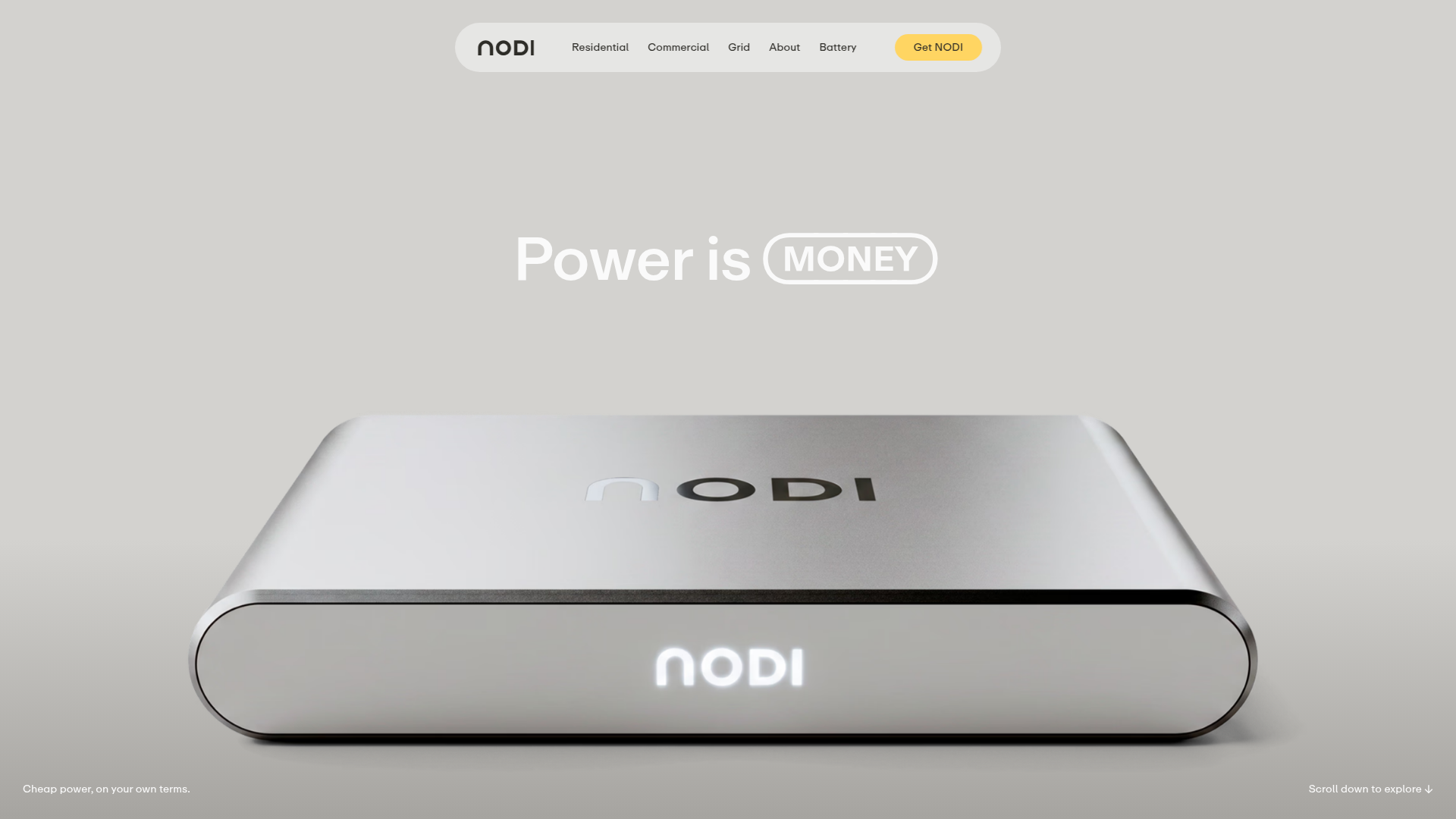
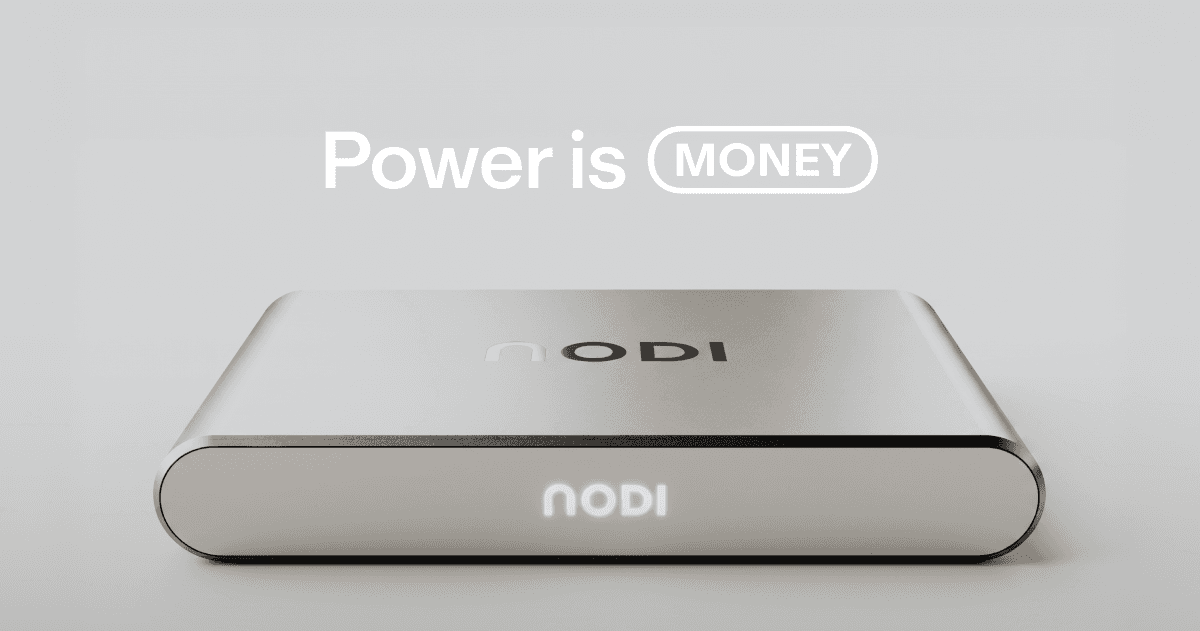
The energy transition has a deployment problem. Solar and wind farms get built, but connecting them to the grid takes years. Data centers, EV chargers, and heat pumps all demand more capacity, yet the grid is often constrained at the local level. The bottleneck is not generation; it's flexibility. NODI Energy, a Y Combinator-backed startup, is attacking this problem with a deceptively simple device: a smart battery that plugs into a standard wall socket. By aggregating thousands of these distributed batteries, NODI aims to create a virtual power plant that can shift demand, ease congestion, and unlock capacity for the next wave of electrification.
The Socket as a Grid Asset: NODI's Distributed Storage Thesis
NODI's core insight is that the grid's flexibility problem can be solved at the edge, using the existing infrastructure of homes and businesses. Traditional battery storage is treated as infrastructure: it requires surveys, installers, fixed wiring, wall space, and large upfront costs. NODI behaves like a consumer product. It plugs into a standard socket, charges when electricity is cheap, and releases power when prices spike. This is not a new concept—time-of-use arbitrage has been around for decades—but NODI's execution is different. It is designed to be as easy as using a kettle, with no scheduling or setup. The device learns the user's consumption patterns and automatically optimizes charging and discharging.
The strategic bet is that by making storage a plug-and-play product, NODI can achieve deployment speeds that traditional battery installers cannot match. Instead of waiting months for permits and electricians, a customer can have a NODI unit running in minutes. This speed is critical for the grid-scale opportunity: if NODI can deploy thousands of units across a neighborhood, it can create a distributed energy resource that utilities and grid operators can tap into, without the multi-year lead times of utility-scale storage projects.
From Infrastructure to Product: Why Deployment Speed Matters
The energy industry has a saying: "The grid isn't short of ambition, it's short of flexibility." NODI's about page echoes this, noting that the grid was built for peaks and often sits underused. The challenge is not how much energy we produce, but how unevenly it is stored, used, and distributed. NODI's answer is to turn every socket into a potential grid asset. This is a radical departure from the traditional model of centralized storage, where large batteries are installed at substations or industrial sites.
The product-first approach has several advantages. First, it reduces the cost of customer acquisition. Instead of a complex sales process involving site assessments and installation quotes, NODI can be sold like any other consumer electronics device. Second, it lowers the barrier to entry for renters and small businesses, who may not have the authority or capital to install permanent battery systems. Third, it allows for rapid scaling: if NODI can manufacture and distribute units efficiently, it can build a distributed network much faster than a utility could deploy centralized storage.
However, this approach also has limitations. A plug-in battery is limited by the capacity of a standard socket (typically 3 kW in the UK) and the battery's internal capacity. NODI does not disclose the exact kWh rating, but based on the claimed £200 annual savings and the payback period, it is likely in the range of 2-5 kWh. This is sufficient for shifting a few hours of household load, but it is not enough to power an entire home for a day. For commercial customers, NODI claims up to 30% peak bill reduction, which suggests a larger unit or multiple units per site.
The Economics of Arbitrage: How NODI Pays for Itself
NODI's value proposition is straightforward: charge when energy is cheap, discharge when it is expensive, and pocket the difference. The company claims an average annual savings of £200 for UK households, based on time-of-use tariffs. The website also mentions a "payback target" of ~0 years, which is likely a typo or placeholder, but the implication is that the savings can offset the cost of the unit over time.
NODI offers two purchasing options: outright purchase or leasing. The reserve fee is £69, which is fully refundable, suggesting a pre-order model. The pricing for the full unit is not disclosed, but given the £200 annual savings, a reasonable price point would be between £500 and £1,000, which would give a payback period of 2.5 to 5 years. This is competitive with traditional battery systems, which typically cost £5,000-£10,000 installed.
The economics become more interesting when NODI aggregates these batteries into a virtual power plant. By offering grid services—such as frequency response or capacity market participation—NODI can generate additional revenue streams beyond customer arbitrage. This is the classic VPP model, but NODI's twist is that it uses a plug-in product to acquire customers cheaply and scale quickly.
Competitive Landscape: NODI vs. Traditional Storage and Virtual Power Plants
NODI faces competition from several directions. The most direct is from traditional home battery systems, such as Tesla Powerwall, Sonnen, and GivEnergy. These systems are more powerful and can provide backup power, but they require professional installation and are significantly more expensive. NODI's plug-in design is a trade-off: lower capacity and no backup capability, but much lower cost and easier deployment.
Another competitive category is smart plugs and energy management devices, such as Hive or Nest, which can shift appliance usage but do not store energy. NODI's battery adds a new dimension by actually storing energy, not just shifting load.
Finally, there are other VPP players, such as Octopus Energy's Kraken Flex or Tesla's VPP programs, which aggregate customer batteries. NODI differentiates by owning the hardware and the network, rather than relying on third-party devices. This gives it more control over the customer experience and the grid services it can offer.
However, NODI's biggest challenge may be customer trust and education. The concept of a plug-in battery is novel, and consumers may be skeptical about its safety and effectiveness. NODI will need to invest in marketing and certifications to overcome this barrier.
The Grid-Scale Opportunity: Data Centers and the 90-Day Interconnection
NODI's website mentions a "Grid" segment for developers, data centers, and local councils, promising "dispatchable capacity in 90 days. Not 10 years." This is a bold claim, but it highlights the company's ambition to move beyond residential and commercial arbitrage into the grid services market.
The target is clear: data centers are facing interconnection queues that can last years, and they need capacity fast. NODI's distributed network could provide a solution by aggregating flexible demand and storage to reduce peak load on constrained substations. If NODI can demonstrate that its network can deliver reliable capacity, it could become a valuable partner for grid operators and developers.
This is a high-stakes, high-reward opportunity. The revenue potential from grid services is much larger than residential arbitrage, but it requires NODI to prove its reliability and scale. The company will need to build a sophisticated software platform to manage thousands of distributed batteries, forecast demand, and respond to grid signals in real time.
Risks and the Road to Scale: From Pilot to Distributed Network
NODI's biggest risk is execution. Hardware is hard, and scaling a consumer electronics product is capital-intensive. The company is Y Combinator-backed, but it has not disclosed its funding stage or amount. It will need significant capital to manufacture, market, and deploy its devices.
Another risk is regulatory. In the UK, plug-in devices that export power to the grid may require certification and compliance with grid codes. NODI will need to navigate these regulations to enable its grid services model.
Finally, there is the question of customer retention. If the savings are not as high as promised, or if the device fails to deliver, customers may churn. NODI will need to ensure its product is reliable and its savings estimates are realistic.
Despite these risks, NODI's approach is compelling. By treating energy storage as a product rather than infrastructure, it could unlock a new model for grid flexibility. The next 12-24 months will be critical as NODI moves from pre-orders to deployment and begins to prove its distributed network thesis.